Kyoto 京都府
The old capital and its hinterland: a thousand years of temples, gardens and craft workshops set against hills that turn red in November. Beyond the city, the tea fields of Uji, the thatched villages of Miyama and the Sea of Japan coast at Amanohashidate belong to the same prefecture.
Seasonal calendar
Notable places
| Notable place | Why | |
|---|---|---|
| 大覚寺 | A former imperial villa in Sagano, whose Osawa Pond was dug in the ninth century so the moon could be watched from a boat. The temple's moon-viewing evenings, Kangetsu no Yube, are held on the nights around the harvest moon: dragon-headed boats cross the pond and the moon rises twice, once in the sky and once on the water. | 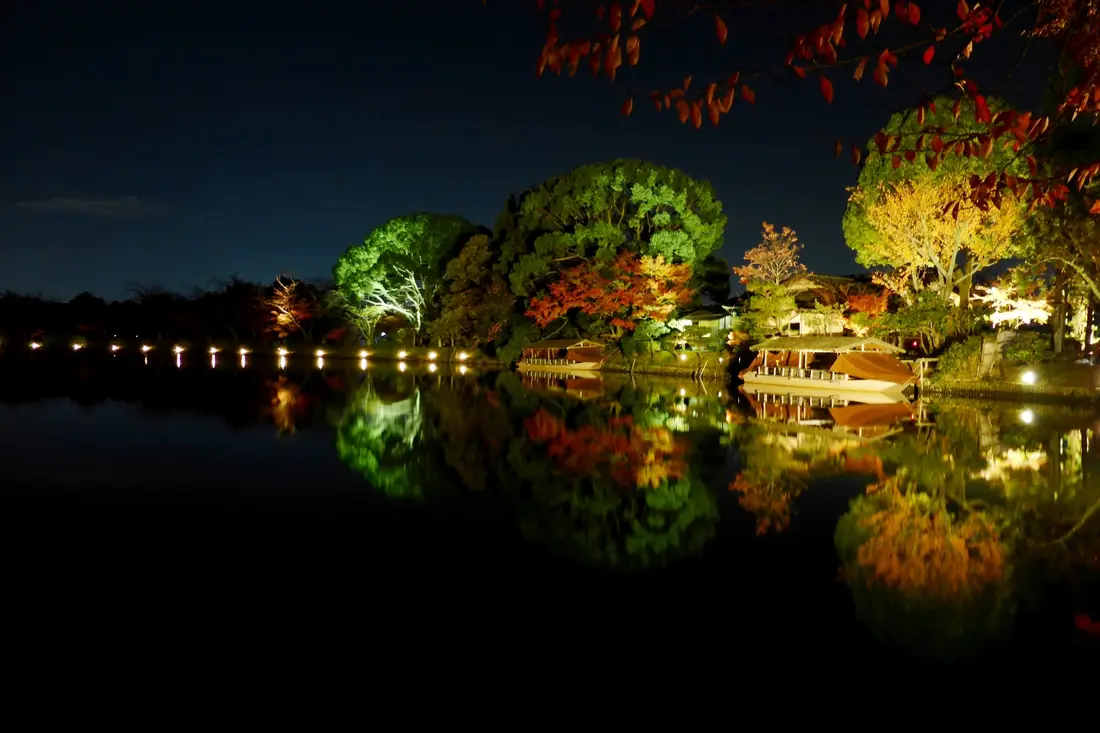 Photo · ttshr1970 · CC BY 3.0 |
| 夢コスモス園 | About eight million cosmos of 20 varieties on 4.2 hectares outside Kameoka, 20 minutes from Kyoto by train. It pairs with the Sagano scenic railway, which ends in Kameoka, and with the Hozu river boats, which start there. | 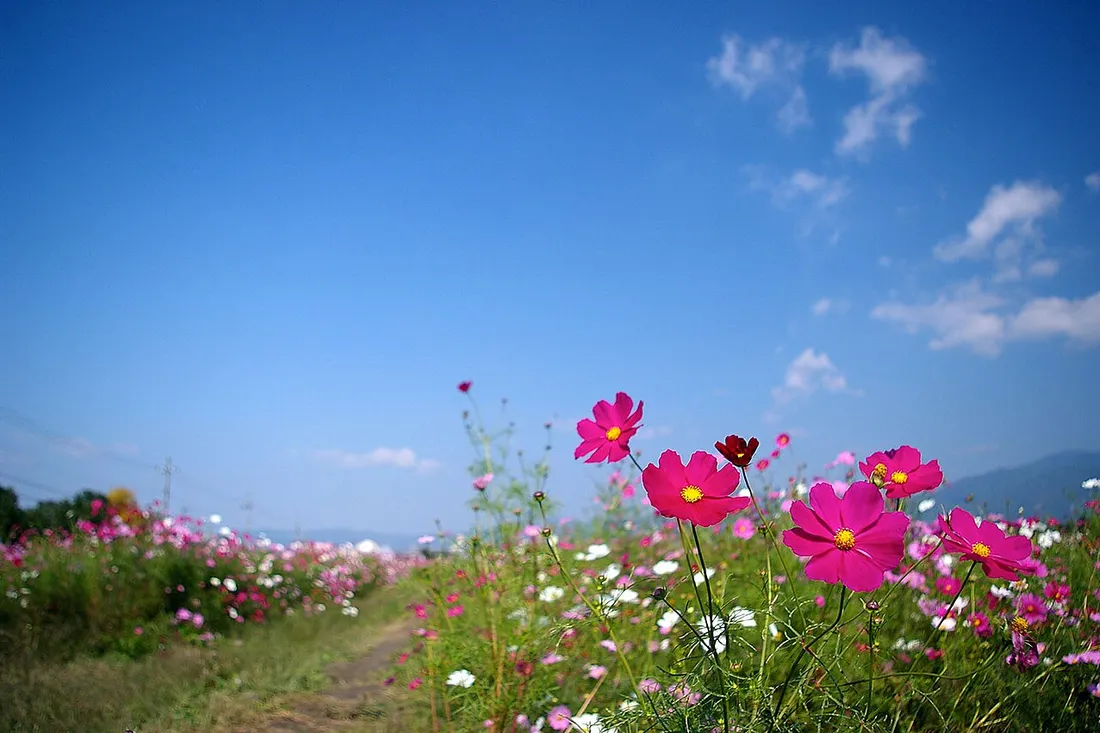 Photo · Kumamushi · CC BY-SA 3.0 |
| 北野天満宮 | The head shrine of Tenjin, the deified scholar Sugawara no Michizane, whose flower is the plum: about 1,500 trees of 50 varieties flower here from January to late March. On 25 February, the day of his death, geiko and maiko of the neighbouring Kamishichiken district serve tea in the open air at the Baikasai. In autumn the shrine opens its maple garden on the Odoi, the earth rampart Hideyoshi raised round the city in 1591: about 350 maples above the Kamiya river. National Treasure · main hallsHistoric Site · the Odoi earthwork of the maple garden, 1930 | 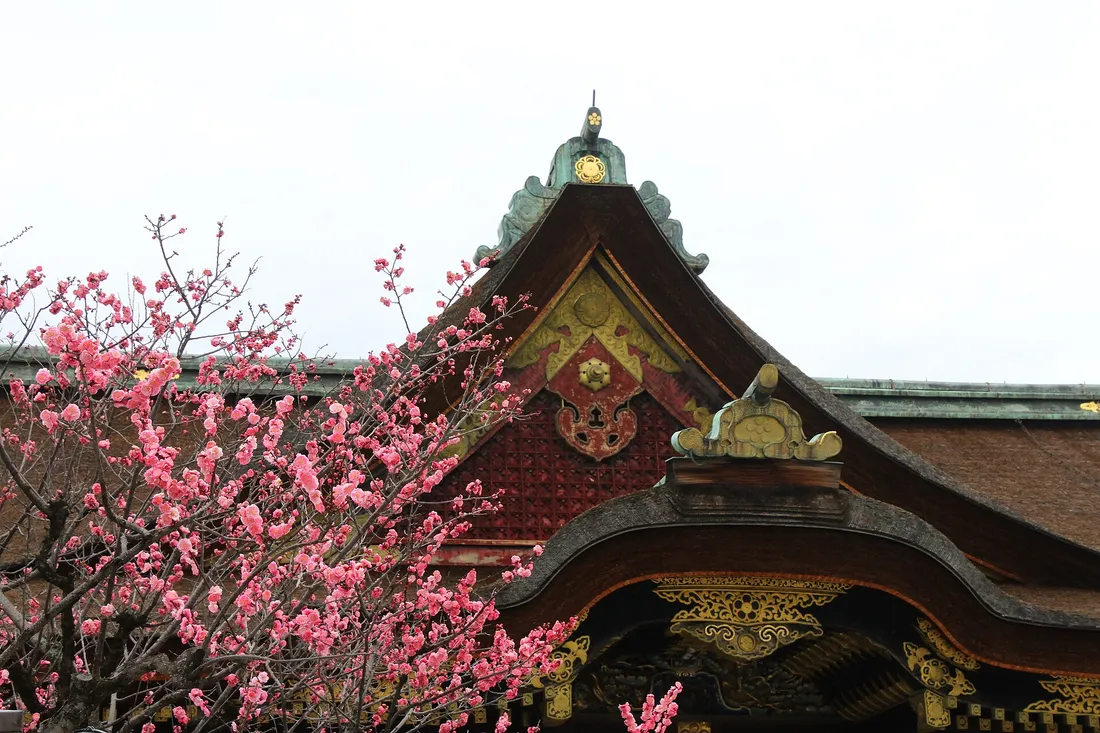 Photo · Hyppolyte de Saint-Rambert · CC BY-SA 4.0 |
| 三室戸寺 | A hillside temple in Uji, the tenth stop of the Saigoku pilgrimage, with about 20,000 hydrangeas of 50 varieties planted under cedars below the main hall. The garden opens for five weeks from the end of May, and on some June weekends it reopens after dark. | 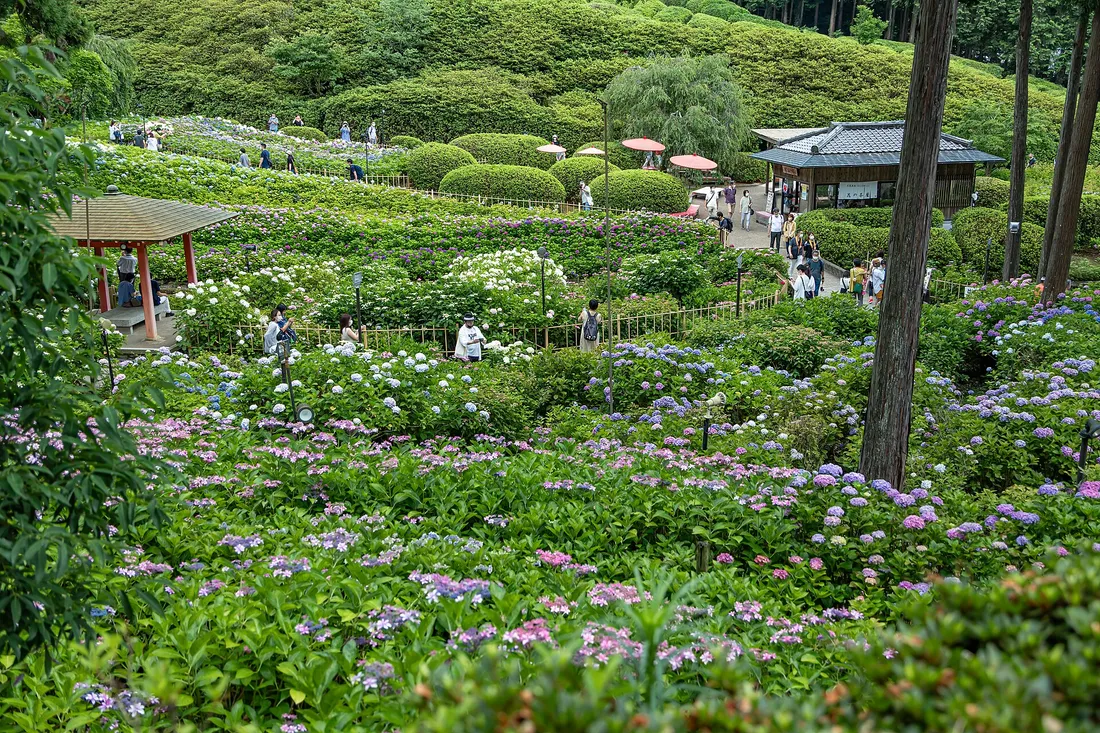 Photo · Naokijp · CC BY-SA 4.0 |
| 美山かやぶきの里 | A farming hamlet in the mountains north of Kyoto where 39 of the 50 houses keep their thatched roofs, a national preservation district since 1993. Under snow, from late January through February, it is the old countryside intact. For the eight evenings of the winter lantern festival, 30 January – 6 February in 2027, the lanes and houses are lit from 17:00 to 19:00 with about 80 paper lanterns and 200 more. Preservation District for Groups of Traditional Buildings · 1993 | 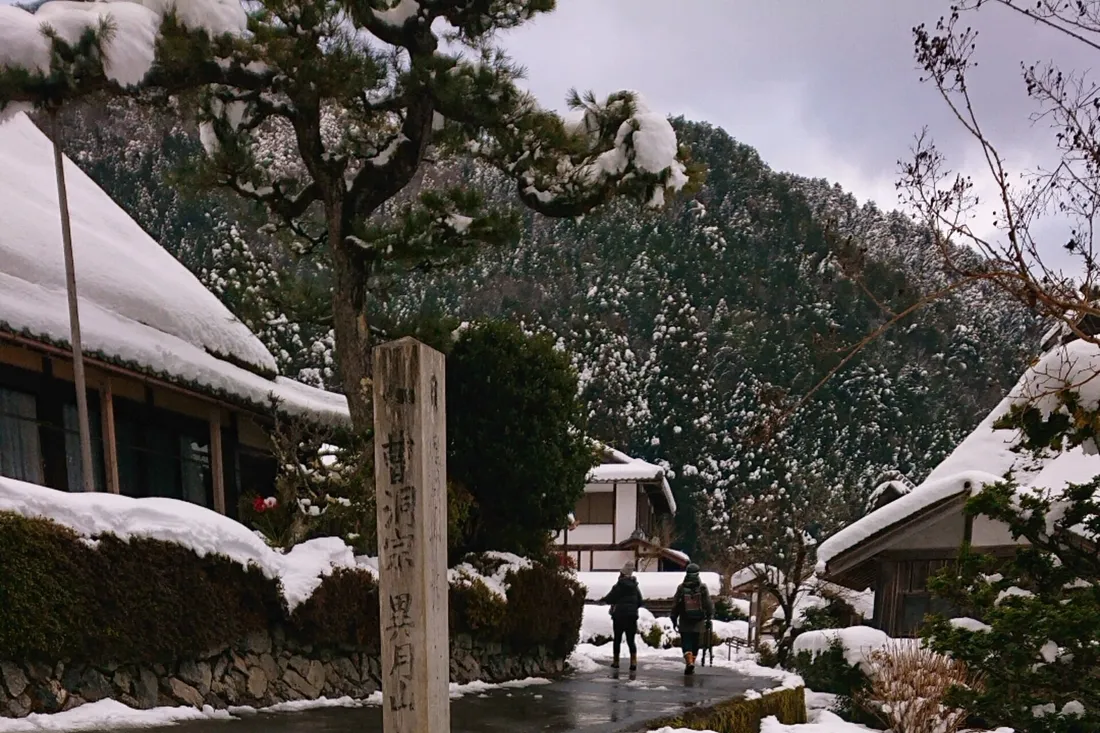 Photo · 経済特区 · CC BY-SA 4.0 |
| 仁和寺 | The last cherry blossom in the city. The Omuro cherries, about 200 trees, most of a variety called Omuro-ariake, grow only about two metres tall, so the blossom hangs at eye level with the five-storey pagoda behind it. They reach full bloom in mid-April, after the rest of Kyoto has finished. World Heritage · Historic Monuments of Ancient Kyoto, 1994National Treasure · Kondo hall | 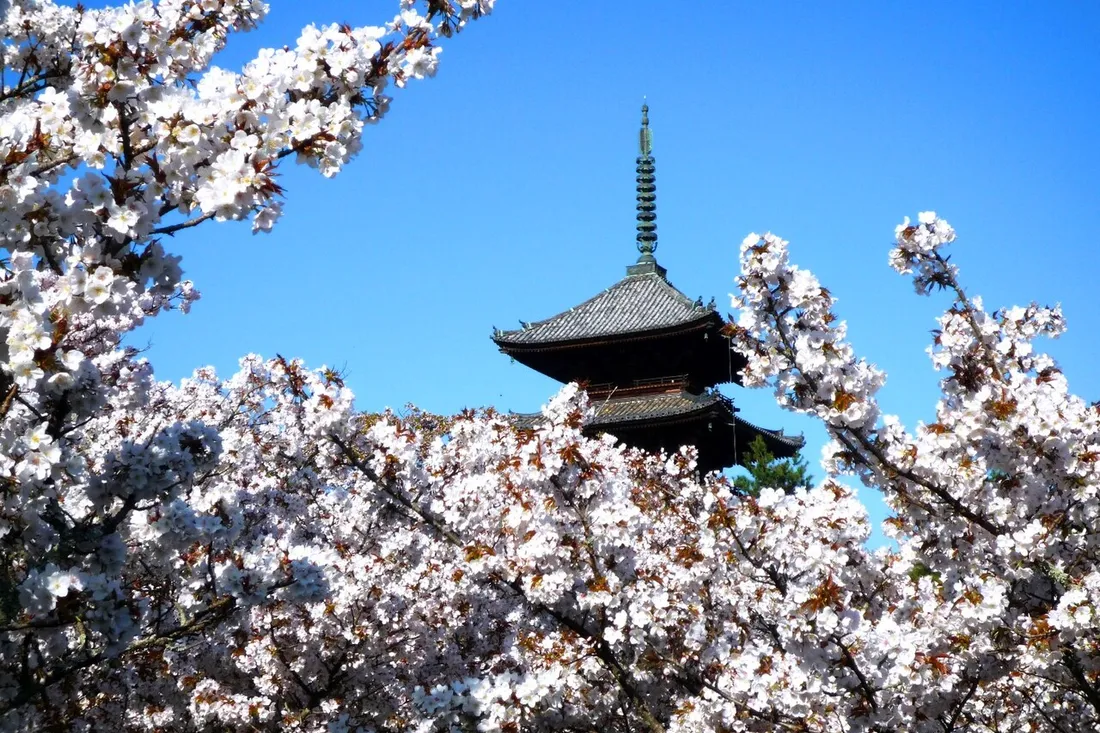 Photo · Bergmann · CC BY 3.0 |
Events
| Event | What it is | |
|---|---|---|
| ずいき祭 | A portable shrine roofed with taro stems and hung with vegetables | 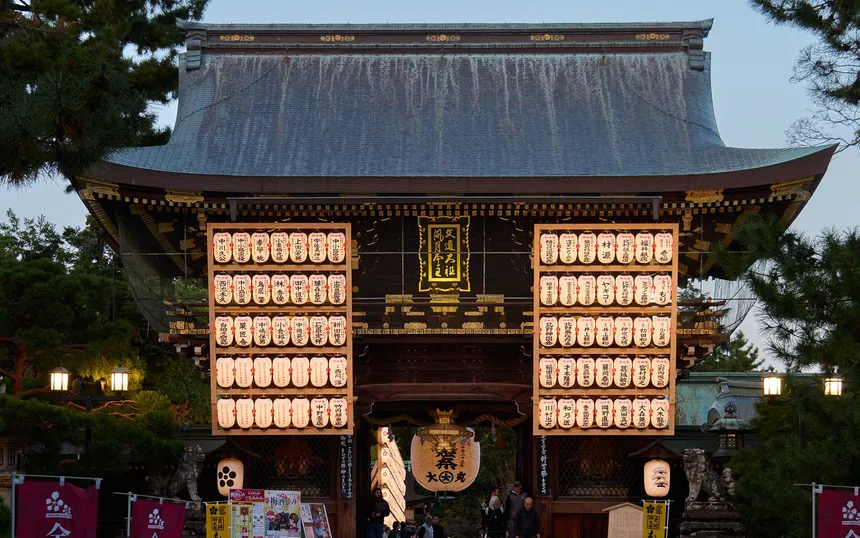 Photo · lumoplank · CC0 |
| 時代祭 | Two thousand people in costume walk a thousand years of Kyoto history | 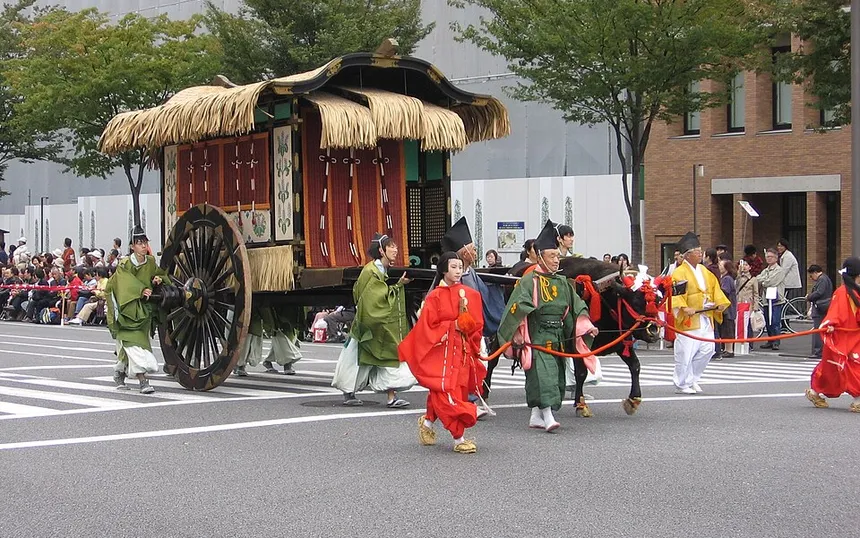 Photo · Peter 111 · Public domain |
| 鞍馬の火祭 | Villagers carry five-metre pine torches through a single mountain street | 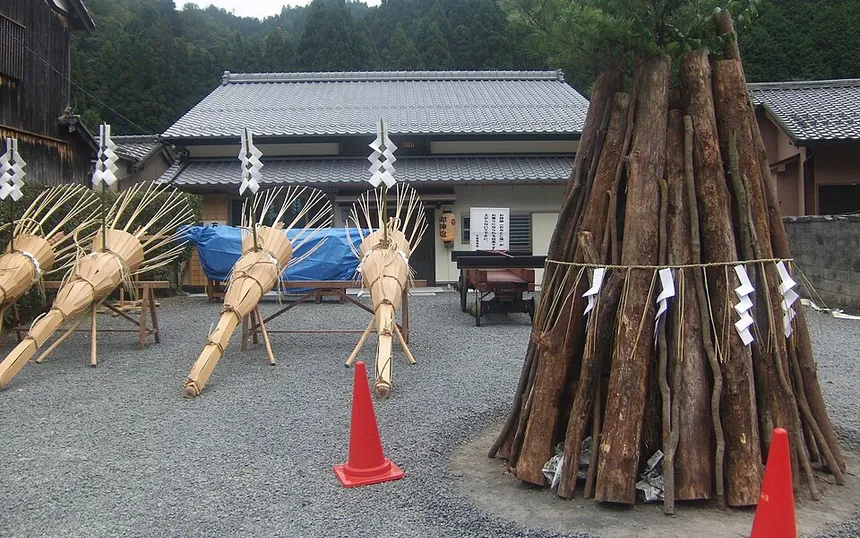 Photo · Indiana jo · CC BY-SA 4.0 |
| 京都非公開文化財特別公開 | Thirty-two halls, gates and treasures that are normally closed | 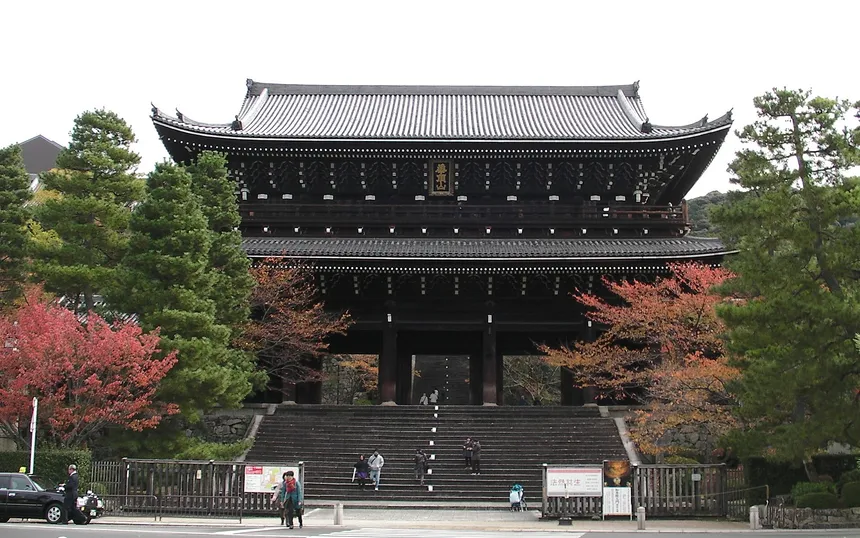 Photo · ONO Masanobu · CC0 |
| 祇園をどり | The only autumn dance season of Kyoto’s geiko and maiko | 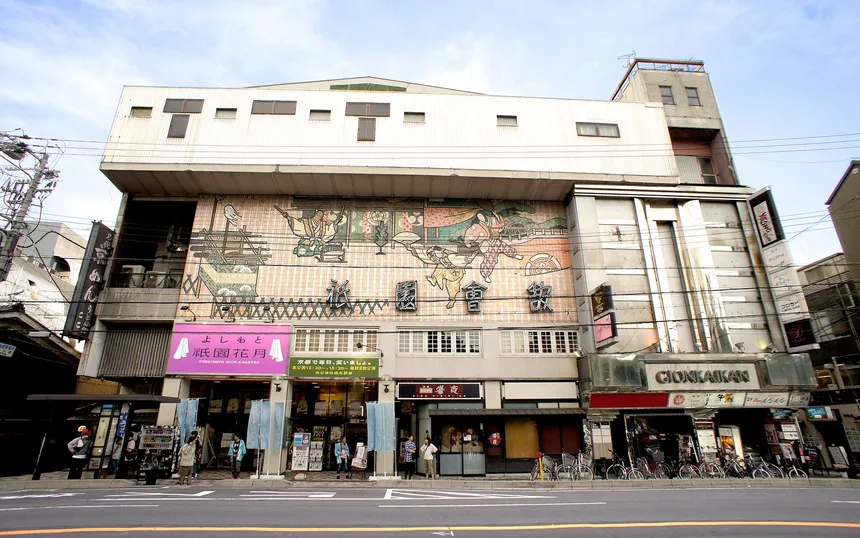 Photo · Kirakirameister · CC BY-SA 3.0 |
| 吉例顔見世興行 | The December run in which kabuki’s leading actors of east and west appear together | 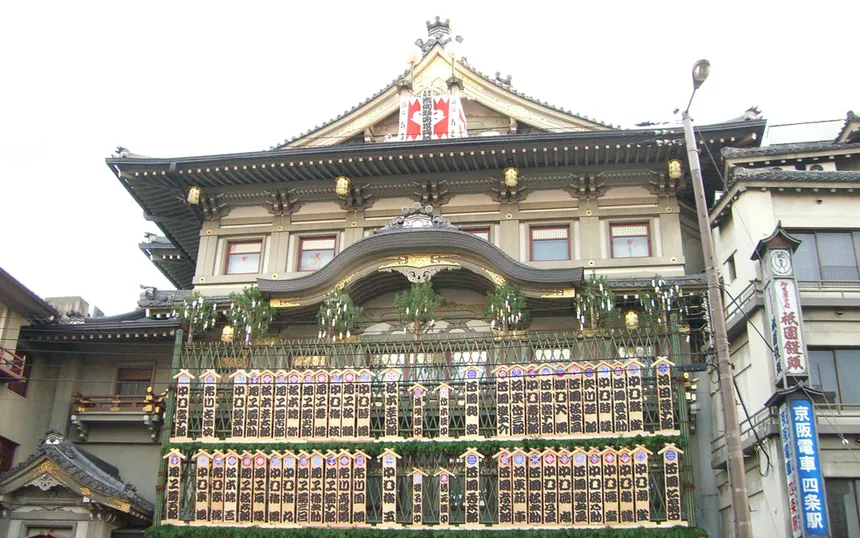 Photo · Conveyor belt sushi · CC BY 2.0 |
| KYOTOGRAPHIE 京都国際写真祭 2027 | An international photography festival hung in temples and townhouses | 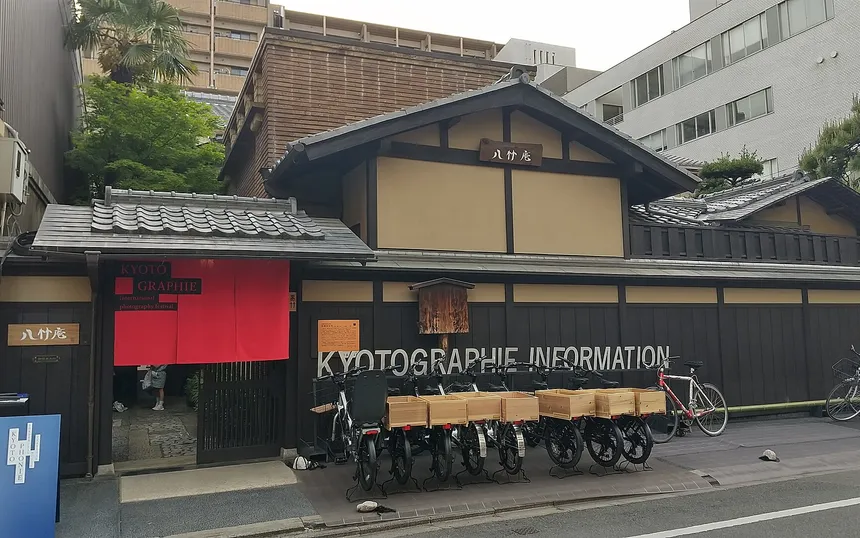 Photo · Toyotsu · CC BY-SA 4.0 |
| 祇園祭 | Two processions of towering floats, both on Saturdays in 2027 | 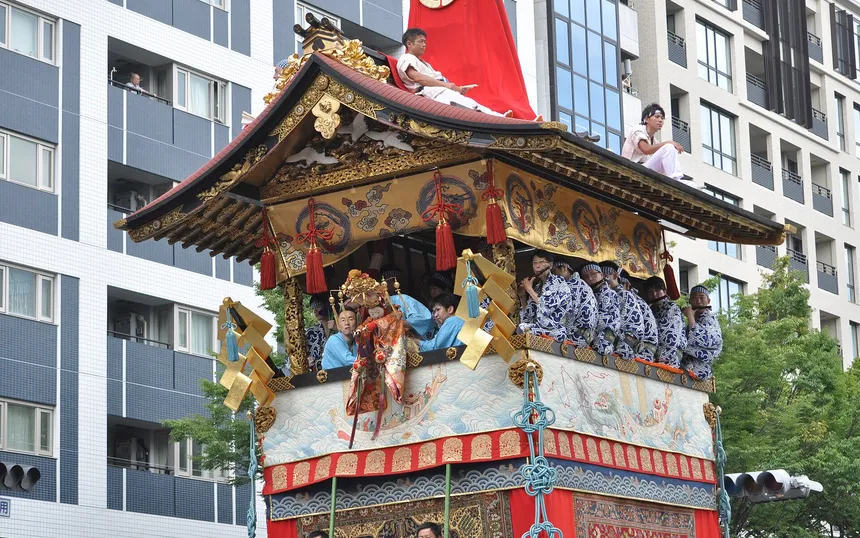 Photo · Edomura no Tokuzo · CC BY-SA 4.0 |
Meibutsu & craft
Food
History through time
794
Emperor Kanmu moves the court to Heian-kyo, a grid city on the Chinese model; it stays the capital for more than a thousand years.
1467
The Onin War begins; ten years of fighting burn most of the city.
1591
Toyotomi Hideyoshi rings the rebuilt city with the Odoi, an earthen wall of about 22 kilometres; a stretch survives at Kitano Tenmangu.
1867
The last shogun announces the return of power to the emperor at Nijo Castle; two years later the court leaves for Tokyo.
1890
The Lake Biwa Canal opens and soon drives Japan's first hydroelectric plant and first electric tramway, the city's answer to losing the court.
1945
Kyoto is taken off the list of atomic bomb targets and escapes heavy bombing, which is why the wooden city survives.