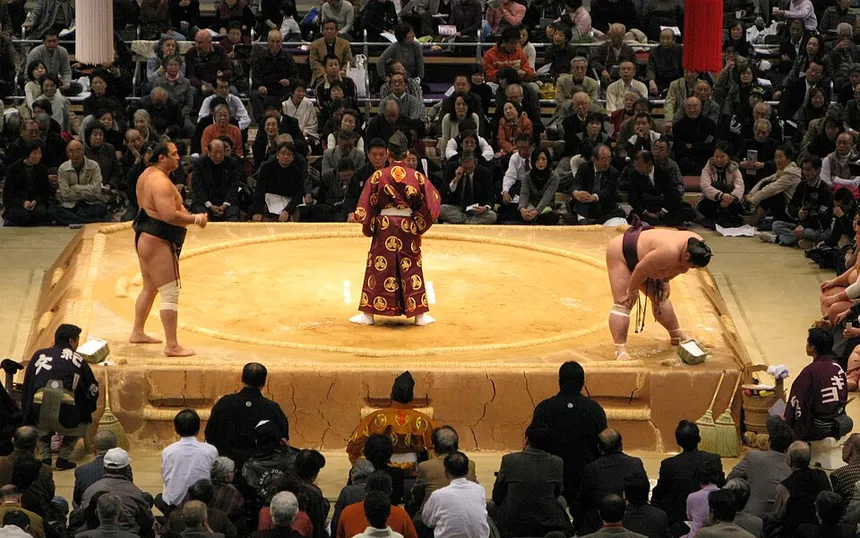
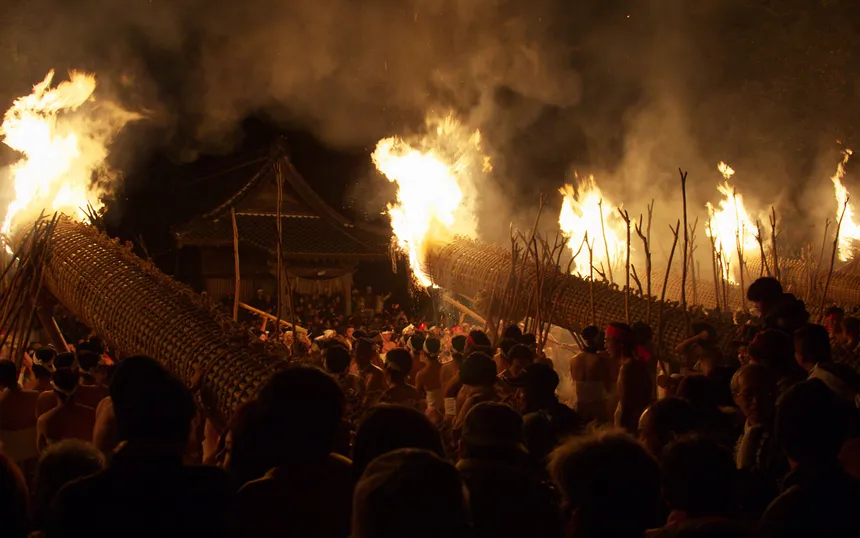
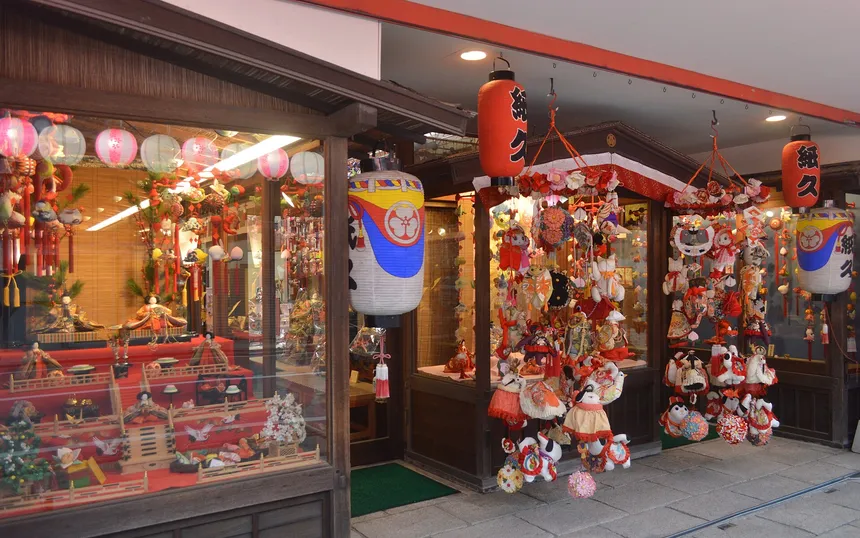
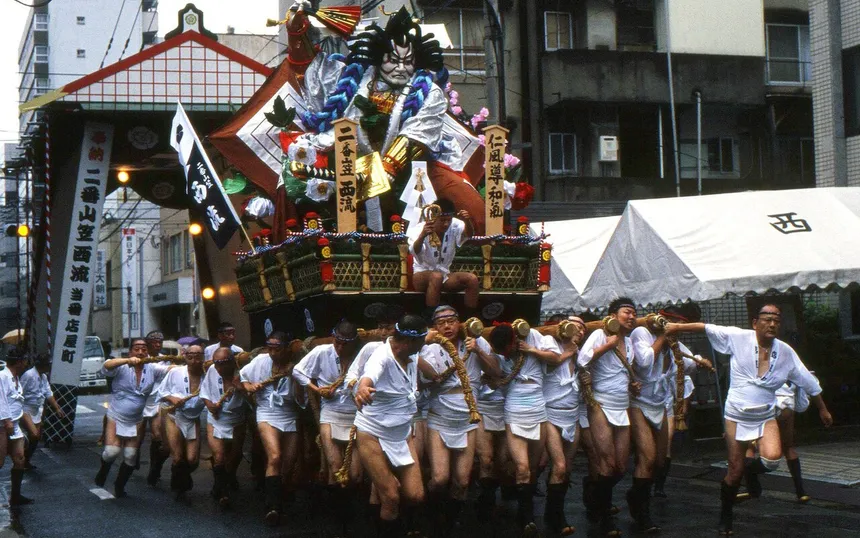
The northern gate of Kyushu, closer to Busan than to Tokyo, and for two thousand years the point where continental culture entered Japan. Hakata, the old merchant port inside the modern city, keeps its yatai food stalls, its tonkotsu ramen and the Hakata Gion Yamakasa, a dawn race of one-tonne festival floats on 15 July. Dazaifu, the ancient seat of government to the south, fills with plum blossom in February, and the November sumo tournament closes the year.
YataiAbout a hundred open-air food stalls set up at dusk in Tenjin, Nakasu and Nagahama
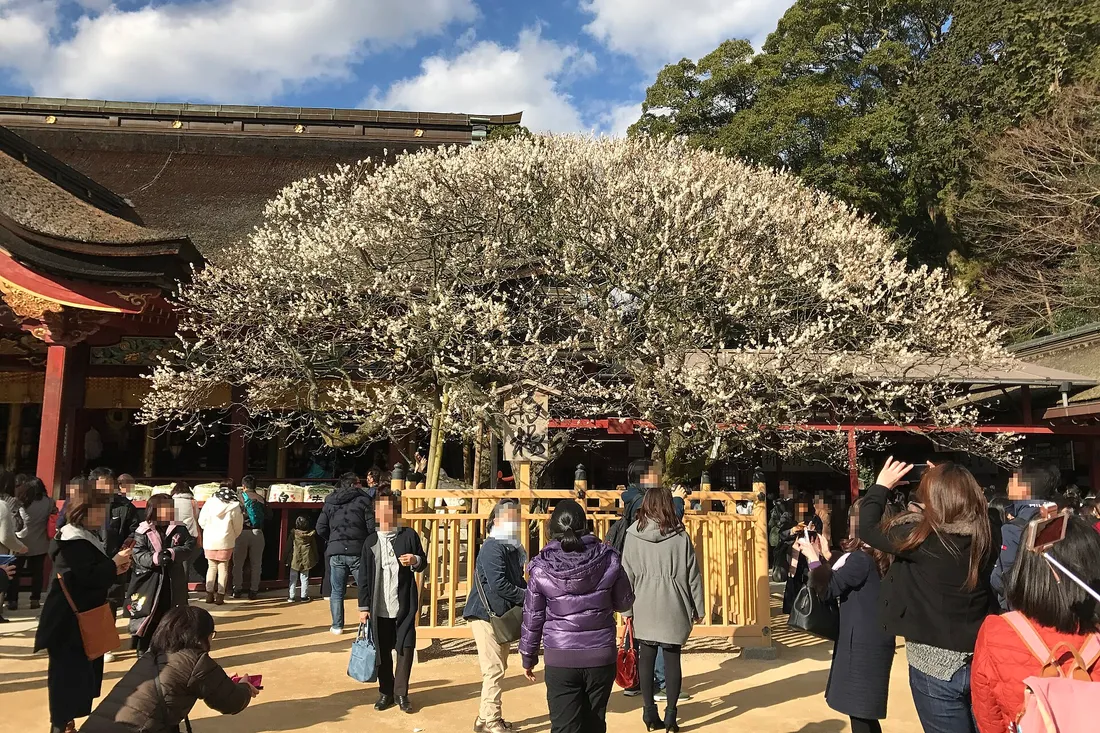
The shrine built over the grave of Sugawara no Michizane, the exiled scholar worshipped as Tenjin, whose flower is the plum: about 6,000 trees of 200 varieties flower in the grounds from late January to early March. The first to open is the Tobiume to the right of the main hall, the tree said to have flown from Kyoto in one night to follow him. The main hall reopened for worship in September 2026 after a restoration of three and a half years, its first in 124 years, and 2027 brings the grand festival held once in 25 years, 1,125 years after his death; its dates are not published yet.
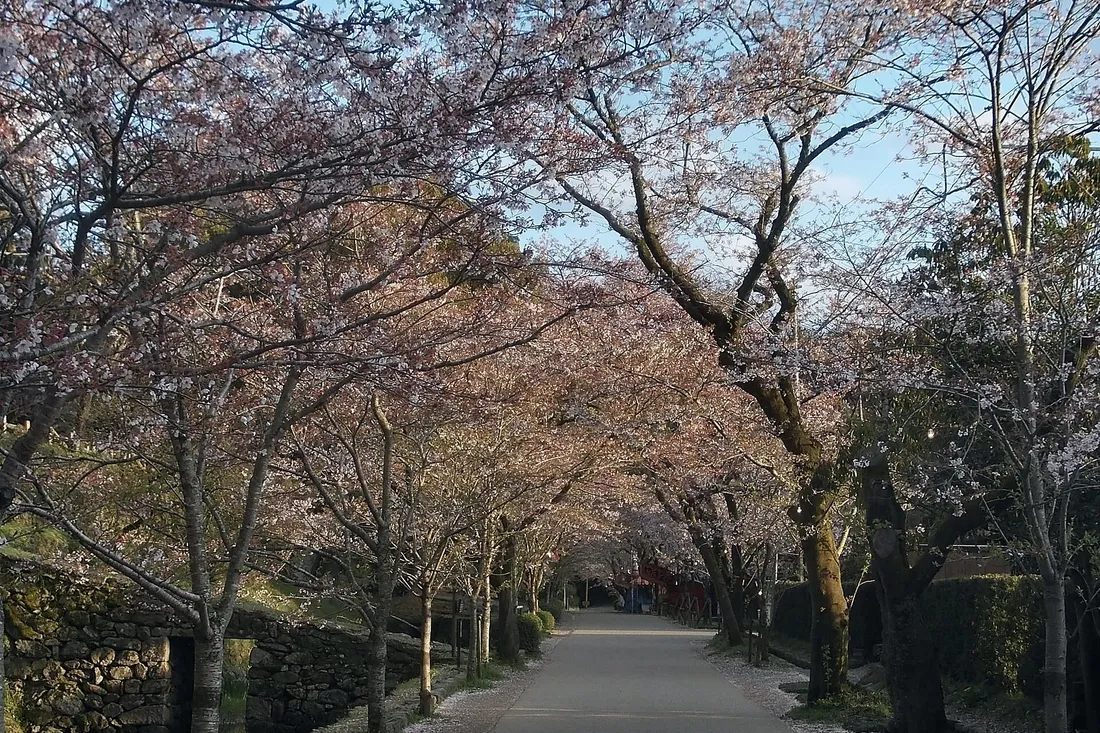
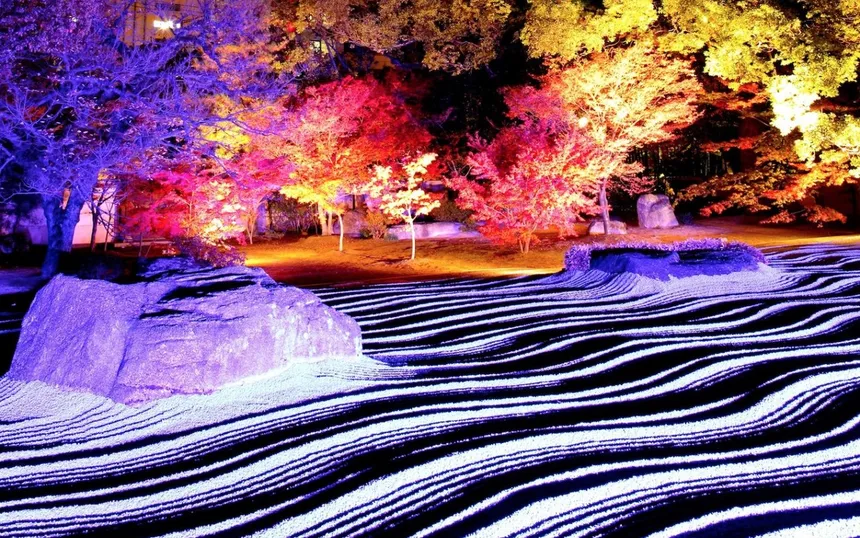
A small castle town in a side valley of Asakura, once the seat of a branch of the Kuroda. Sugi-no-baba, the 500-metre avenue to the castle, was a cedar-lined riding ground until it was replanted with cherries to mark the victory over Russia: about 200 Somei Yoshino now close over it as a tunnel. In late November about 20 maples redden around Kuromon, the black gate that was the main entrance of the castle.
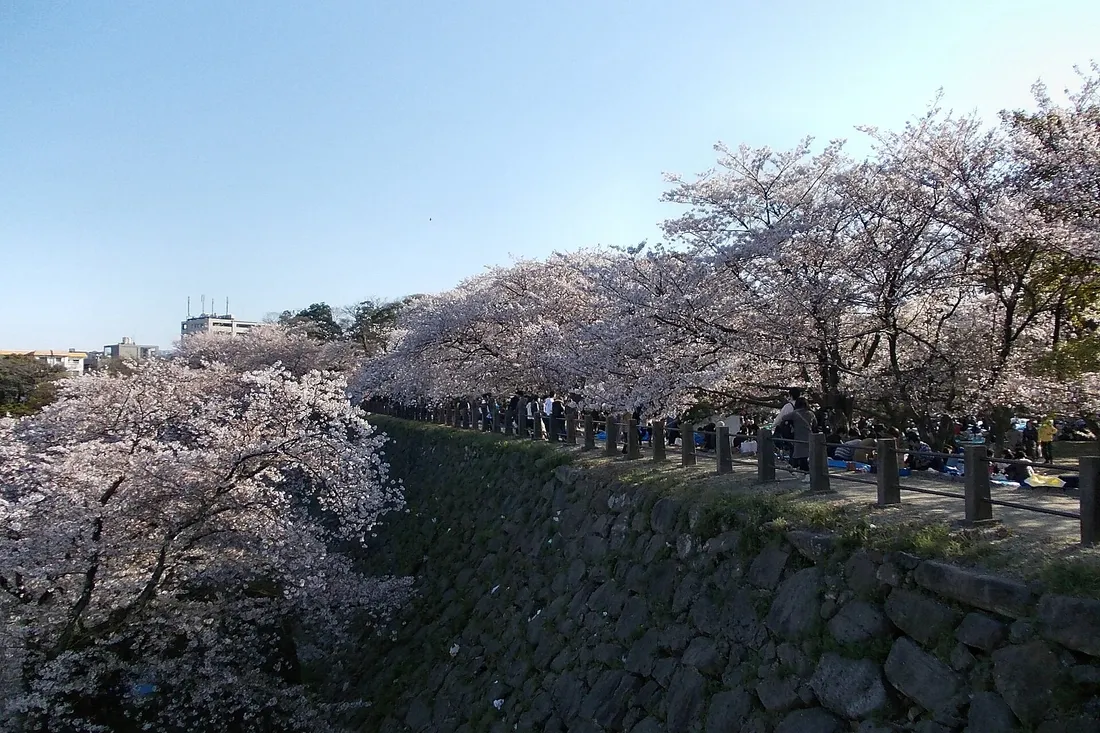
About 1,000 cherry trees on the stone ramparts of Fukuoka Castle, the seat the Kuroda built from 1601, in the middle of the city. During the Fukuoka Castle Sakura Festival the walls and the trees are lit after dark, historic buildings are opened and food stalls fill the old baileys. Fukuoka is one of the first big cities in Japan to flower: on average the blossom opens on 22 March and is full on the 31st.
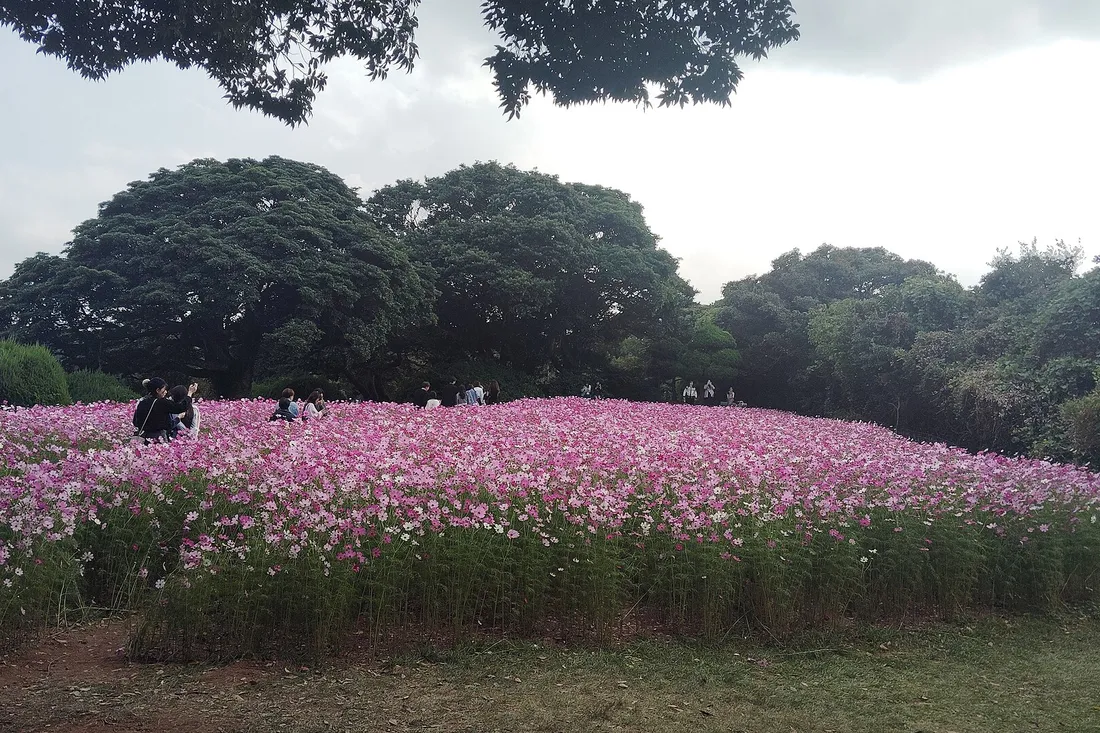
A flower park at the northern end of a small island in Hakata Bay, ten minutes by ferry from the city. In autumn a whole slope of cosmos runs down towards the sea: about 200,000 early plants flower from early to late October, and about 300,000 later ones take over from late October into early November, so the hill stays in flower for about five weeks.
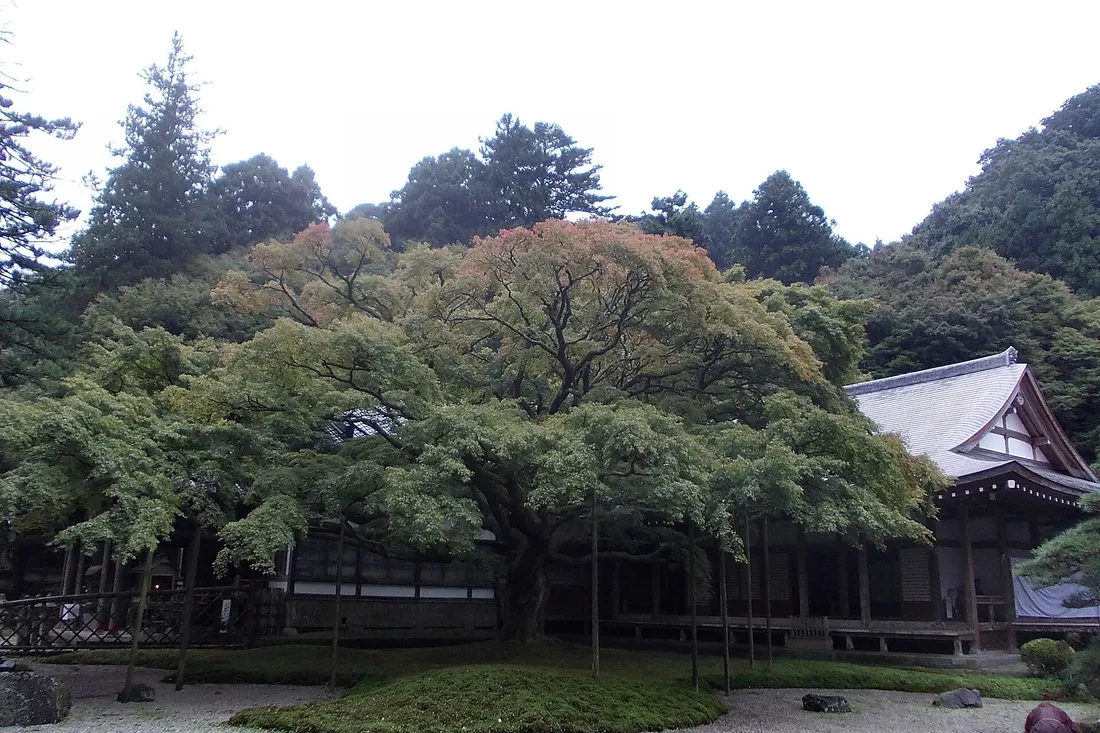
A mountain temple on the slope of Mount Raizan above Itoshima, said to have been founded by a monk from India, which keeps a standing Thousand-Armed Kannon that is an Important Cultural Property. In its courtyard stands one maple more than 400 years old, about eight metres tall, a natural monument of the prefecture, which turns a single deep red in mid-November. People come for this one tree.
57 The Han emperor sends a gold seal to the king of Na; it was dug up on Shikanoshima in 1784 and is kept in the Fukuoka City Museum.
7th century Dazaifu is set up as the government of Kyushu and the state’s office for foreign envoys, behind a 1.2-kilometre earthwork built after the defeat in Korea in 663.
901 The scholar-minister Sugawara no Michizane is exiled to Dazaifu and dies there two years later; the shrine built over his grave is, with Kitano in Kyoto, one of the two head shrines of the Tenjin cult.
1274 and 1281 Mongol fleets land in Hakata Bay; stretches of the 20-kilometre stone wall built between the two invasions still stand along the shore.
1601 Kuroda Nagamasa builds a castle west of the Naka River and names the town Fukuoka; merchant Hakata stays on the east bank, and the railway station still carries its name.
1901 The state-run Yawata Steel Works begins production in what is now Kitakyushu.