A highland prefecture shaped by mountain routes, castle towns and an unusually long flowering season. From Zenko-ji, one of Japan's most important temples, to the post towns of the Nakasendo, Nagano keeps old traditions alive while serving as the gateway to the Japanese Alps.
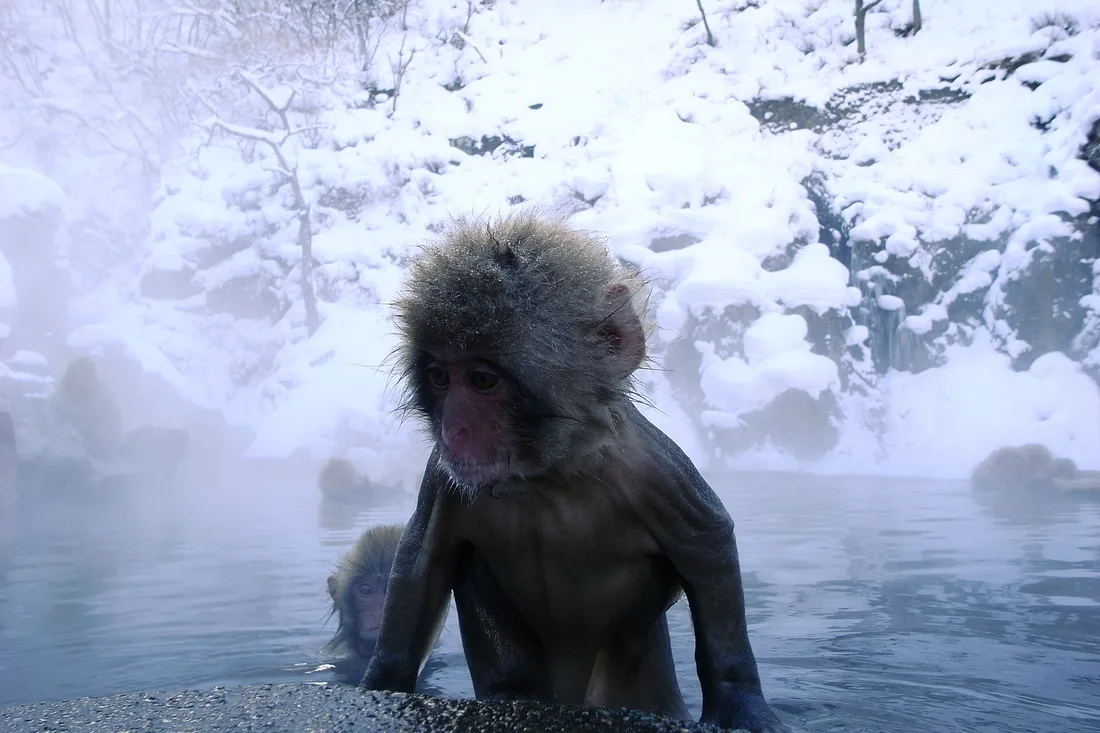
Snow monkeyMacaques bathing in the hot spring at Jigokudani
The rainy season runs 7 Jun – 19 Jul in an average year. Typhoons come closest from July to September.
Figures for Nagano city; Matsumoto and the high valleys run colder at night. Weather: JMA normals 1991–2020, Nagano.
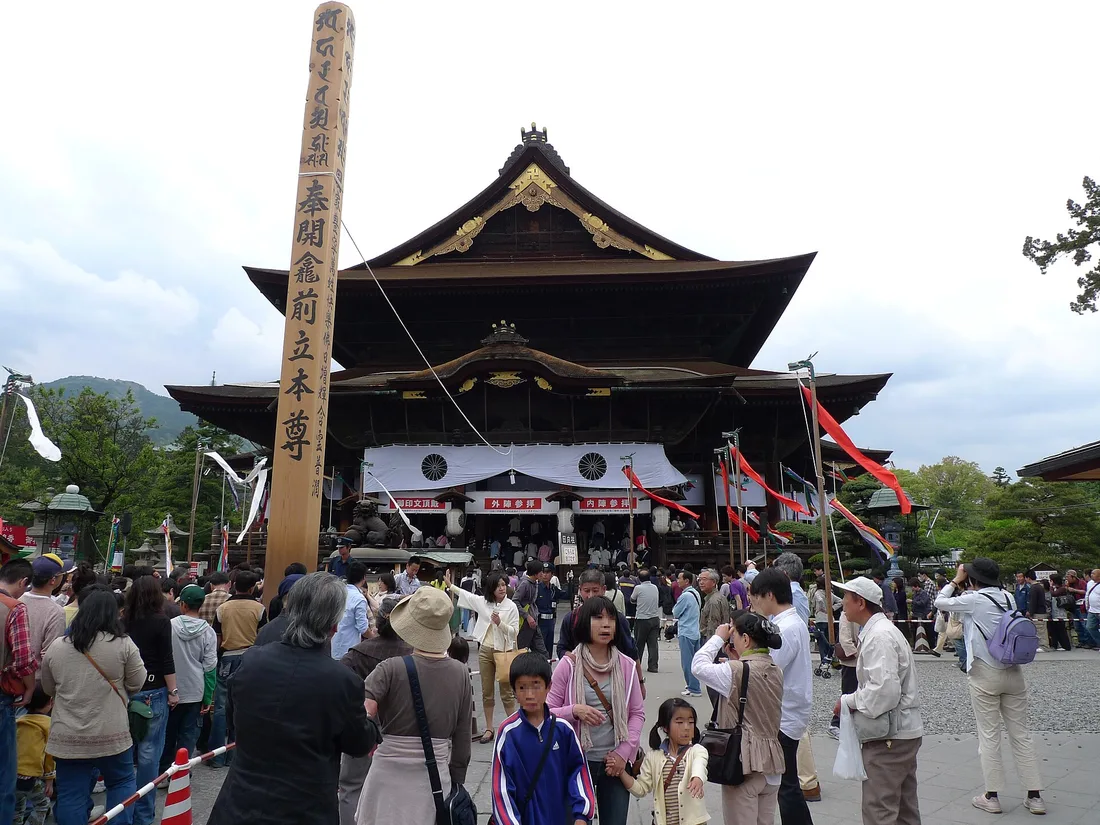
642 By temple tradition, Zenko-ji was moved to its present site in the first year of Empress Kogyoku’s reign, and the town of Nagano grew up around its gate.
1553–1564 Takeda Shingen and Uesugi Kenshin fought five battles at Kawanakajima, south of today’s Nagano city; the fourth, in 1561, was the bloodiest.
1593–1594 The five-tier keep of Matsumoto Castle was built under Ishikawa Kazumasa and his son; it is one of twelve original castle keeps left in Japan.
1601–1602 The Tokugawa government organised the Nakasendo road; eleven post towns, among them Narai and Tsumago, lined its route through the Kiso valley.
Meiji and Taisho eras Silk mills round Lake Suwa made Okaya a centre of Japan’s raw-silk exports.
1998 Nagano hosted the Winter Olympics from 7 to 22 February, with alpine races at Hakuba and Shiga Kogen.
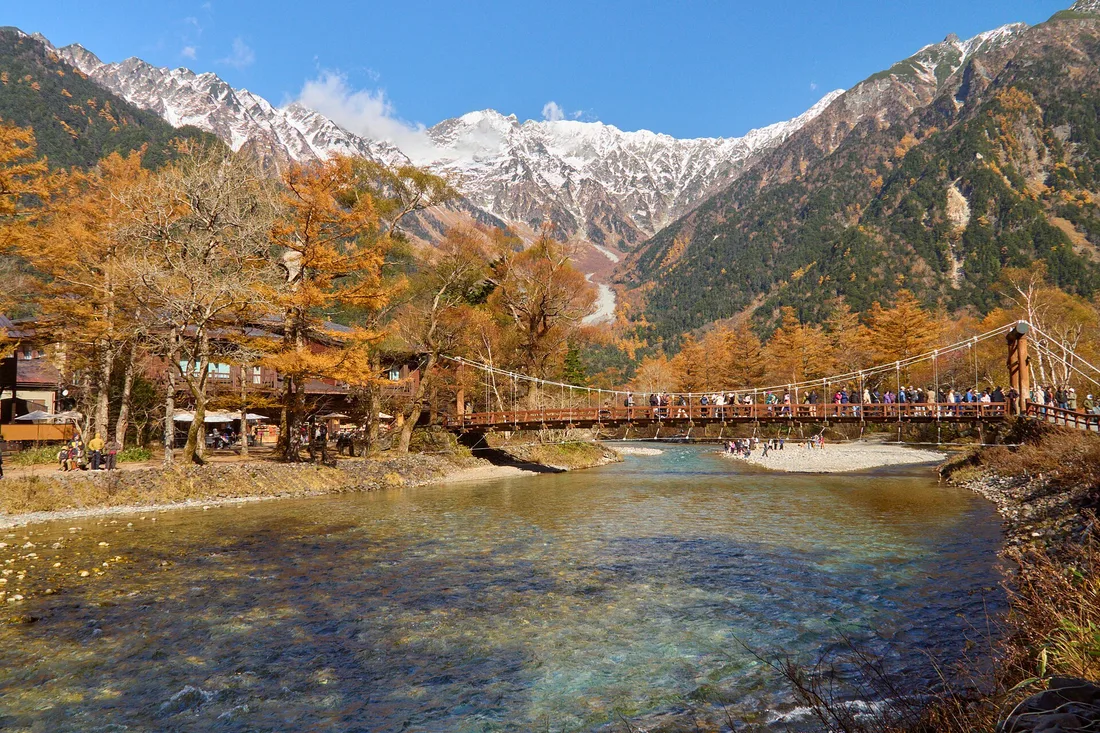
A flat mountain valley along the clear Azusa River, walled in by the Hotaka peaks. In late October the larches turn gold around Kappa Bridge and the bus terminal, sometimes under fresh snow on the summits. Only buses and taxis may drive in.
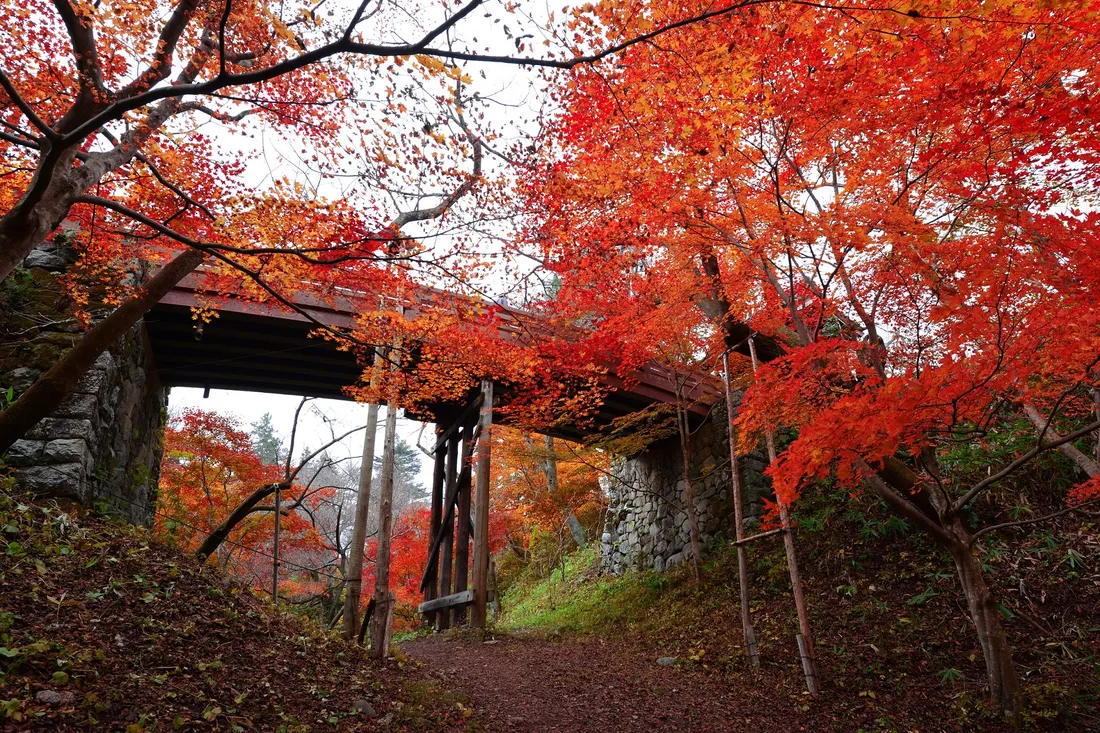
In April the castle park fills with 1,500 Takato-kohigan cherries, a variety that grows only here, whose flowers are smaller and markedly pinker than the usual Somei-yoshino. In autumn about 250 maples colour the park once the cherries have dropped their leaves.
Japanese macaques come down from the forest to a hot pool in a steep valley at 850 m, and on cold days some sit in it while snow settles on their fur. They are wild, so on some days none turn up.
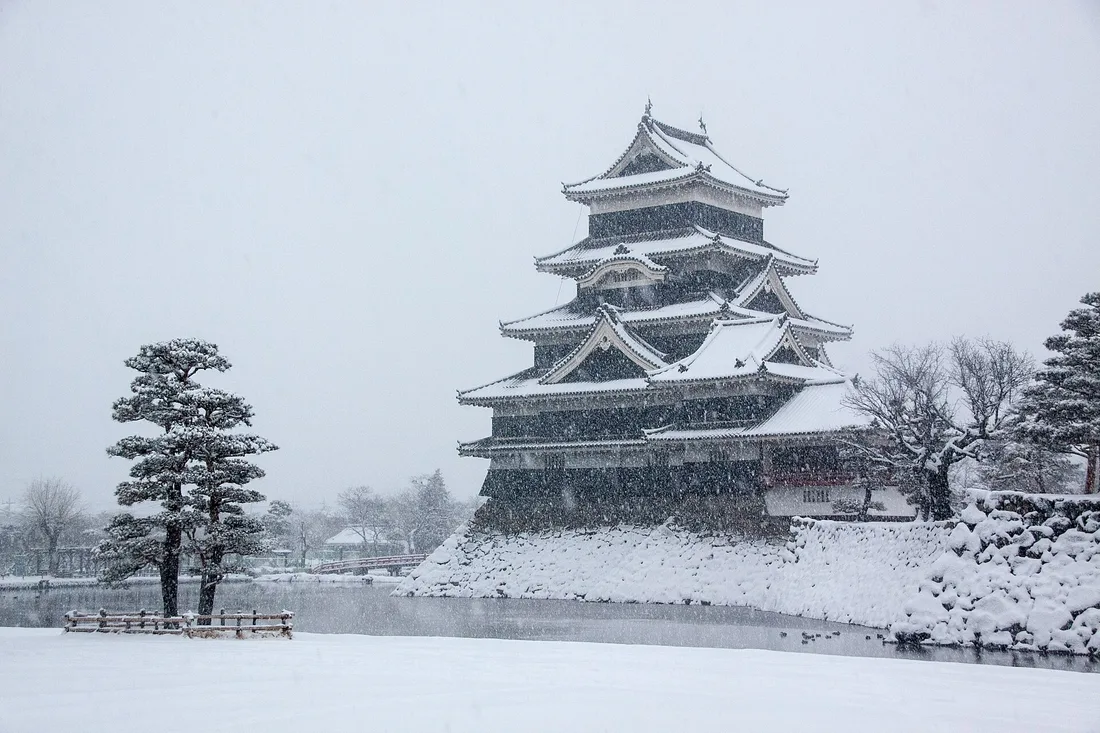
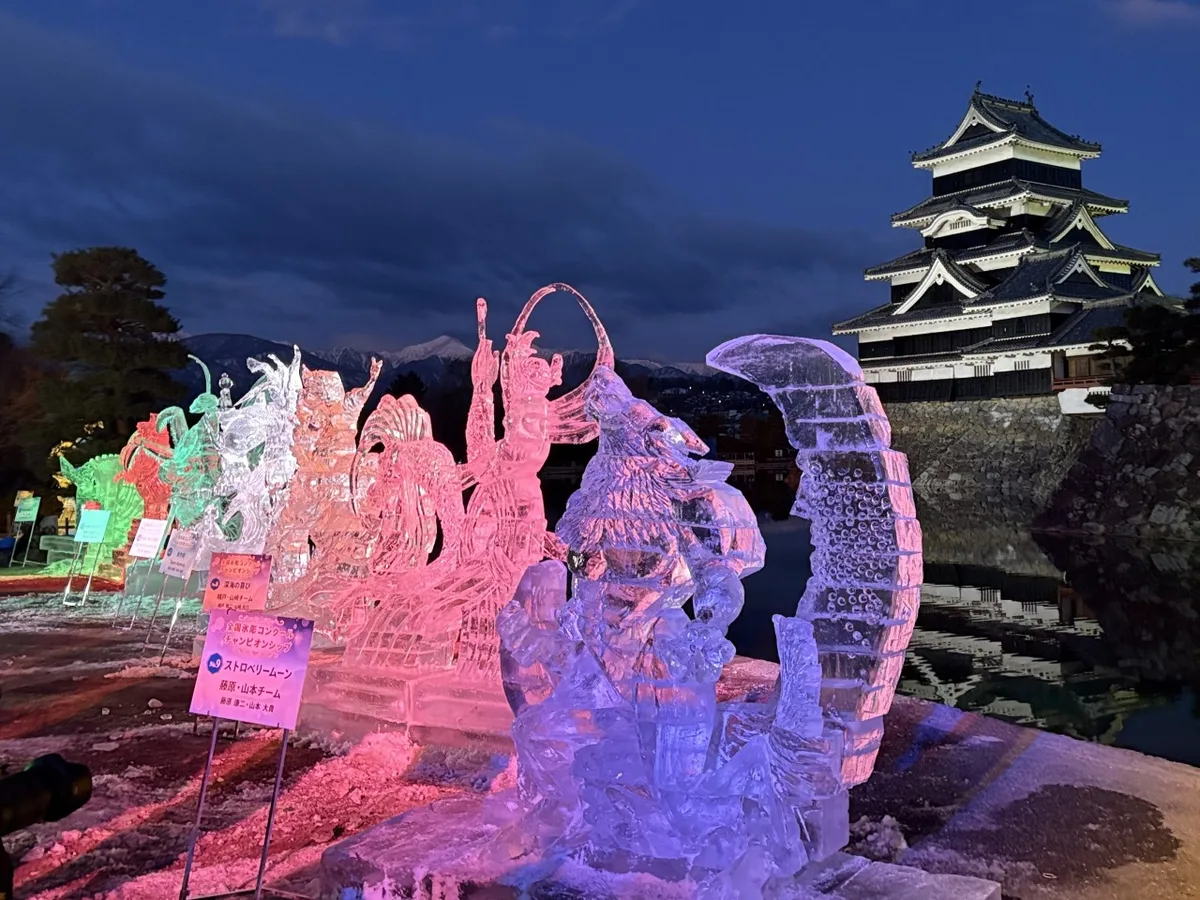
The black keep of Matsumoto Castle, one of five castles whose original keeps are National Treasures, stands over its moat with the Northern Alps behind it. Inside you climb steep wooden stairs to the sixth floor. In early April cherry trees bloom round the inner moat and are lit at night; after a winter snowfall the roofs turn white against the black walls.
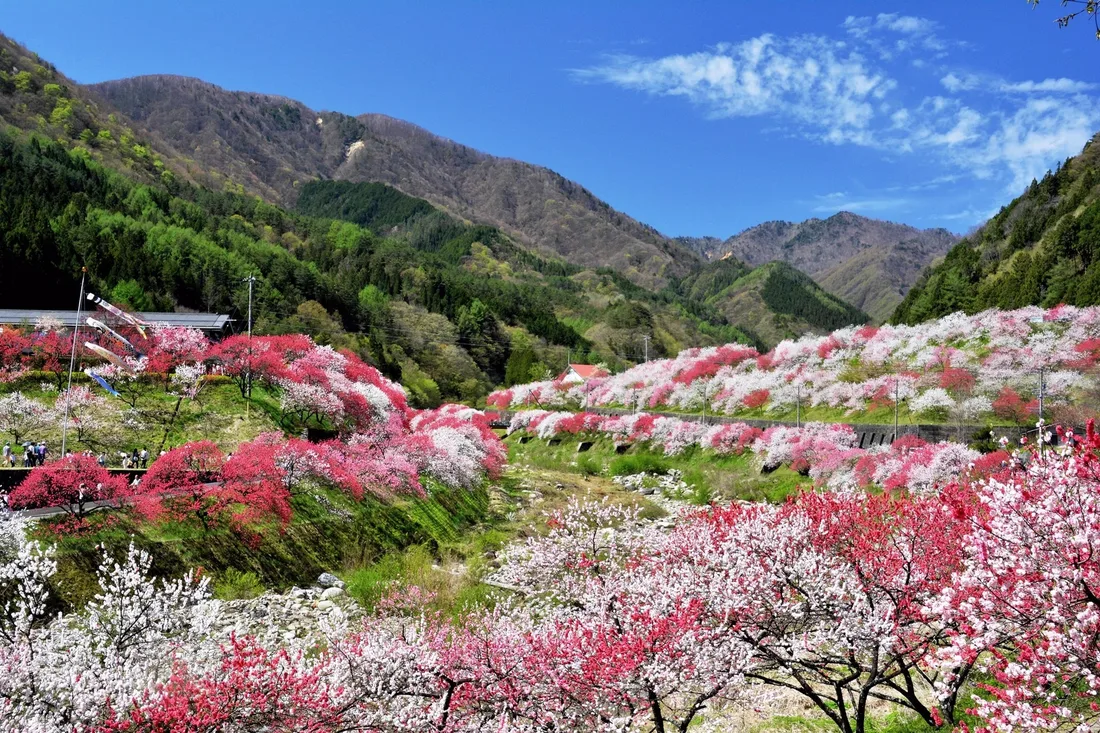
About 5,000 flowering peach trees in red, white and pink line four kilometres of road through a mountain valley, around the inns of Tsukikawa Onsen. The bloom comes in the second half of April, when a festival brings stalls of local produce to the valley.
Photo · Achi Hirugami Tourism Bureau · Press photo
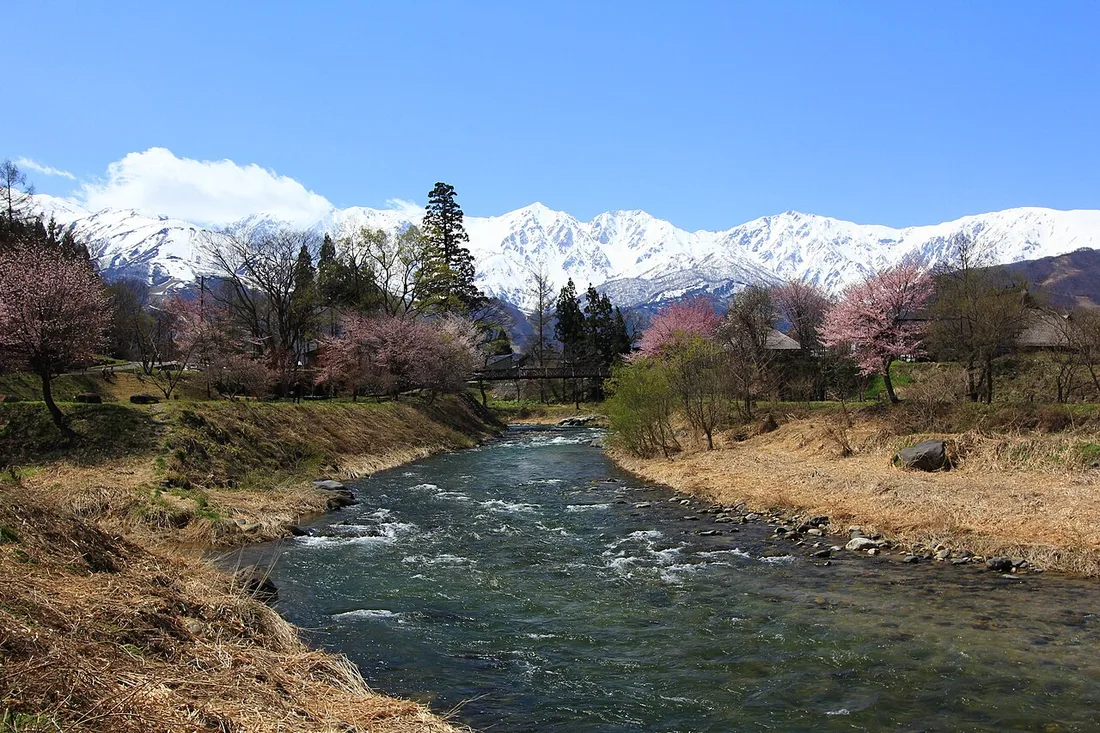
A steel suspension bridge crosses the clear Himekawa river beside thatched farmhouses, with the Hakuba peaks behind. From late April to early May the cherry trees on the banks flower while the mountains are still white. In winter snow covers the banks and roofs.
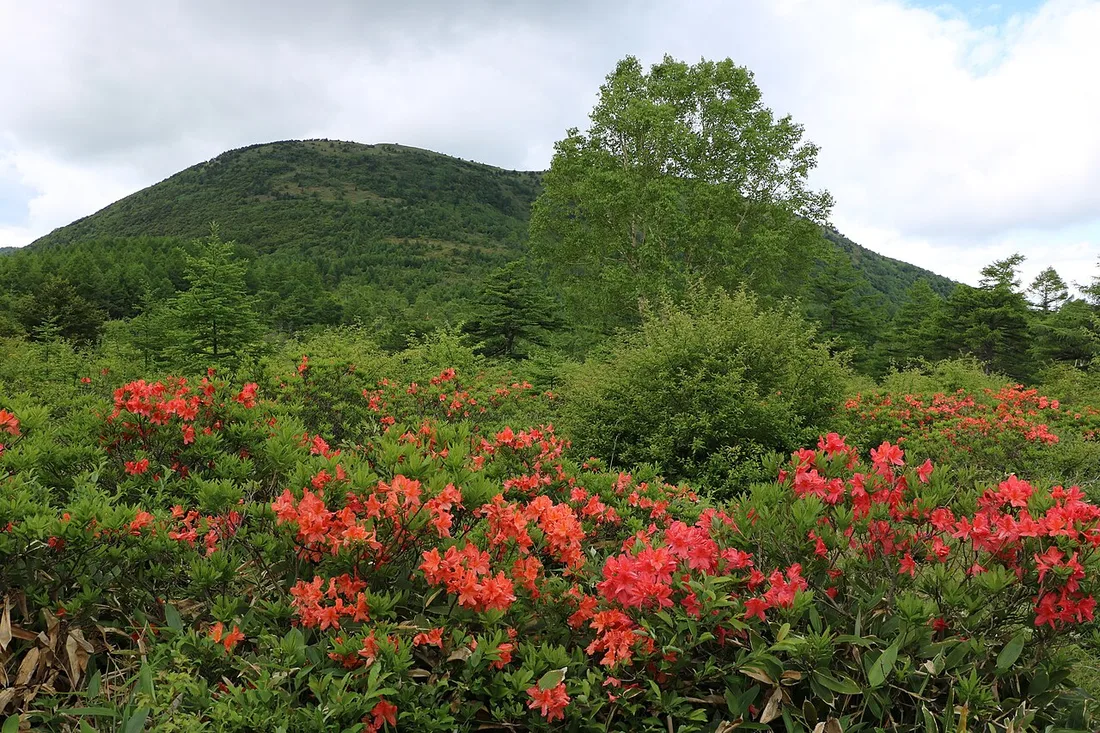
Some 600,000 rengetsutsuji azaleas spread over 174 hectares of open highland below the rounded top of Mount Yunomaru, turning it vermilion in June. Cattle graze among the flowers in early summer. A summer chairlift climbs to Tsutsujidaira, the highest stretch of the colony.