The Kigo季語 Gifu Prefecture · 岐阜県

In season

Coming up

Try

    Arrow keys to move · Enter to open · Esc to close

    Favourites EN日本語

    Gifu 岐阜県

    A mountain prefecture in the centre of Honshu, from the merchant streets and float festivals of Takayama to the thatched farmhouses of Shirakawa-go. Cormorant fishing on the Nagara River and the swordsmiths of Seki tie the present to a long working past.

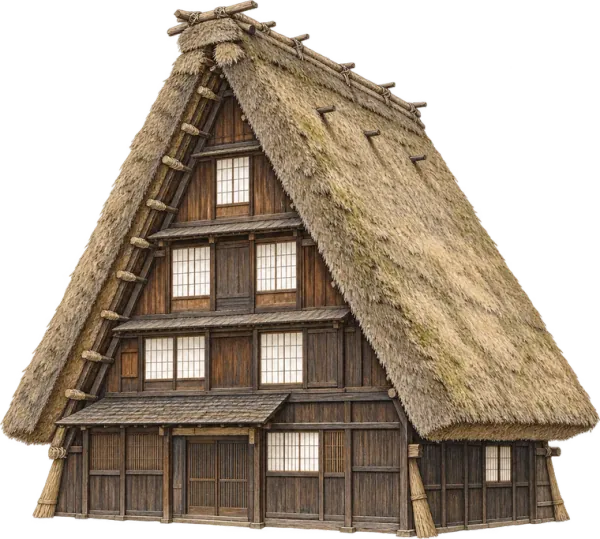
    Gassho-zukuri farmhouse
    Gassho-zukuri farmhouseThe steep thatched houses of Shirakawa-go, built for deep snow
    Created by Geolonia (https://geolonia.com/).

    When to go

    1. NOV 2026 18°8° 7 2
    2. DEC 12°3° 8 1 New Year holidays
    3. JAN 2027 9°1° 8 3 New Year holidays
    4. FEB 10°1° 8 3
    5. MAR 14°4° 9 2
    6. APR 20°9° 10 1 Golden Week
    7. MAY 25°15° 10 2 Golden Week
    8. JUN 28°19° 11 1 Rainy season
    9. JUL 32°24° 13 2 Rainy seasonTyphoons
    10. AUG 33°25° 10 3 TyphoonsObon
    11. SEP 29°21° 11 2 Typhoons
    12. OCT 24°15° 9 2

    Day and night, average Days with rain Dated events, tap a month Seasons on, named in the calendar below

    The rainy season runs 6 Jun – 19 Jul in an average year. Typhoons come closest from July to September. Figures for Gifu city; Takayama and Shirakawa-go are much colder and snowy in winter. Weather: JMA normals 1991–2020, Gifu.

    Seasonal calendar

    JANFEBMARAPRMAYJUNJULAUGSEPOCTNOVDEC
    Autumn foliage 01 OCT – 29 NOV
    Cherry blossom 28 MAR – 12 APR

    Meibutsu & craft

    • Meibutsu & craft · Gifu

      Sarubobo さるぼぼ

      In the Hida dialect sarubobo means “baby monkey”; mothers made these faceless red dolls for their daughters as charms for a good marriage, safe childbirth and healthy children.

    • Meibutsu & craft · Gifu

      Mino washi 美濃和紙

      みのわし

      Paper made in Mino province survives in the Shosoin as the 702 family register paper, and the city’s Hon-minoshi was inscribed by UNESCO in 2014 as part of “Washi”.

    • Meibutsu & craft · Gifu

      Mino ware 美濃焼

      みのやき

      Made in Tajimi, Mizunami, Ena, Toki, Kani and Mitake, and designated a national traditional craft on 22 July 1978; the makers’ cooperative says the area produces over half of Japan’s ceramics.

    • Meibutsu & craft · Gifu

      Gifu lanterns 岐阜提灯

      ぎふちょうちん

      Thin Mino paper is stretched over fine bamboo ribs and painted with autumn grasses and landscapes, a craft of more than 300 years designated in 1995.

    • Meibutsu & craft · Gifu

      Hida shunkei lacquerware 飛騨春慶

      ひだしゅんけい

      Clear lacquer lets the wood grain show; Takayama tradition dates it to the Keicho era (1596–1615), and it became Gifu’s first national traditional craft on 17 February 1975.

    Food

    • Food · Gifu

      Hoba miso 朴葉味噌

      ほおばみそ

      Home-made koji miso grilled on a dried magnolia leaf over charcoal, said to have begun with forestry workers in Hida and Takayama.

    • Food · Gifu

      Hida beef 飛騨牛

      ひだぎゅう

      Japanese Black cattle raised longest in Gifu, fattened there for at least 14 months and graded 3 or higher for meat quality; a registered Geographical Indication since 31 January 2023.

    • Food · Gifu

      Takayama mitarashi dango みたらし団子

      みたらしだんご

      Elsewhere the glaze is sweetened; Takayama grills its rice dumplings with plain unsweetened soy sauce, and locals say mi-da-rashi.

    • Food · Gifu

      Nakatsugawa kuri-kinton 栗きんとん

      くりきんとん

      Steamed chestnut and a little sugar squeezed in a cloth into a chestnut shape; Nakatsugawa, a Nakasendo post town, is called its birthplace, and it is sold from September into winter.

    • Food · Gifu

      Nagara River ayu 長良川の鮎

      ながらがわのあゆ

      The river, the ayu and the people who fish them in Gifu, Seki, Mino and Gujo were recognised by FAO as a Globally Important Agricultural Heritage System on 15 December 2015; ayu season runs summer to autumn.

    History through time

    1567
    Oda Nobunaga took Inabayama Castle from Saito Tatsuoki and renamed the town of Inokuchi as Gifu.

    1600
    On 21 October, by today’s calendar, Tokugawa Ieyasu’s Eastern army defeated the Western army at Sekigahara.

    1995
    The gassho-zukuri villages of Shirakawa-go and Gokayama were inscribed as a UNESCO World Heritage Site.

    2014
    Hon-minoshi paper from Mino joined the UNESCO intangible heritage list as part of “Washi, craftsmanship of traditional Japanese hand-made paper”.

    2015
    The cormorant fishing techniques of the Nagara River became the first fishing technique designated an Important Intangible Folk Cultural Property, on 2 March.

    2016
    The float festivals of Takayama, Furukawa and Ogaki were inscribed by UNESCO among Japan’s 33 “Yama, Hoko, Yatai” festivals.

    Best places through the year

    PlaceWhy

    Autumn · Autumn foliage

    Shirakawa-go

    白川郷 荻町集落

    25 DEC – 05 MAR · Nature · Snow

    Snow — Shirakawa-go白川郷 荻町集落

    GifuShirakawa · 100 km from Gifu

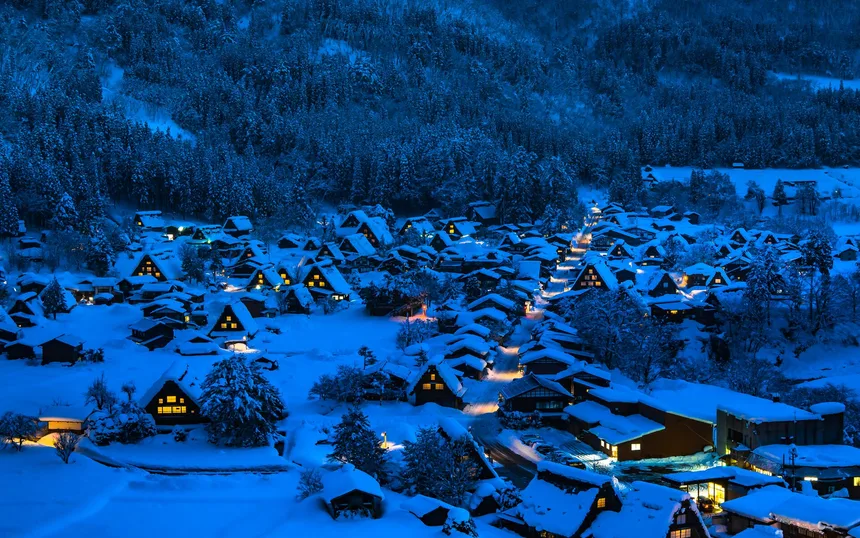
    Thatched gassho houses glowing with light in the deep snow at dusk, seen from the lookout above
    Three snow-laden gassho farmhouses lit up at dusk during the winter light-up, cedars behind
    Steep thatched roofs under thick white snow in bright daylight, seen from the Shiroyama lookout
    The snowbound village at nightfall with lit windows and a glowing lane running through it
    Snow on the riverbank and the bridge into Shirakawa-go
    This place in other seasons · 3
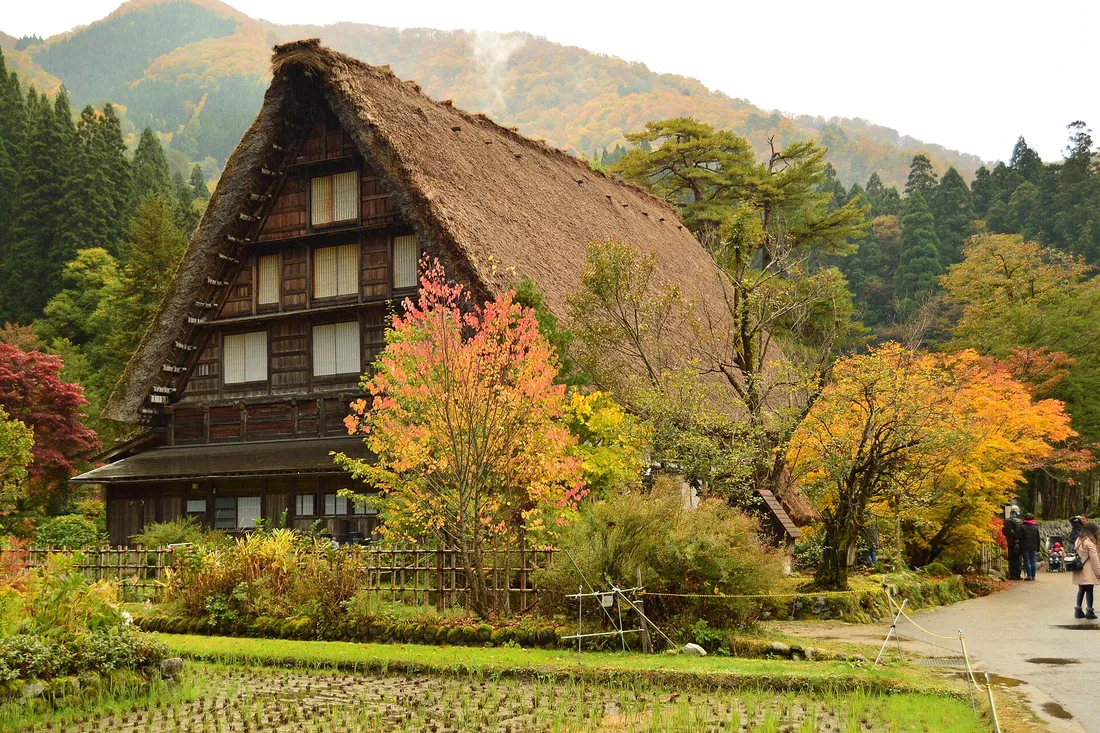
    • A thatched gassho house among autumn trees in Shirakawa-go
    • Ogimachi village and its rice fields from the lookout, with red and gold slopes rising behind
    • A large thatched gassho house in Shirakawa-go with a hillside of red, orange and gold trees behind

    Thatched gassho-zukuri farmhouses stand among rice fields in a mountain valley where nearly 500 people still live. The slopes turn red and gold from late October; in January and February the roofs carry deep snow. The Ogimachi lookout above gives the classic view.

    Dates
    25 DEC – 05 MARWinter to spring
    Where
    GifuGoogle Maps
    Open
    Village open by day, free · Seseragi Park car park 8:00–17:00, last entry 16:30, ¥2,000 per car · light-up evenings 17:30–19:30, booking only (2027: 11, 17, 24, 31 Jan)Official hours ↗
    Survive
    Heavy. People live here: there are no bins, smoking only at three set spots, no drones, and no visiting after dark unless you stay the night. In the colour weeks tour buses take much of the car park, so come early. The 2027 light-up evenings are fully pre-booked, and without a ticket you cannot enter the village after 15:30 on those days.
    Holidays
    New Year's Day · Fri 1 JanComing of Age Day · Mon 11 JanNational Foundation Day · Thu 11 FebLong weekend: expect full trains and hotels
    1 more holidayEmperor's Birthday · Tue 23 Feb
    Access
    Express bus to Shirakawa-go Bus Terminal from Kanazawa Stn, about 1 h 20 min, or from Takayama, about 50 min; some Takayama buses take reserved seats only. Drivers park at Seseragi Park across the river and walk in over the Deai bridge.
    Heritage
    World Heritage · Historic Villages of Shirakawa-go and Gokayama, 1995 白川郷・五箇山の合掌造り集落 世界遺産
    Source
    Official siteSnow page · checked 2026-10-15
    Photos
    8 photos · credits
    1. Jordy Meow · CC BY-SA 3.0
    2. digi0712 · CC BY-SA 2.0
    3. Takashi Hososhima · CC BY-SA 2.0
    4. tsuda · CC BY-SA 2.0
    5. 雷太 · CC BY 2.0
    6. Miguel Romay · CC BY 2.0
    7. Alpsdake · CC BY-SA 4.0
    8. Ray Swi-hymn · CC BY-SA 2.0

    Background

    Ogimachi was selected as a national preservation district in 1976 and inscribed as a World Heritage Site with Gokayama in 1995. Villagers keep a rule of “do not sell, rent or pull down” and still rethatch roofs together, a custom called yui.

    Shirakawa · 100 km from Gifu

    2–3 h · Open in Google Maps

    Thatched gassho-zukuri farmhouses stand among rice fields in a mountain valley where nearly 500 people still live. The slopes turn red and gold from late October; in January and February the roofs carry deep snow. The Ogimachi lookout above gives the classic view.

    World Heritage · Historic Villages of Shirakawa-go and Gokayama, 1995

    A thatched gassho house among autumn trees in Shirakawa-go

    Photo · Miguel Romay · CC BY 2.0

    Autumn · Autumn foliage

    Shinhotaka Ropeway

    新穂高ロープウェイ

    01 DEC – 31 MAR · Nature · Snow

    Snow — Shinhotaka Ropeway新穂高ロープウェイ

    GifuTakayama · 130 km from Gifu

    Visitors on the snowy rooftop deck at Nishihotaka-guchi Station facing Mount Nishihotaka
    Snow-laden firs below Mount Nishihotaka, walkers on the trail from the top station
    This place in other seasons · 2
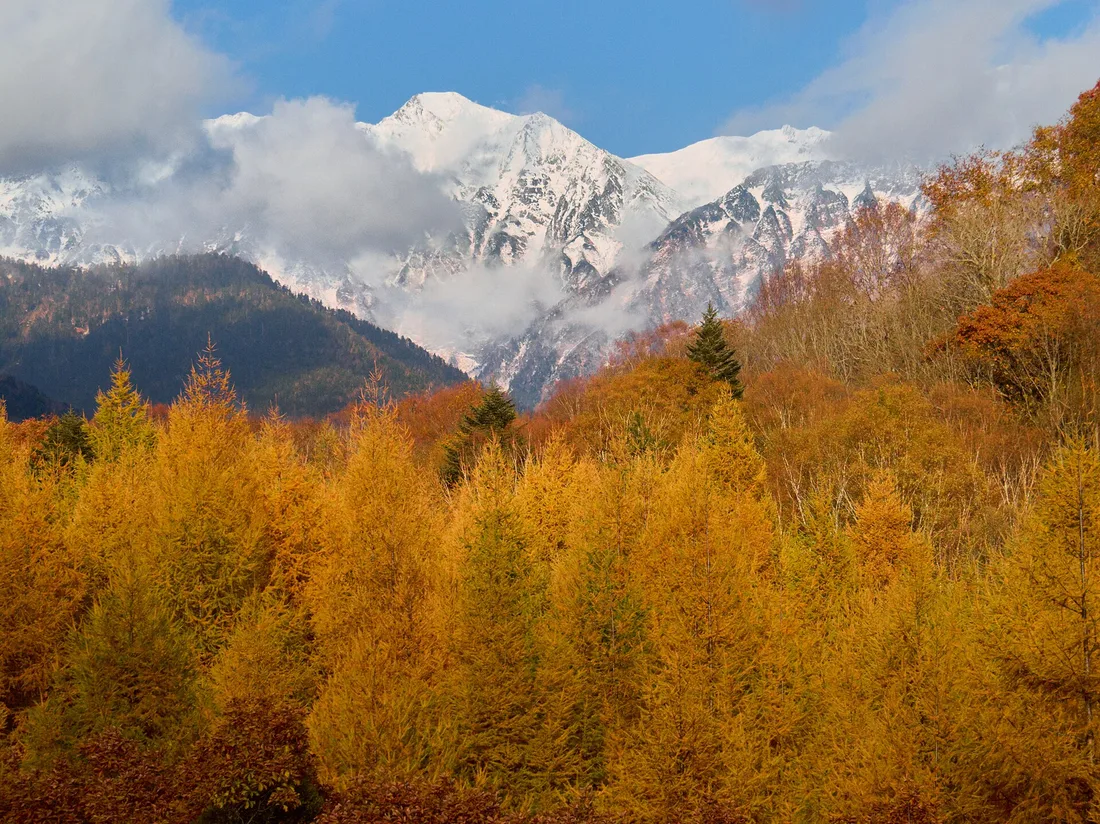
    • Gold larch forest below snow-dusted Northern Alps peaks in Okuhida, the valley below Shinhotaka
    • Gold larch and dark firs in an Okuhida valley below snowy peaks

    Two cable cars climb to Nishihotaka-guchi Station at 2,156 m, facing the Hotaka peaks. In mid-October the larch below turns gold under the first snow on the summits; in winter the rooftop deck looks out over a white range and snow-laden firs.

    Dates
    01 DEC – 31 MARWinter to spring
    Where
    GifuGoogle Maps
    Open
    Year-round · 1st ropeway every :00 and :30, 2nd every :15 and :45 · round trip ¥700 (1st) + ¥3,700 (2nd)Official hours ↗
    Survive
    Medium. On clear October weekends the second ropeway queues; take an early car. In winter dress for well below freezing at the top. Cars stop in bad weather and for inspections.
    Holidays
    New Year's Day · Fri 1 JanComing of Age Day · Mon 11 JanVernal Equinox Day · Sun 21 MarLong weekend: expect full trains and hotels
    3 more holidaysNational Foundation Day · Thu 11 FebEmperor's Birthday · Tue 23 FebSubstitute holiday · Mon 22 Mar
    Access
    Nohi Bus from Takayama Nohi Bus Center to Shinhotaka Ropeway, about 1 h 45 min, ¥2,200; roughly one bus an hour, via Hirayu Onsen.
    Source
    Official siteSnow page · checked 2026-10-29
    Photos
    4 photos · credits
    1. 663highland · CC BY 2.5
    2. 663highland · CC BY 2.5
    3. lumoplank · CC0
    4. lumoplank · CC0

    Background

    The second ropeway runs double-decker gondolas. The lower station is at Shinhotaka Onsen, one of the five hot-spring villages of Okuhida Onsen.

    Takayama · 130 km from Gifu

    2–3 h · Open in Google Maps

    Two cable cars climb to Nishihotaka-guchi Station at 2,156 m, facing the Hotaka peaks. In mid-October the larch below turns gold under the first snow on the summits; in winter the rooftop deck looks out over a white range and snow-laden firs. Gold larch forest below snow-dusted Northern Alps peaks in Okuhida, the valley below Shinhotaka

    Photo · lumoplank · CC0

    Winter · Snow

    Takayama old town (Sanmachi)

    三町伝統的建造物群保存地区

    20 DEC – 28 FEB · Nature · Snow

    Snow — Takayama old town (Sanmachi)三町伝統的建造物群保存地区

    GifuTakayama · 95 km from Gifu

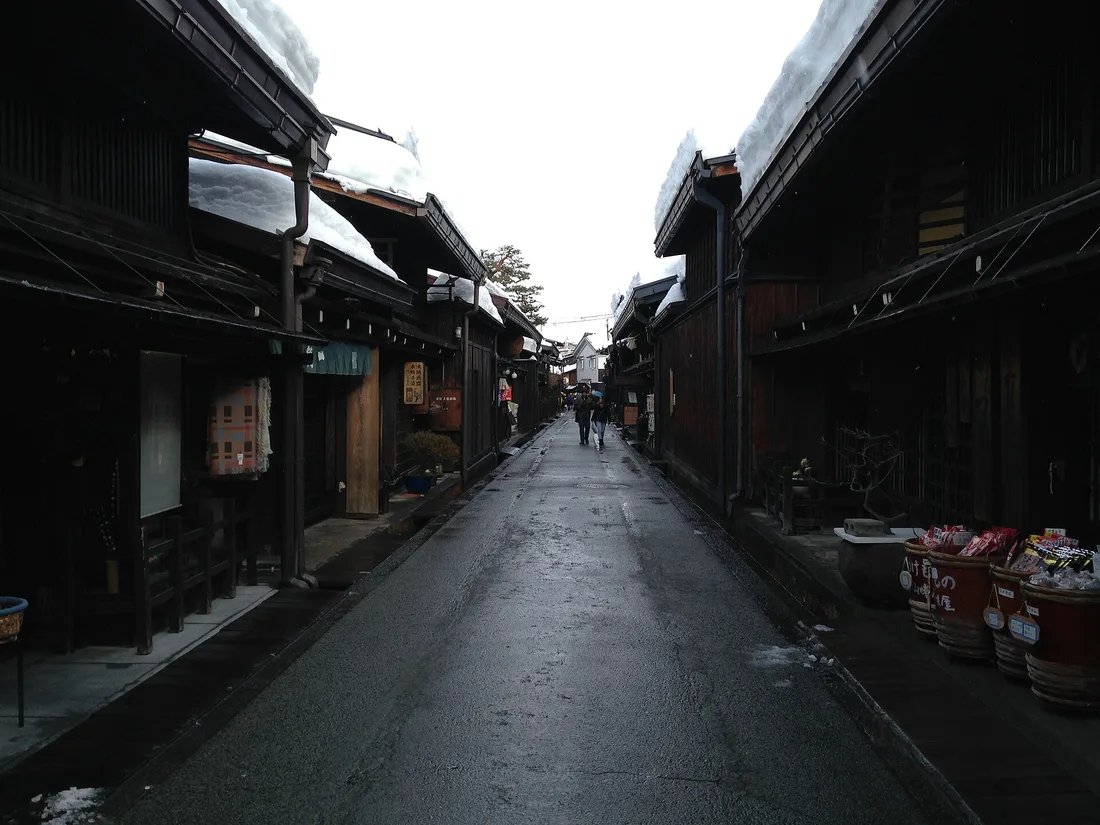
    A Sanmachi street of dark wooden merchant houses, snow heaped on the roofs on both sides
    Latticed townhouses in Sanmachi with snow on the eaves, the street wet and empty
    Snow-capped roofs along a Sanmachi street, rabbit carvings by a shop door
    A long straight Sanmachi street of wooden houses with snow on the eaves
    This place in other seasons · 3
    • The red Nakabashi Bridge over the Miya River, orange and yellow trees on the hill behind
    • Yanagi Bridge over the Miya River at dusk, red maples among the houses on the far bank
    • Stone steps up to Sakurayama Hachiman-gu in northern Takayama, red maples by the gate

    Three streets of dark latticed merchant houses and sake breweries, 12 minutes on foot from JR Takayama Station. In early November the trees by the red Nakabashi Bridge over the Miya River turn orange; after a snowfall the low roofs carry thick white caps.

    Dates
    20 DEC – 28 FEBWinter
    Where
    GifuGoogle Maps
    Open
    Streets open at all times · free
    Survive
    Medium. Tour groups fill Sanmachi from about 10:00; come early. Nakabashi Bridge is lit after dark during the autumn illumination (1 Oct to 30 Nov in 2025). In winter Takayama is very cold and the tourism office strongly recommends non-skid boots; the streets are kept clear, so the snow is mostly on the roofs.
    Holidays
    New Year's Day · Fri 1 JanComing of Age Day · Mon 11 JanNational Foundation Day · Thu 11 FebLong weekend: expect full trains and hotels
    1 more holidayEmperor's Birthday · Tue 23 Feb
    Access
    From JR Takayama Stn, 12 min on foot.
    Source
    Official siteSnow page · checked 2026-10-29
    Photos
    7 photos · credits
    1. そらみみ · CC BY-SA 4.0
    2. そらみみ · CC BY-SA 4.0
    3. そらみみ · CC BY-SA 4.0
    4. そらみみ · CC BY-SA 4.0
    5. lumoplank · CC0
    6. lumoplank · CC0
    7. lumoplank · CC0

    Background

    The Kamimachi streets were the merchant centre of Hida Takayama. Parts of Kamiichinomachi, Kamininomachi and Kamisannomachi were selected in 1979 as a national preservation district for groups of traditional buildings.

    Takayama · 95 km from Gifu

    1–2 h · Open in Google Maps

    Three streets of dark latticed merchant houses and sake breweries, 12 minutes on foot from JR Takayama Station. In early November the trees by the red Nakabashi Bridge over the Miya River turn orange; after a snowfall the low roofs carry thick white caps. A Sanmachi street of dark wooden merchant houses, snow heaped on the roofs on both sides

    Photo · そらみみ · CC BY-SA 4.0

    Winter · Skiing

    Takasu Snow Park

    高鷲スノーパーク

    11 DEC – 19 APR · Nature · Skiing

    Skiing — Takasu Snow Park高鷲スノーパーク

    GifuGujo · 70 km from Gifu

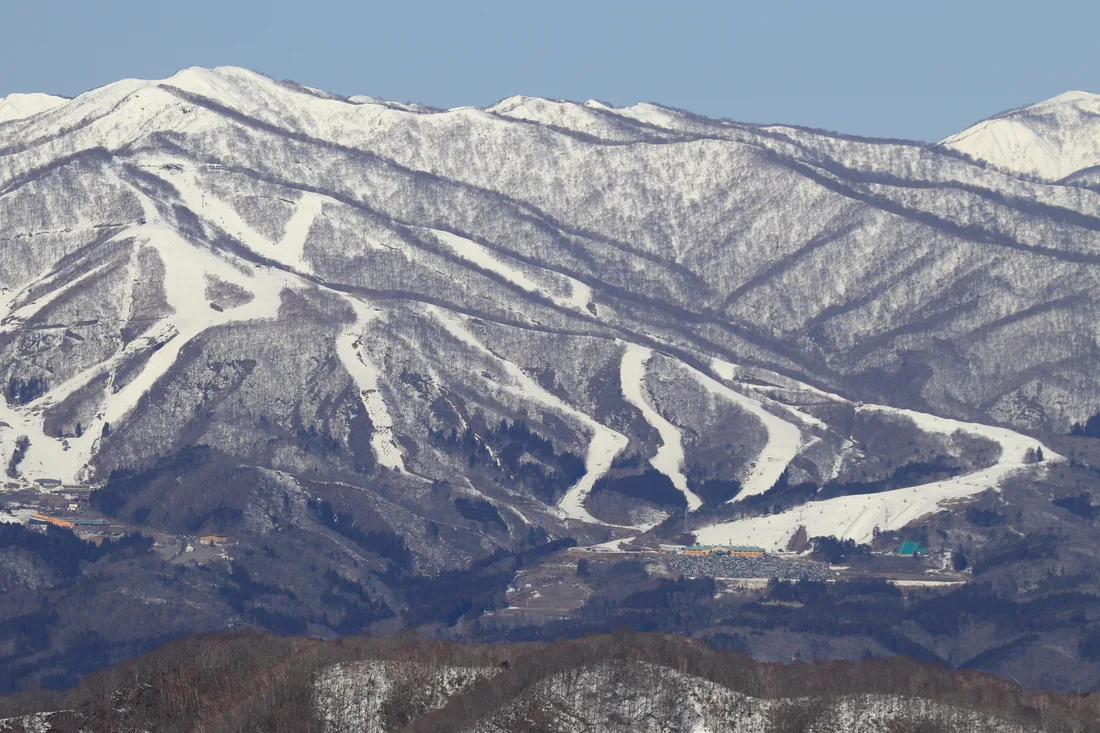
    The white runs of Takasu Snow Park winding down a snowy, wooded mountainside under a clear sky
    The gondola station at the top of Takasu Snow Park among bare beeches in deep spring snow

    One of the biggest ski areas in western Japan, linked at the top with neighbouring Dynaland. A gondola climbs to 1,550 m, and from there a 4,900 m run takes you to the bottom; the café at the top sometimes looks over a sea of cloud.

    Dates
    11 DEC – 19 APRWinter to spring
    Where
    GifuGoogle Maps
    Open
    8:00–16:30Official hours ↗
    Survive
    Heavy. Day pass 2026–27 ¥6,400, valid at Dynaland too, plus a ¥500 card deposit; 29 Dec–1 Jan is priced as a weekend. No night skiing at Takasu. Book buses early for New Year and 6 Feb 2027, Chinese New Year. English lessons are private only.
    Holidays
    New Year's Day · Fri 1 JanComing of Age Day · Mon 11 JanVernal Equinox Day · Sun 21 MarLong weekend: expect full trains and hotels
    3 more holidaysNational Foundation Day · Thu 11 FebEmperor's Birthday · Tue 23 FebSubstitute holiday · Mon 22 Mar
    Access
    From Nagoya, Gifu Bus highway buses reach Hirugano Kogen in about 1 h 40 min, where the free Takasu Snow Shuttle runs to the slopes; a direct bus to Hirugano Kogen Ski Resort takes about 2 h 29 min. Ski-tour buses run daily from Nagoya and Shin-Osaka, mid-December to late March. By car, 10 min from Takasu IC.
    Source
    Official siteSkiing page · checked 2026-11-08
    Photos
    2 photos · credits
    1. Alpsdake · CC BY-SA 4.0
    2. Alpsdake · CC BY-SA 4.0

    Background

    Takasu has 13 courses, from a beginners’ slope 120 m wide to a 40° pitch, and with Dynaland the two share 31. Mostly north-facing slopes and about 110 snow-making machines keep the snow late, usually into late April. In 2025–26 it drew the most skiers in western Japan for the ninth year running.

    Gujo · 70 km from Gifu

    1 day · Open in Google Maps

    One of the biggest ski areas in western Japan, linked at the top with neighbouring Dynaland. A gondola climbs to 1,550 m, and from there a 4,900 m run takes you to the bottom; the café at the top sometimes looks over a sea of cloud. The white runs of Takasu Snow Park winding down a snowy, wooded mountainside under a clear sky

    Photo · Alpsdake · CC BY-SA 4.0

    Spring · Cherry blossom

    Usuzumi-zakura, Neodani

    根尾谷淡墨ザクラ

    28 MAR – 12 APR · Nature · Cherry blossom

    Cherry blossom — Usuzumi-zakura, Neodani根尾谷淡墨ザクラ

    GifuMotosu · 30 km from Gifu

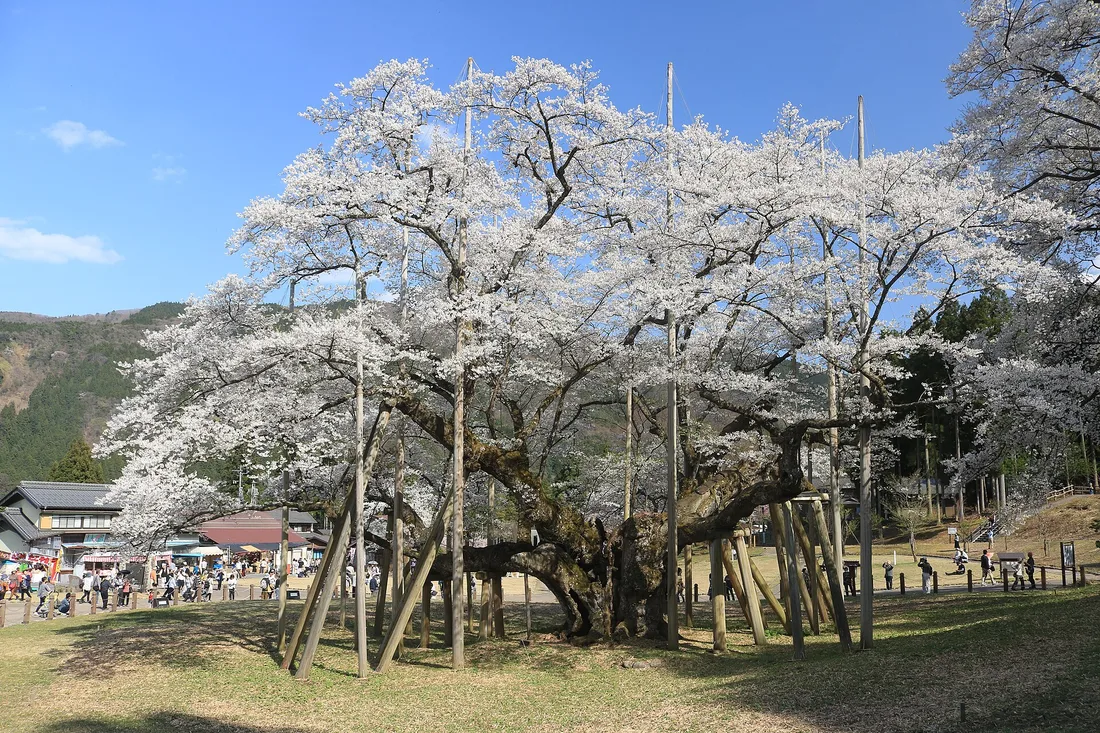
    Usuzumi-zakura in full white bloom on its wooden props, crowds and stalls beyond
    Usuzumi Park in full bloom seen from above, the old tree among younger cherries
    The crown of Usuzumi-zakura in full bloom, held up by dozens of poles
    Usuzumi-zakura at dusk, the blossom a soft grey-pink against the cedar forest
    Close view of Usuzumi-zakura flowers, white with a few new leaves

    A single Edo-higan cherry said to be over 1,500 years old spreads on wooden props in Usuzumi Park. Its buds open pale pink, turn white at full bloom and take an ink-grey tint as they fall; the tree is lit after dark.

    Dates
    28 MAR – 12 APRSpring
    Where
    GifuGoogle Maps
    Open
    Park open at all times · free · light-up 18:40–21:00 in seasonOfficial hours ↗
    Survive
    Heavy. Roads into the valley jam on bloom weekends; the temporary car park has about 700 spaces and is open 24 hours. Come at dawn or for the light-up, 18:40–21:00 (13 Mar to 19 Apr in 2026).
    Access
    Tarumi Railway from JR Ogaki to Tarumi Stn, about 1 h, then 15 min on foot.
    Heritage
    Natural Monument · Neodani Usuzumi-zakura, 1922 根尾谷淡墨ザクラ
    Source
    Official siteCherry blossom page · checked 2026-10-29
    Photos
    5 photos · credits
    1. Alpsdake · CC BY-SA 4.0
    2. Alpsdake · CC BY-SA 4.0
    3. Alfas.Humangazer · CC BY-SA 3.0
    4. 先従隗始 · CC0
    5. Alpsdake · CC BY-SA 4.0

    Background

    Legend says Emperor Keitai planted it while living in the Neo valley. It was designated a Natural Monument in 1922.

    Motosu · 30 km from Gifu

    1 h · Open in Google Maps

    A single Edo-higan cherry said to be over 1,500 years old spreads on wooden props in Usuzumi Park. Its buds open pale pink, turn white at full bloom and take an ink-grey tint as they fall; the tree is lit after dark.

    Natural Monument · Neodani Usuzumi-zakura, 1922

    Usuzumi-zakura in full white bloom on its wooden props, crowds and stalls beyond

    Photo · Alpsdake · CC BY-SA 4.0

    Spring · Roses

    Gifu World Rose Garden

    ぎふワールド・ローズガーデン

    10 MAY – 07 JUN · Nature · Roses

    Roses — Gifu World Rose Gardenぎふワールド・ローズガーデン

    GifuKani · 35 km from Gifu

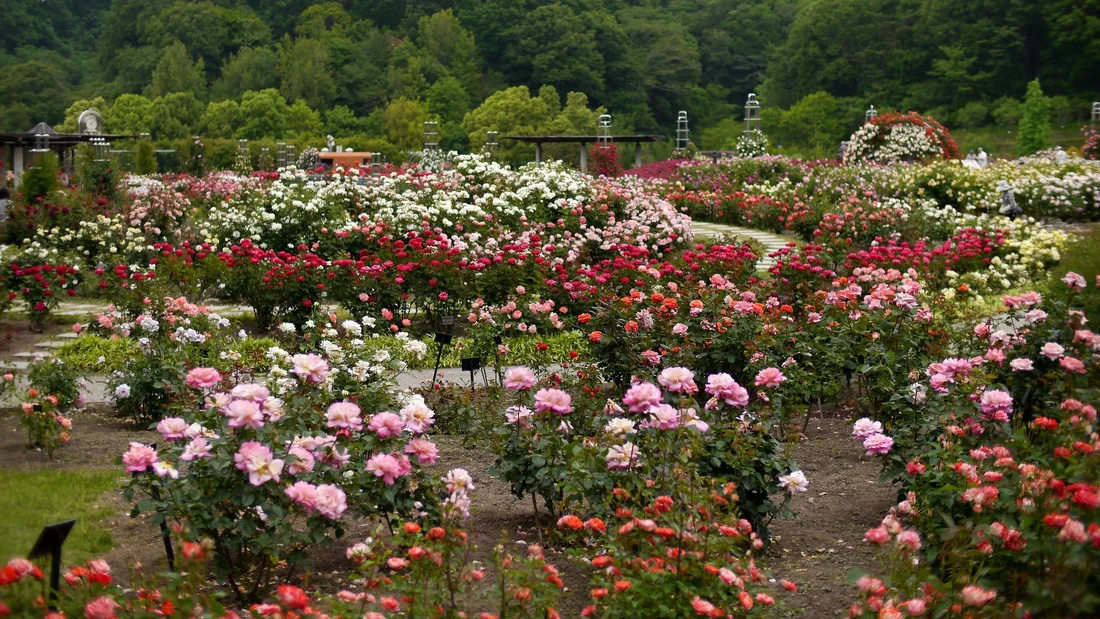
    Beds of pink, red and white roses in full bloom across the rose garden, with wooded hills behind
    Wide view over the curving rose beds and paths of the formal garden under a blue sky
    Crimson climbing roses on a brick wall behind a small fountain in the English rose garden

    A prefectural park of 80.7 ha that grows 6,000 varieties and 20,000 rose bushes, from wild species and old roses to the newest ones; the park calls it the largest collection of varieties in Japan. The Welcome Garden sets about 5,500 bushes of 17 varieties on one long slope, and a tunnel of climbing roses runs for some 323 m along the Rose Terrace. In 2026 the Spring Rose Festival ran from 9 May to 7 June and the autumn one from 17 October to 15 November.

    Dates
    10 MAY – 07 JUNSpring to summer
    Where
    GifuGoogle Maps
    Open
    9:00–17:00, last entry 16:30 (9:30–16:30 from 18 Nov to 31 Mar) · closed Tue (next weekday if a holiday) and 29 Dec – 3 Jan · ¥1,500 on 9–31 May, ¥1,050 on 1–7 Jun and ¥1,000 on 17 Oct – 15 Nov in 2026; high school age and under freeOfficial hours ↗
    Survive
    Heavy. The fee follows the flowers: ¥1,500 in the main weeks of the 2026 spring festival, ¥1,000 in the autumn one, ¥800 in summer. Every rose in the park flowers together only in spring; in autumn only the repeat-flowering varieties bloom, fewer but deeper in colour and scent. Closed on Tuesdays. No pets.
    Access
    JR Kani Stn or Meitetsu Shin-Kani Stn, then the Satsuki Bus (¥200, Monday to Saturday only) or a taxi, 12 min and about ¥2,000. On Sundays and holidays there is no bus: take the taxi, or walk 25 min (about 2 km) from Meitetsu Akechi Stn. By car 5 min from Kani-Mitake IC; parking is free.
    Source
    Official siteRoses page · checked 2026-11-11
    Photos
    3 photos · credits
    1. T.Kiya · CC BY-SA 2.0

    2. Hamachidori · CC BY-SA 3.0
    3. T.Kiya · CC BY-SA 2.0
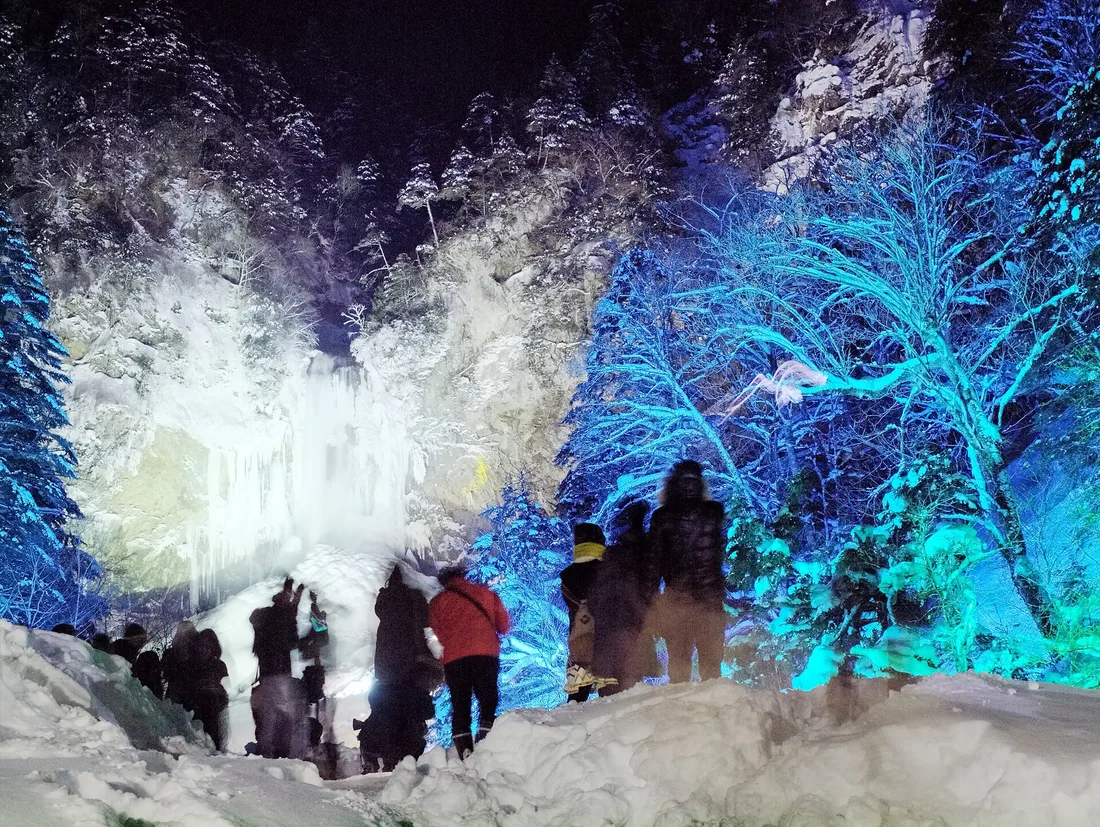
    Background

    The grounds held the Hana Festa ’95 Gifu flower expo in 1995 and reopened as a prefectural park in April 1996. The park was called Hana Festa Memorial Park until 9 October 2021, when the rose went into its name.

    Kani · 35 km from Gifu

    2–3 h · Open in Google Maps

    A prefectural park of 80.7 ha that grows 6,000 varieties and 20,000 rose bushes, from wild species and old roses to the newest ones; the park calls it the largest collection of varieties in Japan. The Welcome Garden sets about 5,500 bushes of 17 varieties on one long slope, and a tunnel of climbing roses runs for some 323 m along the Rose Terrace. In 2026 the Spring Rose Festival ran from 9 May to 7 June and the autumn one from 17 October to 15 November. Beds of pink, red and white roses in full bloom across the rose garden, with wooded hills behind

    Photo · T.Kiya · CC BY-SA 2.0
    Summer · Sweetfish

    Gujo Hachiman Yana

    郡上八幡やな

    01 JUL – 31 OCT · Nature · Sweetfish

    Sweetfish — Gujo Hachiman Yana郡上八幡やな

    GifuGujo · 45 km from Gifu

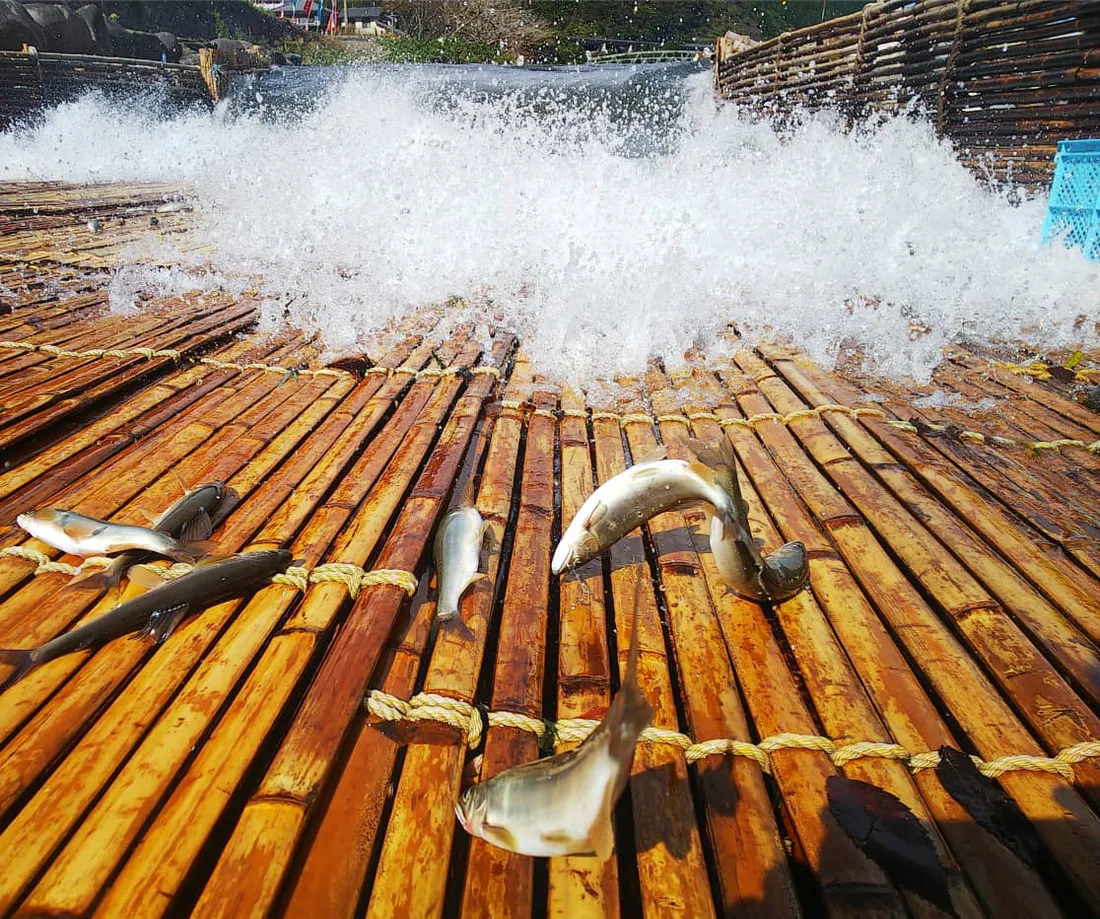
    Ayu flipping on the wet bamboo slats of the weir as river water crashes over

    A riverside restaurant on the Nagara River at Gujo Hachiman that serves wild Gujo ayu. Courses run from sweet-simmered and fried ayu to salt-grilled ayu, ayu dengaku with miso and ayu rice; from August the bamboo weir is set in the river beside you.

    Dates
    01 JUL – 31 OCTSummer to autumn
    Where
    GifuGoogle Maps
    Open
    Lunch 11:00–14:30, 1 Jul – 31 OctOfficial hours ↗
    Survive
    Medium. Ayu courses ¥4,500 (medium fish) and ¥6,000 (large), with ayu rice; from late September ayu rice porridge. Bookings only for 10 or more, about 10 days ahead, and none in August. The local tourist association lists Tuesdays as closed.
    Holidays
    Marine Day · Mon 19 JulRespect for the Aged Day · Mon 20 SepSports Day · Mon 11 OctLong weekend: expect full trains and hotels
    2 more holidaysMountain Day · Wed 11 AugAutumnal Equinox Day · Thu 23 Sep
    Access
    Nagaragawa Railway to Gujo-Hachiman Stn, then about 3 min by taxi or 20 min on foot. About 5 min by car from Gujo-Hachiman IC.
    Source
    Official siteSweetfish page · checked 2026-11-09
    Photos
    Photo credit
    1. Gujo Hachiman Yana · © Gujo Hachiman Yana

    Background

    Whether the weir catches anything depends on sunshine, water temperature and flow. Fish are not released for visitors, so there is no hand-catching here; you can go down to the weir and see what the river brings.

    Gujo · 45 km from Gifu

    1–1.5 h · Open in Google Maps

    A riverside restaurant on the Nagara River at Gujo Hachiman that serves wild Gujo ayu. Courses run from sweet-simmered and fried ayu to salt-grilled ayu, ayu dengaku with miso and ayu rice; from August the bamboo weir is set in the river beside you. Ayu flipping on the wet bamboo slats of the weir as river water crashes over

    Photo · Gujo Hachiman Yana · © Gujo Hachiman Yana

    All 17 places in Gifu

    Events

    EventWhat it is

    Spring Takayama Festival (Sanno Matsuri)

    春の高山祭(山王祭)

    In 143 days · 14–15 Apr

    Matsuri

    Takayama · 95 km from Gifu

    14–15 Apr · Matsuri

    Spring Takayama Festival (Sanno Matsuri)春の高山祭(山王祭)

    Takayama Jinya (the Otabisho) and the streets south of Yasugawa-dori, GifuTakayama · 95 km from Gifu

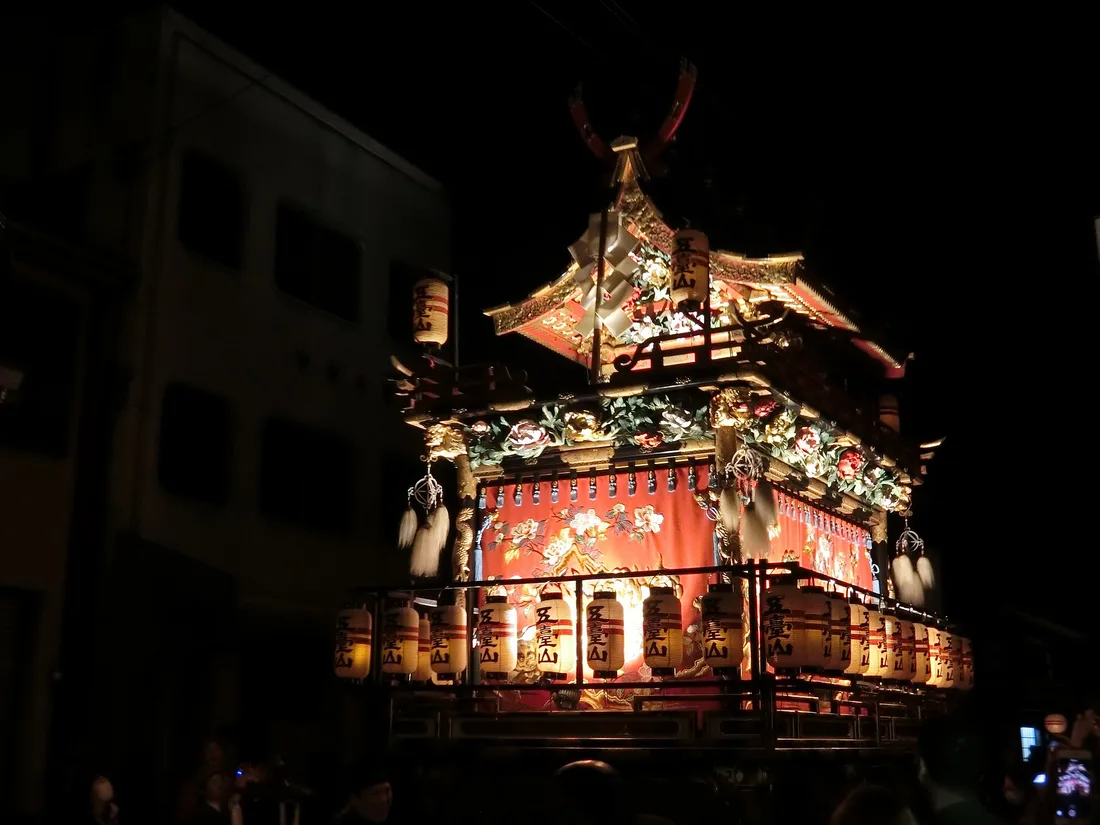
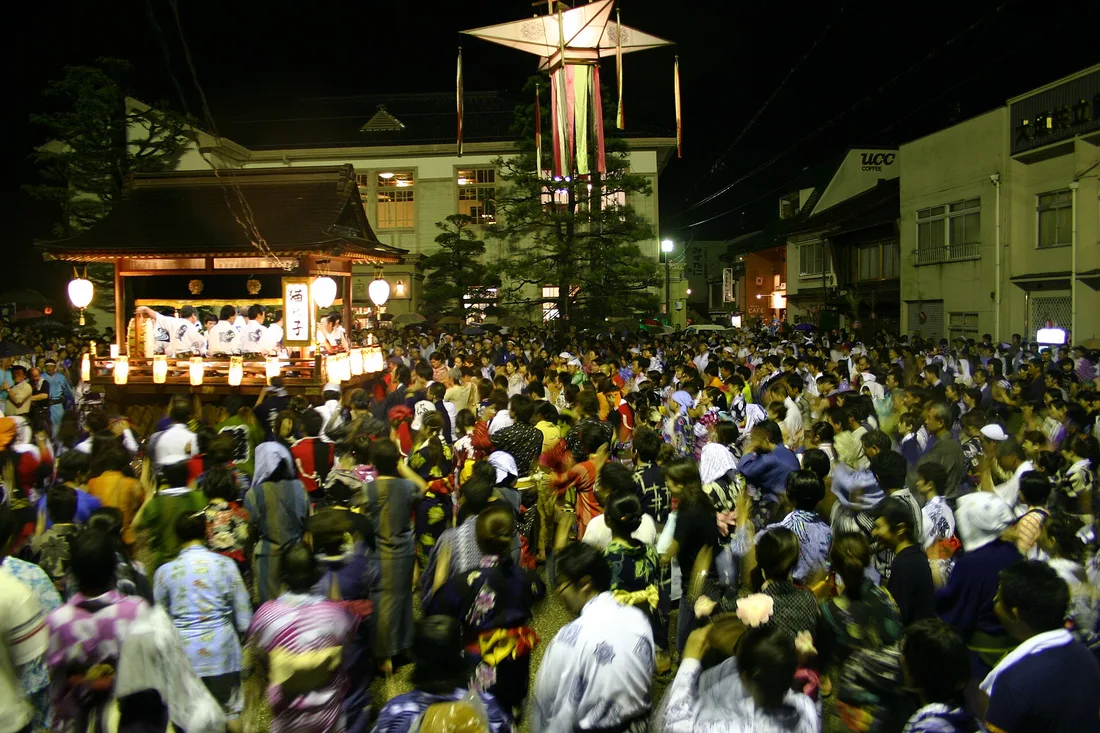
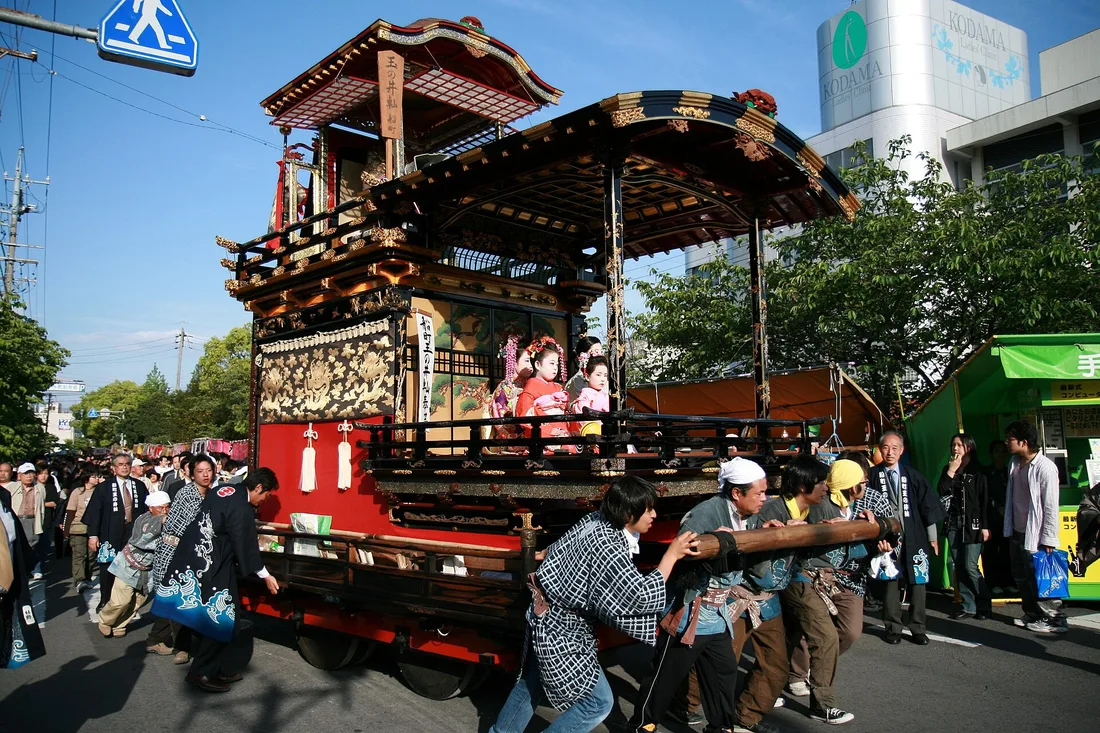
    A float hung with lit lanterns in the night parade
    The three marionette floats Ryujin-tai, Shakkyo-tai and Sanbaso at the Otabisho
    The dragon-god marionette performing on top of Ryujin-tai
    The gilded Kirin-tai float in the street
    Lion dancers in the festival procession

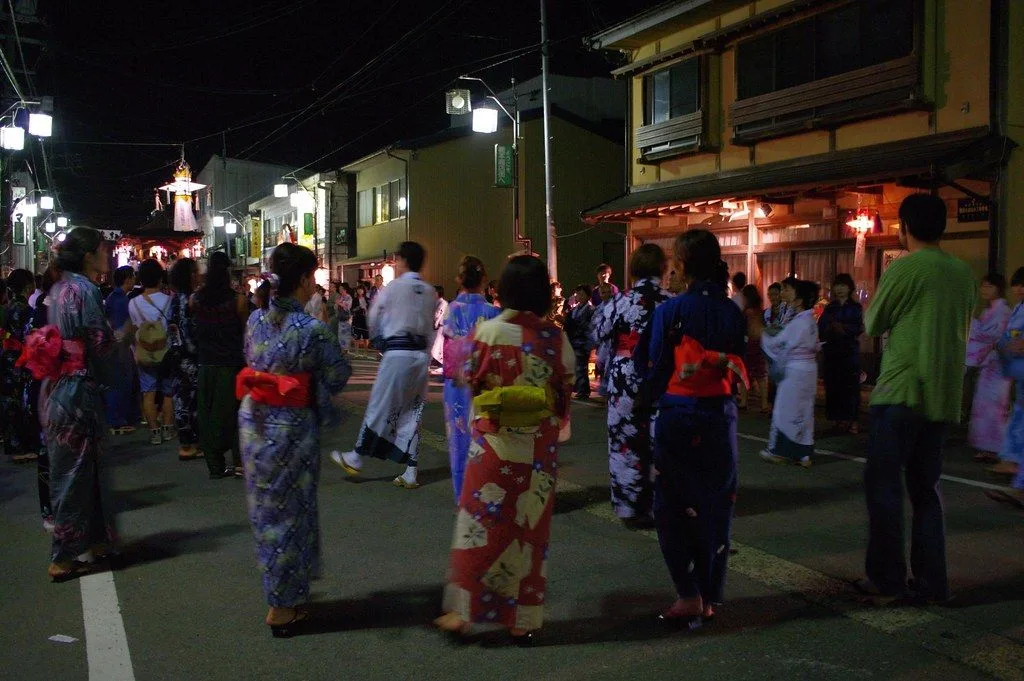
    Twelve festival floats stand in the streets south of Yasugawa-dori from 9:30, and three of them stage karakuri marionette shows at Takayama Jinya at 10:00 and 14:00. On the night of the 14th each float is hung with about 100 lanterns and pulled slowly through town from 18:00.

    Dates
    14–15 AprSpring
    Where
    Takayama Jinya (the Otabisho) and the streets south of Yasugawa-dori, GifuGoogle Maps
    Open
    Floats 9:30–about 15:00 on the 14th, 9:30–about 16:00 on the 15th · night parade 14th from 18:00 (2026 times)Wed 14 Apr · Floats on show 9:30–about 15:00 · marionettes 10:00 and 14:00 · procession 12:45–16:00 · night parade from 18:00 (2026 times)Thu 15 Apr · Floats on show 9:30–about 16:00 · marionettes 10:00 and 14:00 · procession 12:30–15:30 (2026 times)
    Tickets
    Free, with no paid seats. In rain the procession, float display, marionettes and night parade are cancelled, not postponed. Inns in Takayama fill months ahead.
    Heritage
    UNESCO Intangible Cultural Heritage · 2016 山・鉾・屋台行事(ユネスコ無形文化遺産代表一覧表)Important Intangible Folk Cultural Property · 1979 高山祭の屋台行事
    Source
    Official site · checked 2026-10-29
    Photos
    5 photos · credits
    1. 大野 一将 · CC BY-SA 4.0
    2. gundam2345 · CC BY 3.0
    3. gundam2345 · CC BY 3.0
    4. 大野 一将 · CC BY-SA 4.0
    5. 大野 一将 · CC BY-SA 4.0

    Background

    The spring festival of Hie Shrine and the autumn festival of Sakurayama Hachiman Shrine together make up the Takayama Matsuri, whose float rites joined the UNESCO “Yama, Hoko, Yatai” inscription in 2016. Marionettes have ridden the floats since 1804–1830; the 2027 timetable is not yet announced, so the times here follow 2026.

    Twelve festival floats, marionette shows and a lantern-lit night parade A float hung with lit lanterns in the night parade

    Photo · 大野 一将 · CC BY-SA 4.0

    Shirakawa-go Winter Light-up 2027

    第41回 白川郷ライトアップ

    In 50 days · 11–31 Jan

    Light-up

    Shirakawa · 100 km from Gifu

    11–31 Jan · Light-up

    Shirakawa-go Winter Light-up 2027第41回 白川郷ライトアップ

    Ogimachi village, Shirakawa-go, GifuShirakawa · 100 km from Gifu

    The gassho houses of Shirakawa-go lit up in the snow at night, seen from the viewpoint
    Lit windows of the thatched houses of Shirakawa-go on a snowy evening
    Three gassho houses lit at night in deep snow

    On four winter evenings the thatched gassho farmhouses of Ogimachi are lit from 17:30 to 19:30, usually under snow. Entry is by advance booking only, through a village inn, a reserved parking space or a bus tour, and only some packages include the viewpoint above the village.

    Dates
    11–31 JanWinter
    Where
    Ogimachi village, Shirakawa-go, GifuGoogle Maps
    Open
    17:30–19:30 · without a light-up ticket you cannot enter the village after 15:30 · day visitors’ car parks take cars until 15:00 · Closed 12–16 Jan, 18–23 Jan and 25–30 JanMon 11 Jan · First of four nights, a Monday holiday; the others are Sundays 17, 24 and 31 January
    Tickets
    Nothing is sold on the day. Book an inn by lottery (entries close 31 Oct), a parking space (second sale 1 Dec, ¥7,000 per car of up to five) or a bus tour. On sale from 1 Dec · in 9 days
    Holidays
    Coming of Age Day · Mon 11 JanLong weekend: expect full trains and hotels
    Source
    Official site · checked 2026-10-15
    Photos
    3 photos · credits
    1. Yoshiyuki Ito · CC BY-SA 3.0
    2. shinohal · CC BY-SA 3.0
    3. Yoshiyuki Ito · CC BY-SA 3.0

    Background

    This is the 41st light-up. Shirakawa-go and Gokayama, with their steep-roofed gassho houses, have been a UNESCO World Heritage Site since 1995.

    Buy tickets · Shirakawa-go Winter Light-up 2027

    Four January evenings when Shirakawa-go’s thatched farmhouses are lit in snow The gassho houses of Shirakawa-go lit up in the snow at night, seen from the viewpoint

    Photo · Yoshiyuki Ito · CC BY-SA 3.0

    Cormorant Fishing on the Nagara River

    ぎふ長良川の鵜飼

    In 170 days · 11 May – 15 Oct

    Show

    11 May – 15 Oct · Show

    Cormorant Fishing on the Nagara Riverぎふ長良川の鵜飼

    Nagara River below Nagara Bridge, Ukai sightseeing boat office, Gifu

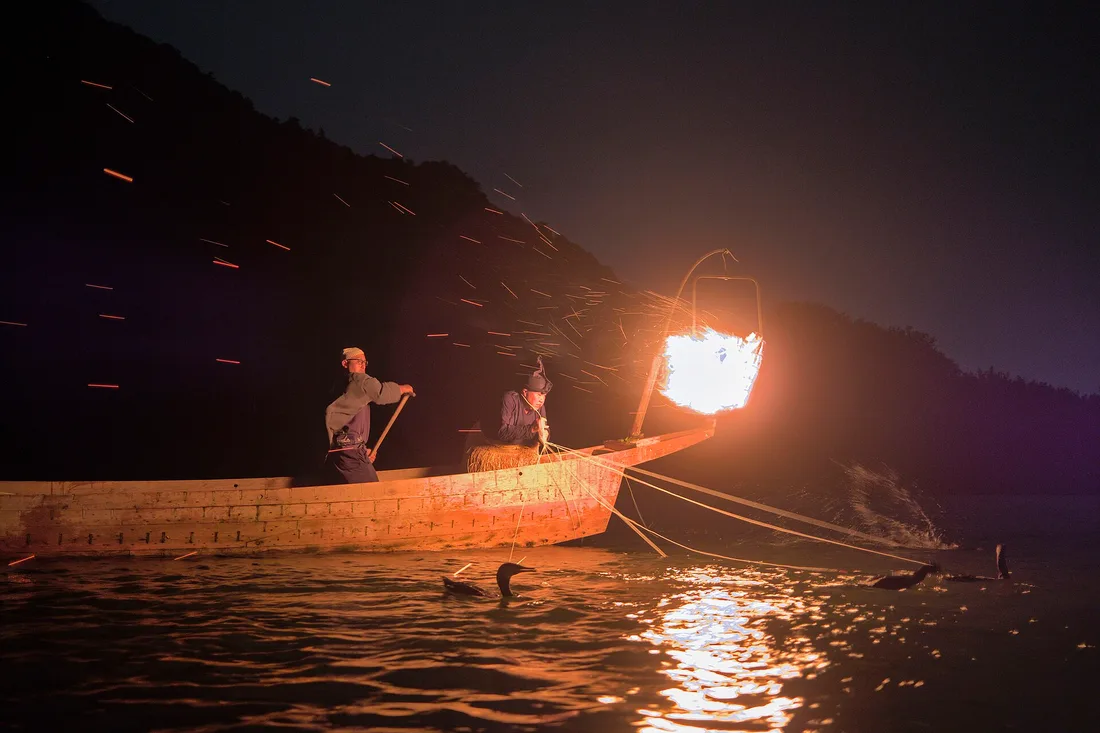
    A cormorant master at the bow under the fire basket, birds swimming on leashes
    The fishing boats side by side with their fire baskets blazing
    A single fishing boat and its fire reflected in the dark river

    Six boats drift down the Nagara River after dark, each with a blazing fire basket at the bow and a master working 10 to 12 cormorants on leashes. Shared viewing boats leave at 18:15, 18:45 and 19:15, moor to watch the fishing from about 19:45 and return 20:30–21:00.

    Dates
    11 May – 15 OctSpring to autumn
    Where
    Nagara River below Nagara Bridge, Ukai sightseeing boat office, GifuGoogle Maps
    Open
    Boats leave 18:15, 18:45 and 19:15 · fishing from about 19:45 · back 20:30–21:00 · Closed 24 Sep
    Tickets
    Shared boat in 2026: adults ¥4,200, or ¥5,100 on busy days such as summer Saturdays and Obon. Book ahead; 2027 fares not yet announced. No food sold, bring your own.
    Holidays
    Marine Day · Mon 19 JulRespect for the Aged Day · Mon 20 SepSports Day · Mon 11 OctLong weekend: expect full trains and hotels
    2 more holidaysMountain Day · Wed 11 AugAutumnal Equinox Day · Thu 23 Sep
    Heritage
    Important Intangible Folk Cultural Property · 2015 長良川の鵜飼漁の技術
    Source
    Official site · checked 2026-10-29
    Photos
    3 photos · credits
    1. Ludger Heide · CC BY-SA 4.0
    2. Kenichi Inagaki · CC BY 4.0
    3. Hide-sp · CC BY-SA 3.0

    Background

    Cormorant fishing on the Nagara has a history of more than 1,300 years. The six masters hold the title of cormorant fishers of the Imperial Household Agency, and on eight nights a season they fish a protected stretch for ayu sent to the Imperial Palace. The techniques became an Important Intangible Folk Cultural Property in 2015.

    Buy tickets · Cormorant Fishing on the Nagara River

    Fishing with cormorants by firelight, watched from wooden boats A cormorant master at the bow under the fire basket, birds swimming on leashes

    Photo · Ludger Heide · CC BY-SA 4.0

    Seki traditional sword forging demonstrations

    古式日本刀鍛錬 一般公開

    On now · 1 Nov – 7 Mar

    Show

    Seki · 20 km from Gifu

    1 Nov – 7 Mar · Show

    Seki traditional sword forging demonstrations古式日本刀鍛錬 一般公開

    Forge of the Seki Traditional Swordsmith Museum (Seki Kaji Denshokan), GifuSeki · 20 km from Gifu

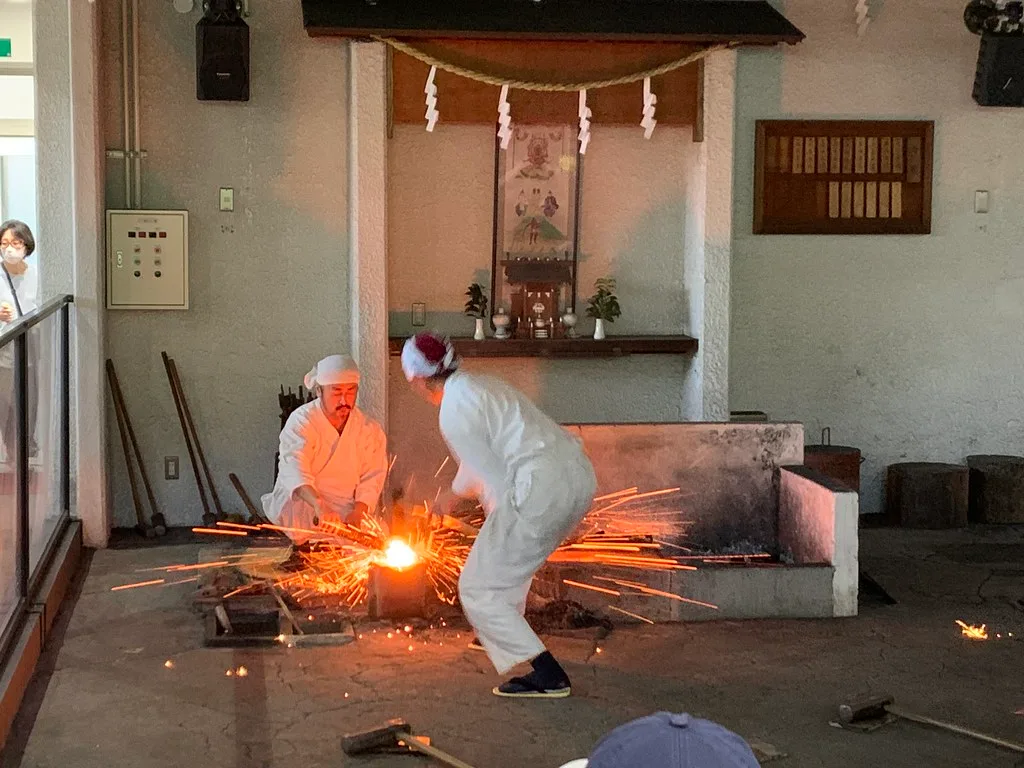
    Two smiths in white hammering hot steel in a shower of sparks

    On the first Sunday of the month, swordsmiths in white fold and hammer glowing steel in the museum’s forge, the striker’s big hammer and the master’s small one keeping time, for 30 minutes at 10:30 and 13:00. On 2 January 2027 the first forging of the year is free, mornings only.

    Dates
    1 Nov – 7 MarAutumn to spring
    Where
    Forge of the Seki Traditional Swordsmith Museum (Seki Kaji Denshokan), GifuGoogle Maps
    Open
    Open every day · Forging 10:30–11:00 and 13:00–13:30 · doors open 30 min before
    Programme · 4 daysSun 6 Dec · Forging onlySat 2 Jan · First forging of the year, morning only, free, first 90Sun 7 Feb, Sun 7 Mar · Forging and polishing demonstrations
    Tickets
    ¥300 adults, ¥200 high-school students, ¥100 children per forging session; afternoon tickets go on sale at 11:00. 130 places a session; 2 January free, first 90.
    Holidays
    Labour Thanksgiving Day · Mon 23 NovNew Year's Day · Fri 1 JanComing of Age Day · Mon 11 JanLong weekend: expect full trains and hotels
    3 more holidaysCulture Day · Tue 3 NovNational Foundation Day · Thu 11 FebEmperor's Birthday · Tue 23 Feb
    Source
    Official site · checked 2026-10-29
    Photos
    Photo credit
    1. Yuya Tamai · CC BY 2.0

    Background

    Seki’s smiths have worked since the Kamakura period, and the forge shows one step of making a katana: folding the steel again and again to drive out impurities. The museum is closed for renovation until 31 March 2027, but the forge stays open; in November and December there is no polishing demonstration.

    Swordsmiths fold and hammer white-hot steel, one Sunday a month Two smiths in white hammering hot steel in a shower of sparks

    Photo · Yuya Tamai · CC BY 2.0

    Doburoku Festival, Shirakawa-go

    どぶろく祭

    In 326 days · 14–19 Oct

    Matsuri

    Shirakawa · 95 km from Gifu

    14–19 Oct · Matsuri

    Doburoku Festival, Shirakawa-goどぶろく祭

    Shirakawa Hachiman Shrine, Ogimachi (14–15 Oct), then Hatoya and Iijima Hachiman shrines, GifuShirakawa · 95 km from Gifu

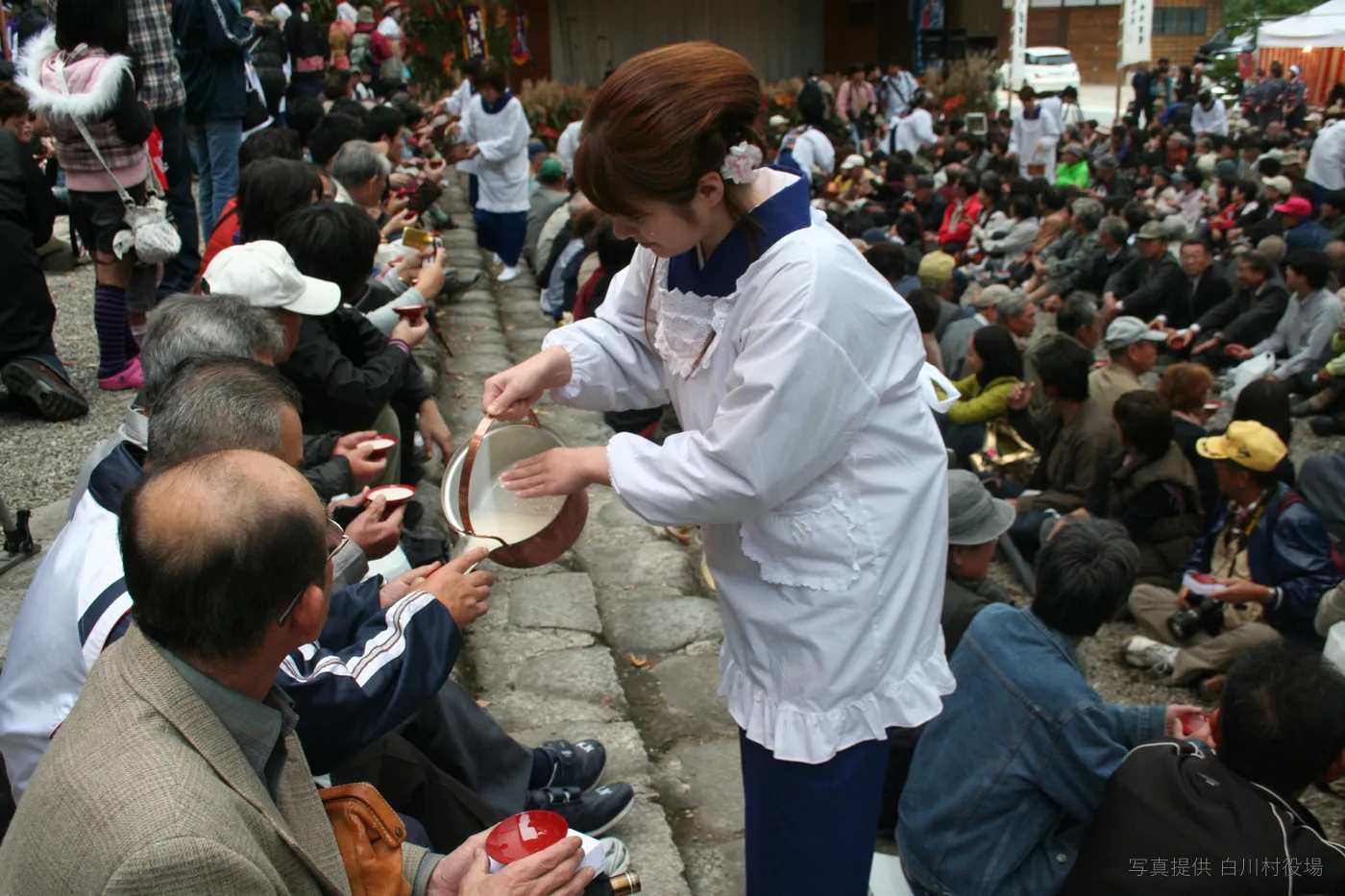
    A shrine maiden pours cloudy doburoku into red cups for visitors seated on the shrine steps
    Children in festival robes and straw hats dance with gongs before the crowd at Shirakawa Hachiman Shrine
    A thatched gassho house, pampas grass and rice-drying racks hung with coloured streamers in Ogimachi
    Red and green demon figures lead the procession down the shrine steps, children with drums behind

    Shirakawa Hachiman Shrine and two other village shrines hold the festival in turn over six days. After a morning procession through the hamlet, the year’s doburoku, a thick unfiltered sake brewed at the shrine, is poured for visitors 15:30–17:00; folk songs follow, and a lion dance at about 19:00.

    Dates
    14–19 OctAutumn
    Where
    Shirakawa Hachiman Shrine, Ogimachi (14–15 Oct), then Hatoya and Iijima Hachiman shrines, GifuGoogle Maps
    Open
    Open every day · Rites 8:00 · procession 9:00 · doburoku poured 15:30–17:00 · lion dance about 19:00
    Programme · 6 daysThu 14 Oct, Fri 15 Oct · Shirakawa Hachiman Shrine, OgimachiSat 16 Oct, Sun 17 Oct · Hatoya Hachiman ShrineMon 18 Oct, Tue 19 Oct · Iijima Hachiman Shrine, opposite Michi-no-Eki Shirakawa-go
    Tickets
    Free. To taste, buy the shrine’s commemorative cup at the shrine office; sake is poured only into that cup and may not be taken away. Drivers must not drink.
    Source
    Official site · checked 2026-10-29
    Photos
    4 photos · credits
    1. 写真提供 白川村役場 · Shirakawa village photo terms
    2. 写真提供 白川村役場 · Shirakawa village photo terms
    3. 写真提供 白川村役場 · Shirakawa village photo terms
    4. 写真提供 白川村役場 · Shirakawa village photo terms

    Background

    The festival prays to the mountain gods for a good harvest, safe homes and peace in the village. Each shrine brews its doburoku in late January under snow, and the village says the sake has been used in the rites since the Wado era, about 1,300 years ago. The dates are the same every year; 2027 details are not yet announced.

    Village shrines pour cloudy home-brewed sake for visitors A shrine maiden pours cloudy doburoku into red cups for visitors seated on the shrine steps

    Photo · 写真提供 白川村役場 · Shirakawa village photo terms

    Gifu Park Chrysanthemum Doll and Flower Show

    第55回岐阜公園菊人形・菊花展

    On now · 31 Oct – 23 Nov

    Exhibition

    31 Oct – 23 Nov · Exhibition

    Gifu Park Chrysanthemum Doll and Flower Show第55回岐阜公園菊人形・菊花展

    Gifu Park, Gifu

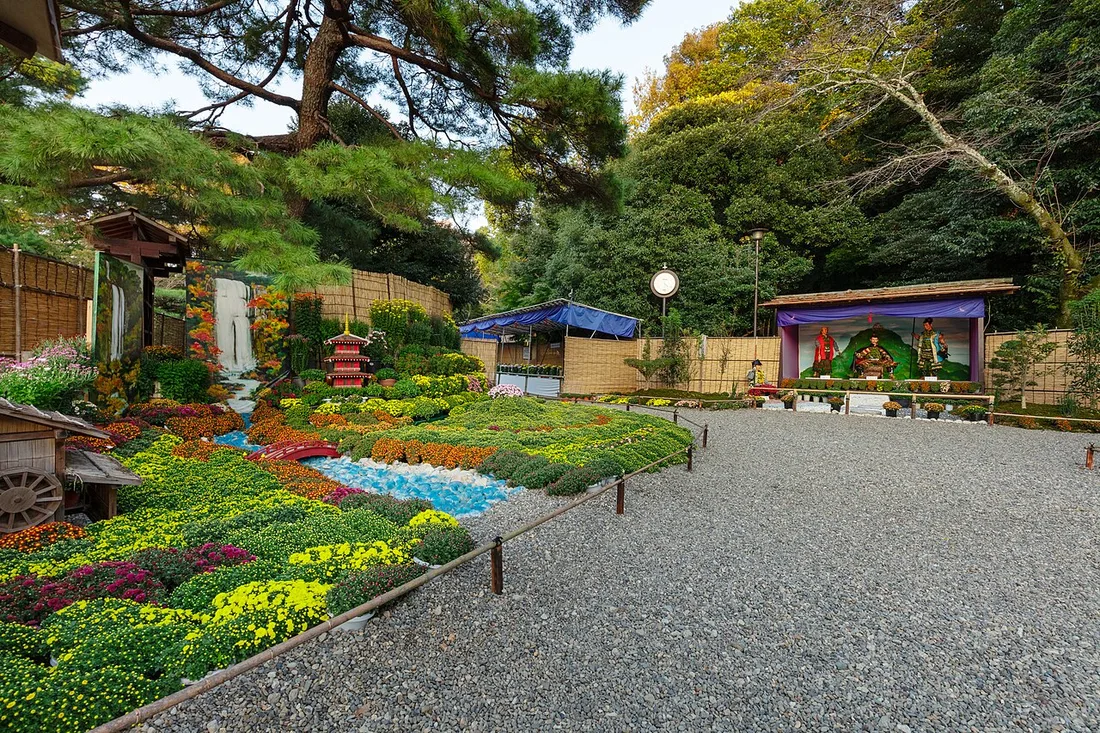
    Flower beds and doll stages along the path through Gifu Park
    A chrysanthemum doll stage built over the pond in Gifu Park
    A bed of small chrysanthemums laid out among the trees of Gifu Park
    Thousand-bloom chrysanthemums and rows of potted plants under the show awning

    At the foot of Mount Kinka, Gifu Park fills with chrysanthemum dolls and growers’ prize plants. This year’s dolls, dressed in flowers and armour, show Oda Nobunaga sending the brothers Tokichiro and Koichiro to build the fort at Sunomata. Look for Mino-giku, a classic chrysanthemum born in Gifu.

    Dates
    31 Oct – 23 NovAutumn
    Where
    Gifu Park, GifuGoogle Maps
    Open
    Open every day · 9:00–17:00
    Tickets
    Free.
    Holidays
    Culture Day · Tue 3 NovLabour Thanksgiving Day · Mon 23 NovLong weekend: expect full trains and hotels
    Source
    Official site · checked 2026-11-07
    Photos
    4 photos · credits
    1. 杉山宣嗣 · CC BY-SA 4.0
    2. Hide-sp · CC BY-SA 3.0
    3. Hide-sp · CC BY-SA 3.0
    4. Hide-sp · CC BY-SA 3.0

    Background

    This is the 55th show. Nobunaga took the castle in 1567 and renamed the town Gifu, so each year the dolls recreate a scene from the Warring States period. Mino-giku descends from the ichimonji chrysanthemum of the imperial crest.

    Chrysanthemum dolls of Nobunaga’s day below Gifu Castle Flower beds and doll stages along the path through Gifu Park

    Photo · 杉山宣嗣 · CC BY-SA 4.0

    All events in Gifu

    Add to which trip?

    The Kigo季語

    Found a mistake?

    Tell us what is wrong and, if you can, where the right information is. We check it against the official page and fix the card.

    Email

    hello@thekigo.com

    Write to us

    Omikuji ·

    願望Wishes
    待人The one you wait for
    失物Lost things
    旅行Travel

    One slip a day

    The Kigo home page in version 1.0, on 24 September 2026: one day to the harvest moon, the first festivals of autumn, cosmos and silver grass

    The rest has faded

    The Kigo 1.0 · 24 Sep 2026