Ishikawa brings together Kanazawa’s craft traditions, the fishing communities of Noto and the mountain landscapes around Hakusan. Visit for a season as much as a place: cherry blossom beside old streets, alpine flowers above the treeline, autumn temple gardens or winter crab from the Sea of Japan.
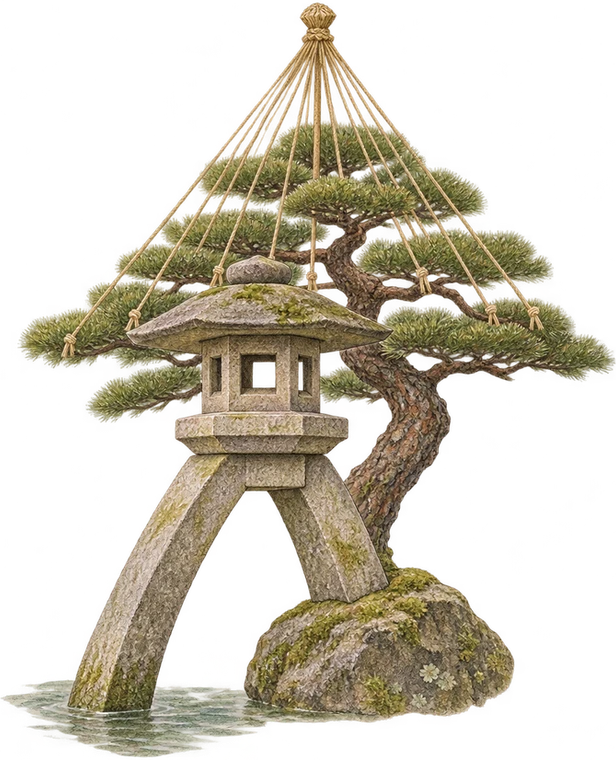
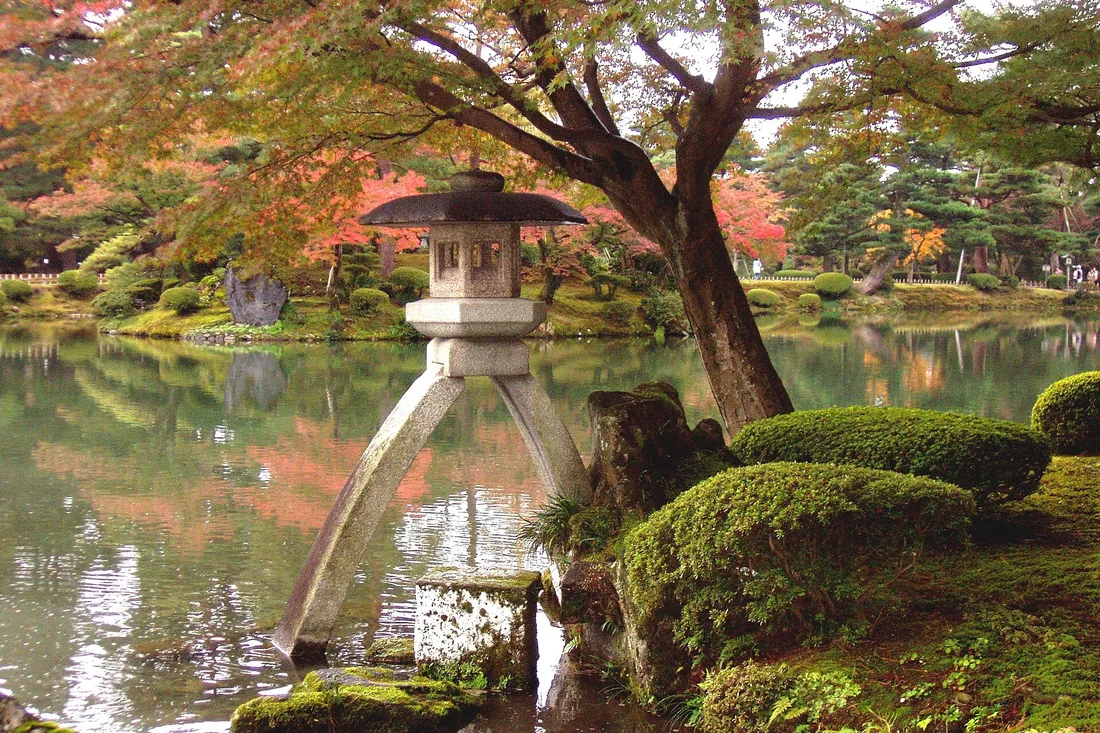
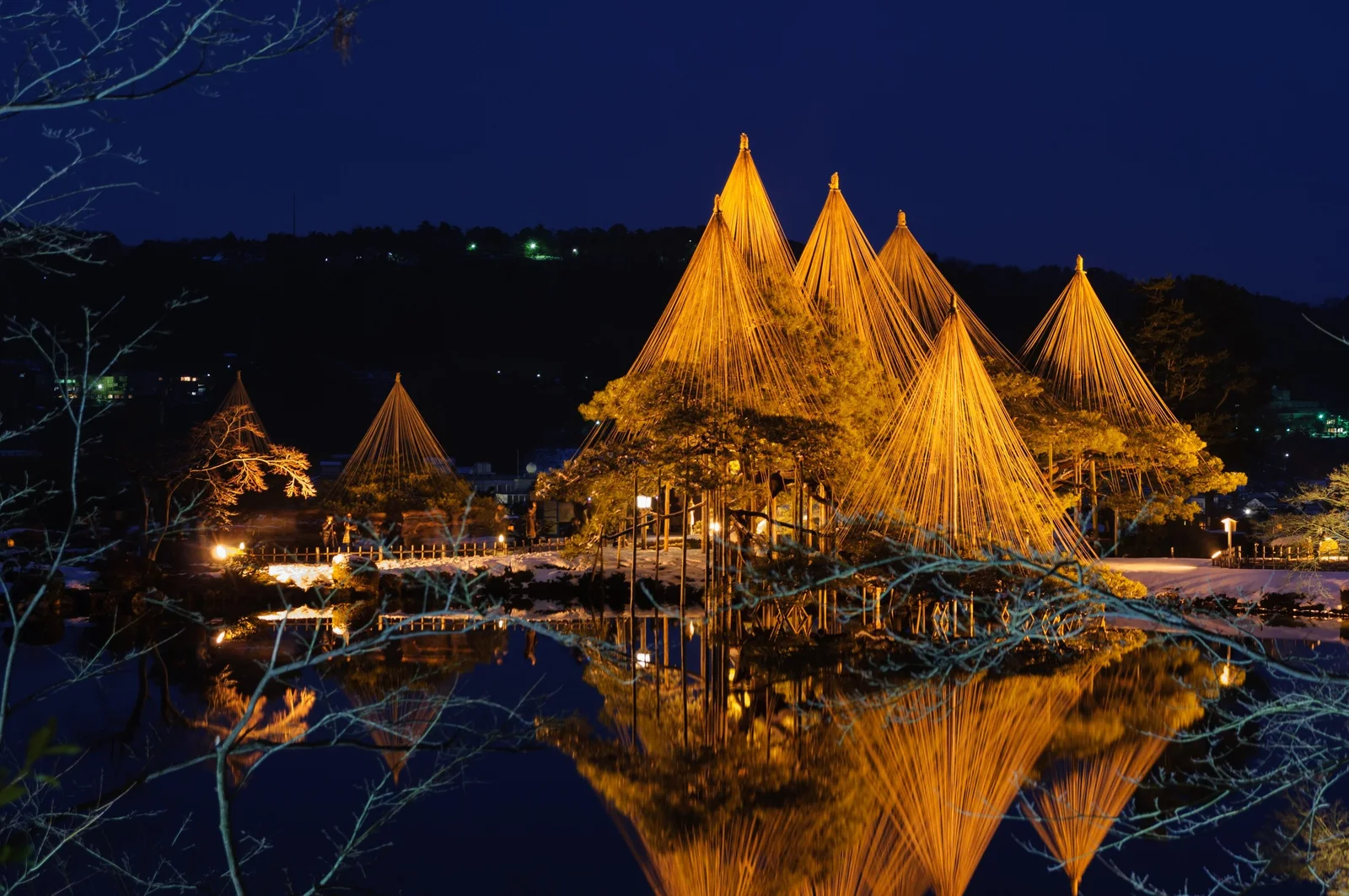
Kotoji lanternThe two-legged stone lantern of Kenrokuen under a pine roped against snow
The rainy season runs 11 Jun – 23 Jul in an average year. Typhoons come closest from July to September.
Figures for Kanazawa; the Hakusan trails are far colder, and winter here is wet even outside the rainy season. Weather: JMA normals 1991–2020, Kanazawa.
717 Natadera traces its foundation to the monk Taichō and the worship of Mount Hakusan; its rocks and cave sanctuary keep that link between landscape and faith.
1583 Maeda Toshiie entered Kanazawa Castle, and his family built the castle town around it; the stone walls and gates still shape central Kanazawa.
1820 The Higashi Chaya district was formally established; it keeps the wooden façades and street plan of an entertainment quarter.
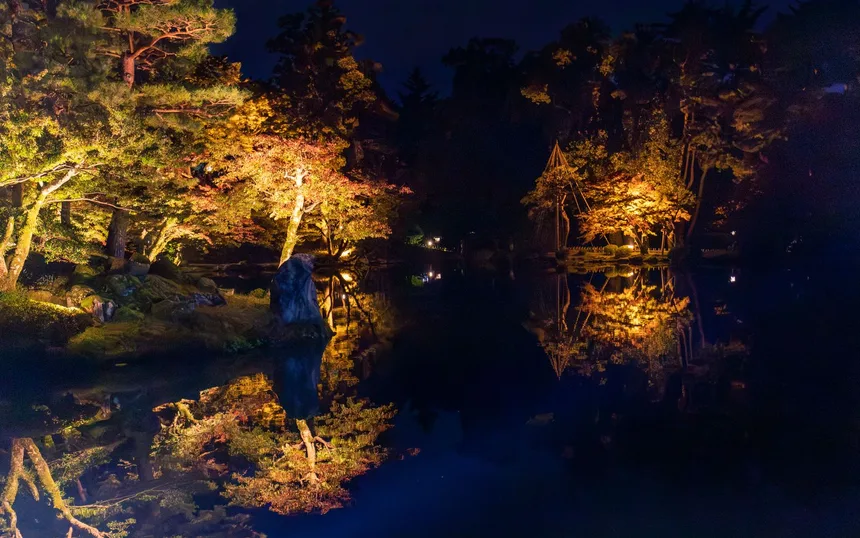
A daimyo strolling garden above Kanazawa, laid out round the Kasumigaike pond and its two-legged Kotoji lantern. In the second half of November the maples redden while gardeners rig about 800 trees with yukitsuri ropes against the coming snow.
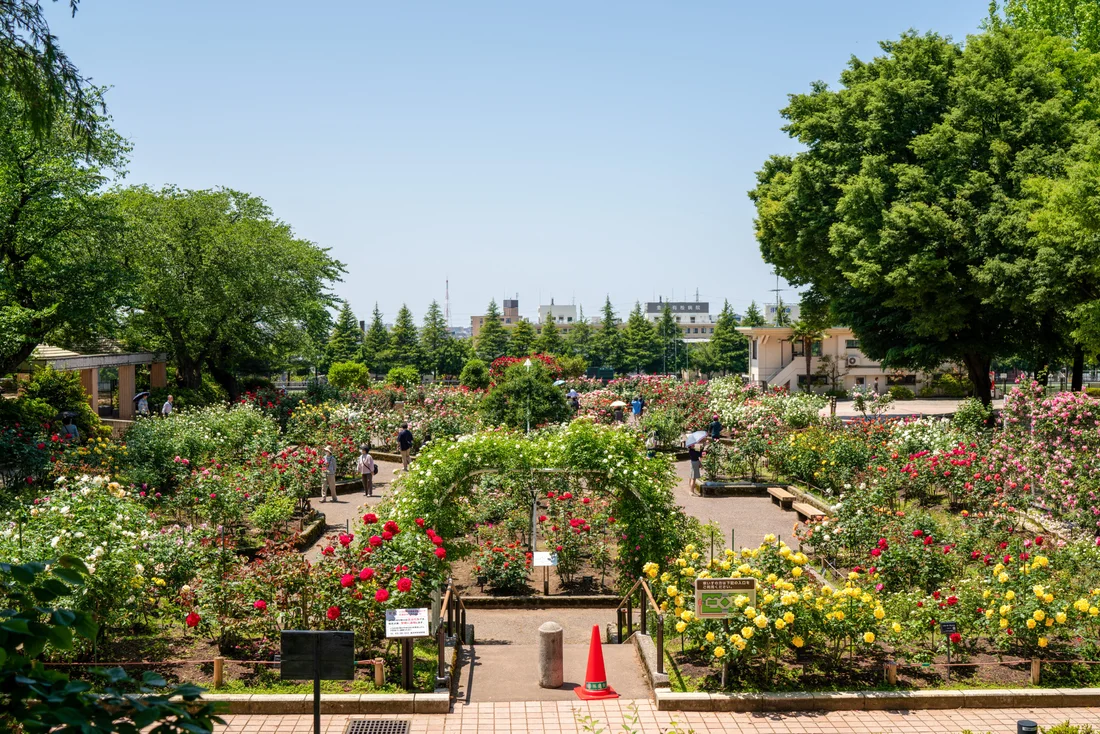
A free rose garden of 1,630 m² beside the municipal ball-game stadium, with about 1,800 bushes of 170 varieties trained over arches and fences. It flowers from mid-May to early June and again from late September to mid-October; the May flush has more flowers.
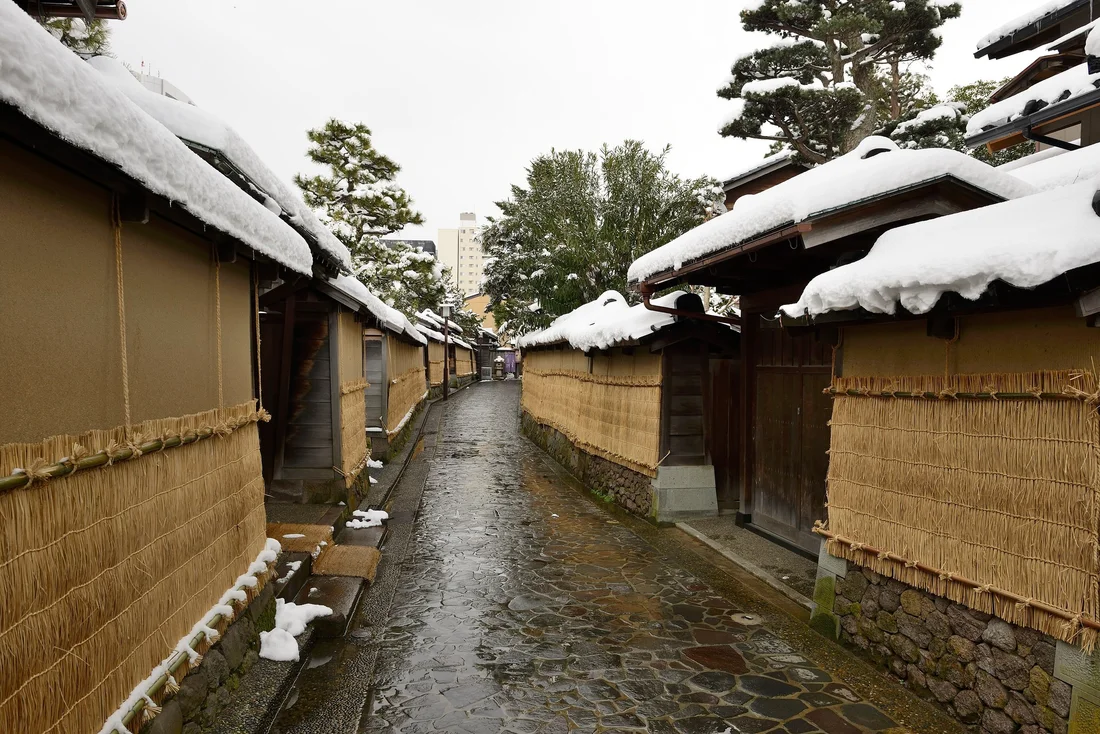
Stone-paved lanes between ochre earthen walls, where middle-ranking samurai of the Kaga domain once lived. From the first weekend of December to mid-March the walls wear komo, mats of woven straw tied on to keep Kanazawa’s wet snow and frost from cracking the clay. After a snowfall the tiled wall-tops turn white above the straw.
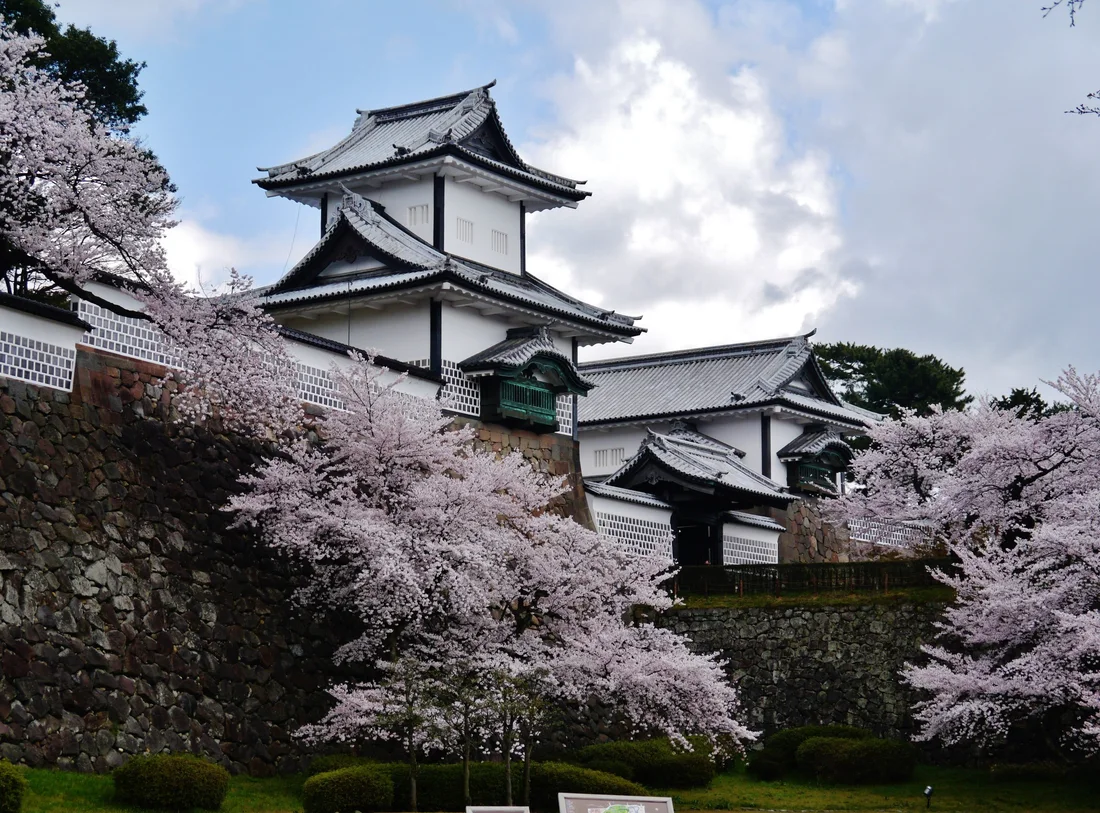
Cherry trees line the stone walls of the castle next to Kenroku-en. The best views are at the Ishikawa-mon gate, the Otebori moat, the Hakuchoro path and the inner moat below the Hishi Yagura turret. In 2026 the park stayed open until 21:30 with the trees lit from 2 to 8 April.
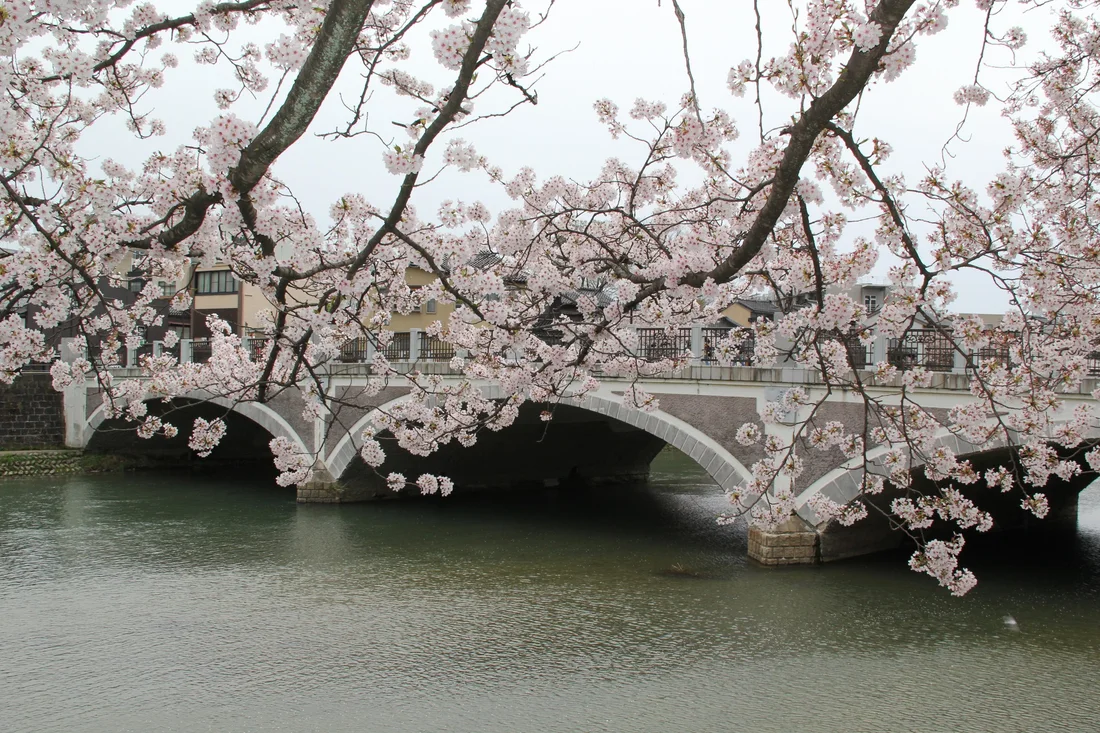
Rows of cherry trees follow the Asano River past the Kazuemachi teahouse quarter and round the Asanogawa Ohashi, an arched bridge that is a registered cultural property. The Umenohashi and Naka-no-hashi bridges give views along the whole row.
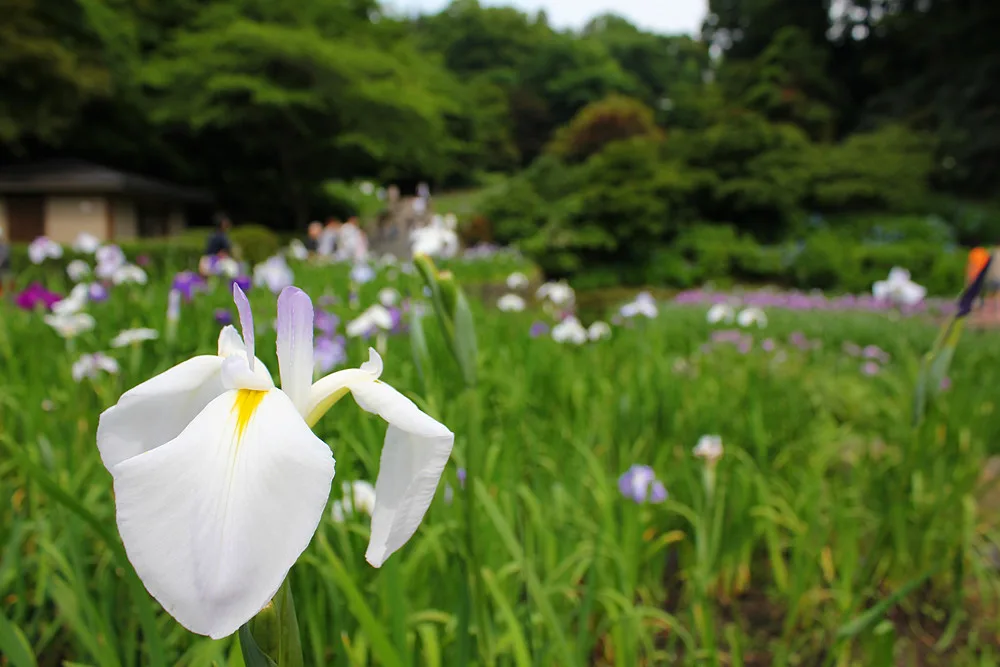
A free hillside iris garden above Kanazawa, laid out in three tiers: irises in terraced paddies at the top, along a stream in the middle and round a pond below. About 2,900 hydrangeas flower alongside.
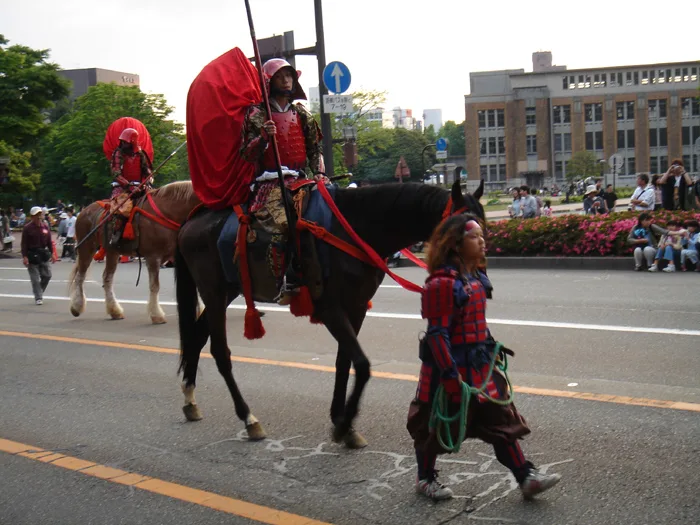
On Saturday afternoon samurai on horseback, mikoshi and women in Edo-period dress walk from Kanazawa Station to the castle, led by an actor playing the lord Maeda Toshiie.