The Kigo季語 Nara Prefecture · 奈良県

In season

Coming up

Try

    Arrow keys to move · Enter to open · Esc to close

    Favourites EN日本語

    Nara 奈良県

    Japan's first permanent capital, where eighth-century temples and the deer of Nara Park sit within a short walk of the station. The south of the prefecture is another world: the cedar mountains of Yoshino, famous for cherry blossom in April and quiet foliage in November.

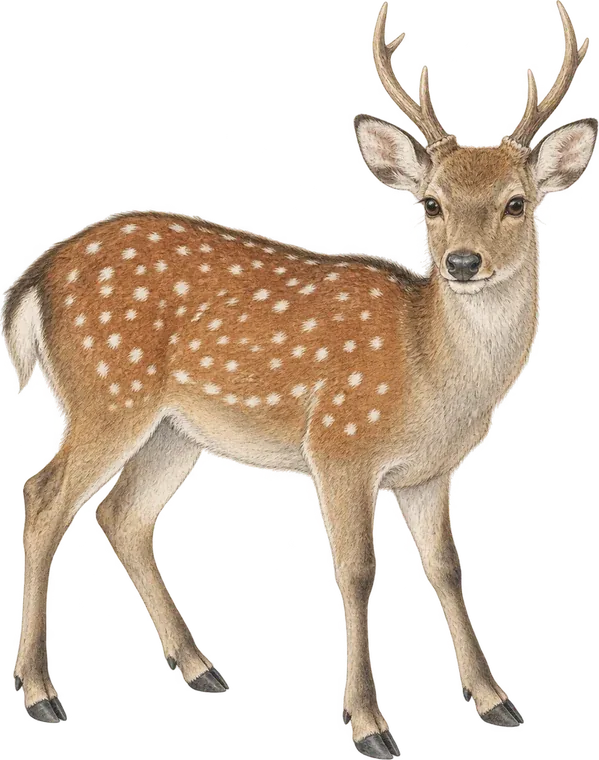
    Sika deer
    Sika deerMore than a thousand deer roam Nara Park as messengers of the gods
    Created by Geolonia (https://geolonia.com/).

    When to go

    1. NOV 2026 17°7° 7 1
    2. DEC 12°3° 7 2 New Year holidays
    3. JAN 2027 9°1° 6 1 New Year holidays
    4. FEB 10°1° 7 1
    5. MAR 14°4° 10 2
    6. APR 20°9° 10 1 Golden Week
    7. MAY 25°14° 10 1 Golden Week
    8. JUN 28°18° 12 – Rainy season
    9. JUL 32°23° 11 – Rainy seasonTyphoons
    10. AUG 33°24° 8 1 TyphoonsObon
    11. SEP 29°20° 10 1 Typhoons
    12. OCT 23°14° 9 –

    Day and night, average Days with rain Dated events, tap a month Seasons on, named in the calendar below

    The rainy season runs 6 Jun – 19 Jul in an average year. Typhoons come closest from July to September. Figures for Nara city; Yoshino and the southern mountains are cooler and wetter. Weather: JMA normals 1991–2020, Nara.

    Seasonal calendar

    JANFEBMARAPRMAYJUNJULAUGSEPOCTNOVDEC
    Autumn foliage 04 NOV – 07 DEC
    Cherry blossom 27 MAR – 14 APR

    Meibutsu & craft

    • Meibutsu & craft · Nara

      Nara ink and brushes 奈良墨・奈良筆

      ならずみ・ならふで

      Nara makes about 95% of Japan’s solid ink sticks; its brushes became a national traditional craft in 1977, its ink in 2018.

    • Meibutsu & craft · Nara

      Takayama tea whisks 高山茶筌

      たかやまちゃせん

      Carved from a single piece of bamboo in Takayama, Ikoma, for more than 500 years; the town still makes over 90% of Japan’s whisks.

    • Meibutsu & craft · Nara

      Nara ittobori carving 奈良一刀彫

      ならいっとうぼり

      Bold chisel-cut, brightly painted figures that began as the dolls decorating hats and stands at the Kasuga Wakamiya Onmatsuri.

    • Meibutsu & craft · Nara

      Akahada ware 赤膚焼

      あかはだやき

      Tea ware first fired in the Tensho era, when Toyotomi Hidenaga brought a potter to the Akahada hills; it is often painted with Nara’s deer and pagodas.

    Food

    • Food · Nara

      Persimmon-leaf sushi 柿の葉寿司

      かきのはずし

      Summer festival food along the Yoshino river since the Edo period: salted mackerel carried inland from the coast, pressed onto rice and wrapped in persimmon leaves.

      Two pieces of pressed sushi, mackerel and salmon, on the persimmon leaves they were wrapped in
      ZhengZhou · CC BY-SA 4.0
    • Food · Nara

      Miwa somen 三輪素麺

      みわそうめん

      Miwa, below Omiwa Shrine, is held to be where somen began more than 1,200 years ago; the thin noodles are stretched in the dry winter cold.

      A bowl of chilled Miwa somen with ice, shredded omelette, a prawn and a shiitake mushroom
      ちぃこ · CC BY 2.1 jp
    • Food · Nara

      Nara-zuke 奈良漬

      ならづけ

      White melon and other vegetables pickled for months, often years, in sake lees from Nara’s breweries until they turn dark amber.

      Rows of Nara-zuke, melon pickled dark in amber sake lees, in a tub at a Nara shop
      bangdoll from Taipei,Taiwan · CC BY-SA 2.0
    • Food · Nara

      Yoshino kuzu 吉野葛

      よしのくず

      Kudzu starch washed again and again in icy winter water, the Yoshino method used since the Edo period, then set into clear kuzu-mochi.

      A bowl of clear kuzu noodles in iced water with a cup of dark sugar syrup, at Tengyokudo in Nara
      hirotomo from Yoshino, Nara · CC BY-SA 2.0
    • Food · Nara

      Chagayu tea gruel 茶粥

      ちゃがゆ

      Rice cooked thin in roasted tea; monks at Todai-ji’s Omizutori still eat it, rice boiled in hojicha, during the rite.

      A red lacquer bowl of chagayu, rice gruel cooked in tea
      Degueulasse · CC BY 3.0

    History through time

    607
    Prince Shotoku and Empress Suiko found Horyu-ji, whose western precinct holds the world’s oldest surviving wooden buildings.

    710
    The capital moves to Heijo-kyo, a grid city on the Nara basin, and stays until 784.

    752
    The eye-opening ceremony of the Great Buddha of Todai-ji is held, with monks from as far as India.

    1336
    Emperor Go-Daigo flees to Yoshino and sets up the Southern Court, which rules from the mountains for 56 years.

    1993 and 1998
    Horyu-ji becomes one of Japan’s first World Heritage sites, and eight sites of ancient Nara follow in 1998.

    2004
    Yoshino, Omine and the pilgrim routes of the Kii mountains are listed as World Heritage.

    Best places through the year

    PlaceWhy

    Autumn · Autumn foliage

    Hasedera

    長谷寺

    09 NOV – 05 DEC · Nature · Autumn foliage

    Autumn foliage — Hasedera長谷寺

    NaraSakurai · 20 km from Nara

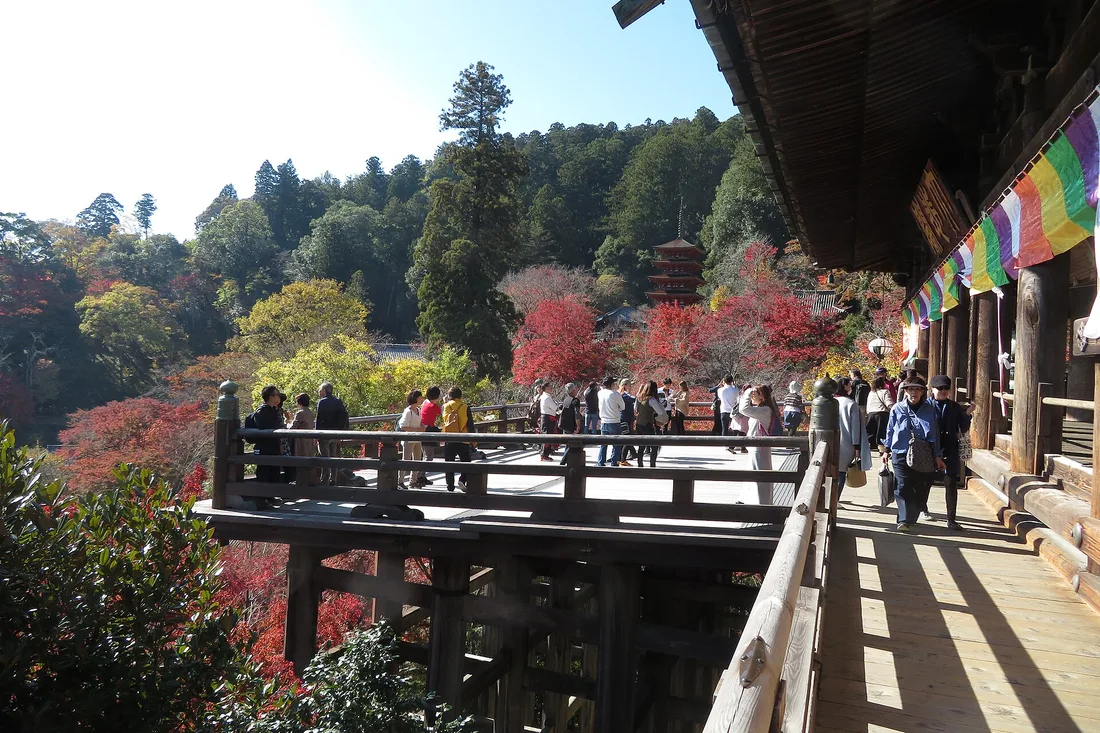
    The Main Hall stage with red maples and the pagoda below
    The pagoda among early yellow maples
    The covered stairway of 399 steps hung with lanterns
    The Niomon gate of Hase-dera
    This place in other seasons · 6
    • Pink hydrangeas with the five-storey pagoda of Hasedera behind
    • Blue hydrangeas lining a temple lane
    • Large pink tree peonies at Hasedera
    • A deep pink tree peony and bud at Hasedera
    • Red tree peonies at Hasedera
    • A lilac tree peony at Hasedera

    A mountain temple climbed by a lantern-hung covered stairway of 399 steps, known as the temple of flowers: peonies in late April, hydrangeas in June, maples in late November. Fifteen minutes on foot from Kintetsu Hasedera station.

    Dates
    09 NOV – 05 DECAutumn to winter
    Where
    NaraGoogle Maps
    Open
    8:30–17:00 Apr–Sep · 9:00–17:00 Oct, Nov and Mar · 9:00–16:30 Dec–Feb · ¥500Official hours ↗
    Survive
    Heavy. Busy on weekends and brutal in peony season around Golden Week: come on a weekday morning. Tripods are banned, and the hydrangea corridor is not a walk-through; photos are taken in turn. For the Momiji Matsuri, 10 October – 6 December 2026, the Main Hall opens the feet of the great Kannon to visitors, 9:30–16:00, ¥1,000 on top of entry.
    Holidays
    Labour Thanksgiving Day · Mon 23 NovLong weekend: expect full trains and hotels
    Access
    Kintetsu Osaka Line to Hasedera Station, then 15 min on foot; or bus from Sakurai Station to Hasedera Sandoguchi, then 10 min.
    Source
    Official siteAutumn foliage page · checked 2026-10-01 · 1 day earlier this year, per JMA
    Photos
    10 photos · credits
    1. Pochi6 · CC BY-SA 4.0
    2. Seko Naotomo · CC BY 3.0
    3. Zairon · CC BY 4.0
    4. Zairon · CC BY 4.0
    5. buzzhiro · CC BY 3.0
    6. Yoshio Kohara · CC BY 3.0
    7. Hamachidori · CC BY-SA 3.0
    8. Hamachidori · CC BY-SA 3.0
    9. 663highland · CC BY 2.5
    10. 663highland · CC BY 2.5

    Background

    The Main Hall, a stage built out over the slope, is a National Treasure, and its Eleven-faced Kannon, over ten metres tall, is called Japan’s largest wooden Buddhist statue. The stairway dates from 1039, and 2026 marks the temple’s 1,300th year. Not to be confused with Hase-dera in Kamakura.

    Sakurai · 20 km from Nara

    1.5–2 h · Open in Google Maps

    A mountain temple climbed by a lantern-hung covered stairway of 399 steps, known as the temple of flowers: peonies in late April, hydrangeas in June, maples in late November. Fifteen minutes on foot from Kintetsu Hasedera station. The Main Hall stage with red maples and the pagoda below

    Photo · Pochi6 · CC BY-SA 4.0

    Autumn · Autumn foliage

    Tanzan Shrine

    談山神社

    09 NOV – 02 DEC · Nature · Autumn foliage

    Autumn foliage — Tanzan Shrine談山神社

    NaraSakurai · 25 km from Nara

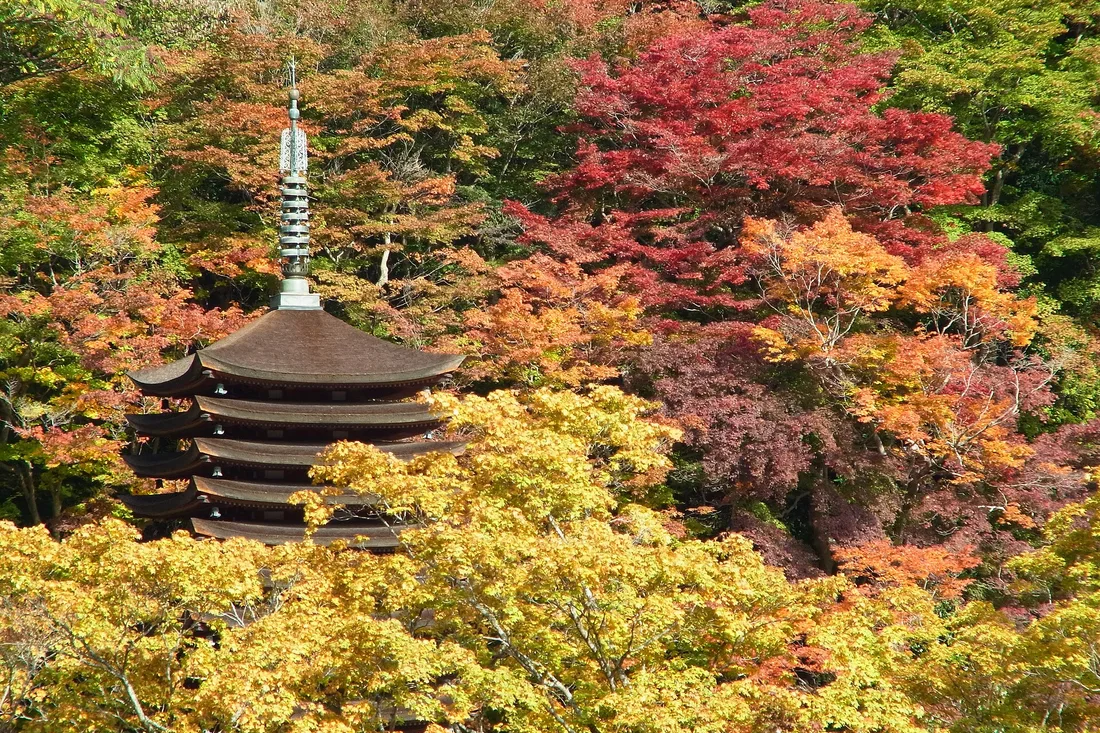
    The upper storeys of the thirteen-storey pagoda among red, orange and yellow maples, November 2014
    The thirteen-storey pagoda lit at night, framed by red maple leaves, December 2024
    The worship hall on its vermilion stage above a row of stone lanterns, with red and orange maples, December 2006
    Hanging lanterns along the vermilion balcony of the worship hall, with maples beyond, December 2006
    The Shinbyō Haisho hall with the thirteen-storey pagoda behind it in fresh green, May 2020

    A thirteen-storey wooden pagoda rises among maples beside vermilion halls on the Tonomine hillside. From mid-November the whole mountain colours around it, and the shrine usually lights the trees after dark. On 3 November kemari, the old court kickball, is played below the pagoda.

    Dates
    09 NOV – 02 DECAutumn to winter
    Where
    NaraGoogle Maps
    Open
    8:30–16:30 · last entry 16:00 · ¥700, primary-school children ¥300 · autumn light-up 14 Nov – 6 Dec 2026, sunset to 20:30Official hours ↗
    Survive
    Heavy. Come on a weekday: on peak weekends the road jams and the bus may stop short at Tonomine, one stop before the shrine. The busiest days are 3 November, with kemari at 11:00, and 17 November, the grand festival from 10:30 with court dance after it. The last bus down leaves at 17:52, so the light-up needs a taxi or a car unless extra buses are announced; until 8 November 2026 a free weekend bus also runs from Ishibutai in Asuka. On 28 November at 18:00 court music and the Ryōō dance are performed after dark.
    Holidays
    Labour Thanksgiving Day · Mon 23 NovLong weekend: expect full trains and hotels
    Access
    From the south exit of Sakurai Stn (JR Sakurai Line, Kintetsu Osaka Line), stop 1: Sakurai City community bus, run by Nara Kotsu, to the last stop, Tanzan-jinja, about 25 min, then 3 min on foot. Eight buses a day at weekends and on holidays, ten on weekdays; a taxi takes about 15 min.
    Source
    Official siteAutumn foliage page · checked 2026-10-07 · 1 day earlier this year, per JMA
    Photos
    5 photos · credits
    1. Ajax · CC BY-SA 4.0
    2. ONO Masanobu · CC0
    3. 663highland · CC BY 2.5
    4. 663highland · CC BY 2.5
    5. Saigen Jiro · CC0

    Background

    The shrine honours Fujiwara no Kamatari. By its own tradition he and Prince Naka no Ōe, who had met at a kemari game at Asuka-dera, came up this hill to plot the coup of 645, and the name Tanzan, ‘the mountain of the talk’, comes from that meeting. Kamatari’s son Jōe reburied part of his father’s remains here in 678 and built the pagoda; the present one dates from 1532, and the shrine calls it the only wooden thirteen-storey pagoda left in the world.

    Sakurai · 25 km from Nara

    1–2 h · Open in Google Maps

    A thirteen-storey wooden pagoda rises among maples beside vermilion halls on the Tonomine hillside. From mid-November the whole mountain colours around it, and the shrine usually lights the trees after dark. On 3 November kemari, the old court kickball, is played below the pagoda. The upper storeys of the thirteen-storey pagoda among red, orange and yellow maples, November 2014

    Photo · Ajax · CC BY-SA 4.0

    Winter · Snow

    Mount Takami rime

    高見山の霧氷

    15 JAN – 25 FEB · Nature · Snow

    Snow — Mount Takami rime高見山の霧氷

    NaraHigashiyoshino · 35 km from Nara

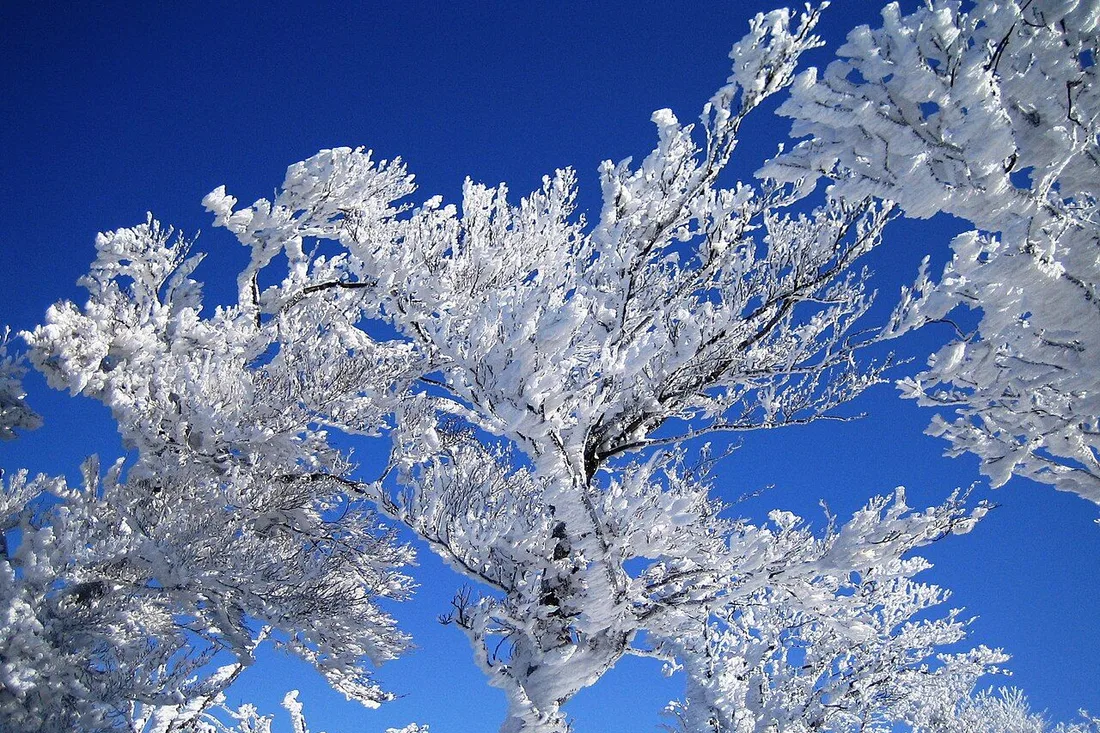
    Beech branches thick with white rime against a deep blue sky on Mount Takami
    Hikers climb the last snowy rise among rime-covered trees near the summit of Mount Takami
    Rime-covered branches framing a view over the hazy hills from Mount Takami
    The small summit shrine of Mount Takami in snow, rime on the tree beside it

    In the coldest weeks the beech forest on the summit of this pyramid-shaped peak, 1,249 m on the Nara–Mie border, turns white with rime, crisp against the sky on a clear day. There is no ropeway: it is a winter hike, and a seasonal ‘rime bus’ runs to the trailhead.

    Dates
    15 JAN – 25 FEBWinter
    Where
    NaraGoogle Maps
    Open
    Open mountain, no gate · free; rime bus ¥2,600 return in 2026Official hours ↗
    Survive
    Medium. The 2027 rime bus is not announced yet. In 2026 it ran 1–23 Feb except Thursdays, out at 8:15 and back at 16:00, ¥2,600 return, booked ahead from one month before until 16:00 the day before. Dress and equip for a snowy mountain, and start early.
    Holidays
    National Foundation Day · Thu 11 FebEmperor's Birthday · Tue 23 FebLong weekend: expect full trains and hotels
    Access
    Haibara Stn on the Kintetsu Osaka Line, then Nara Kotsu’s seasonal Muhyo Bus to Takami Tozanguchi, 38 min in 2026; the return bus leaves from Takasumi Onsen on the far side.
    Source
    Official siteSnow page · checked 2026-11-05
    Photos
    4 photos · credits
    1. Mass Ave 975 · CC BY-SA 3.0
    2. 米田賢一 · CC BY 3.0
    3. N yotarou · CC BY 2.5
    4. Mass Ave 975 · CC BY-SA 3.0
    Higashiyoshino · 35 km from Nara

    5–6 h · Open in Google Maps

    In the coldest weeks the beech forest on the summit of this pyramid-shaped peak, 1,249 m on the Nara–Mie border, turns white with rime, crisp against the sky on a clear day. There is no ropeway: it is a winter hike, and a seasonal ‘rime bus’ runs to the trailhead. Beech branches thick with white rime against a deep blue sky on Mount Takami

    Photo · Mass Ave 975 · CC BY-SA 3.0
    Winter · Plum blossom

    Tsukigase Plum Grove

    月ヶ瀬梅林

    15 FEB – 25 MAR · Nature · Plum blossom

    Plum blossom — Tsukigase Plum Grove月ヶ瀬梅林

    NaraNara · 20 km from Nara

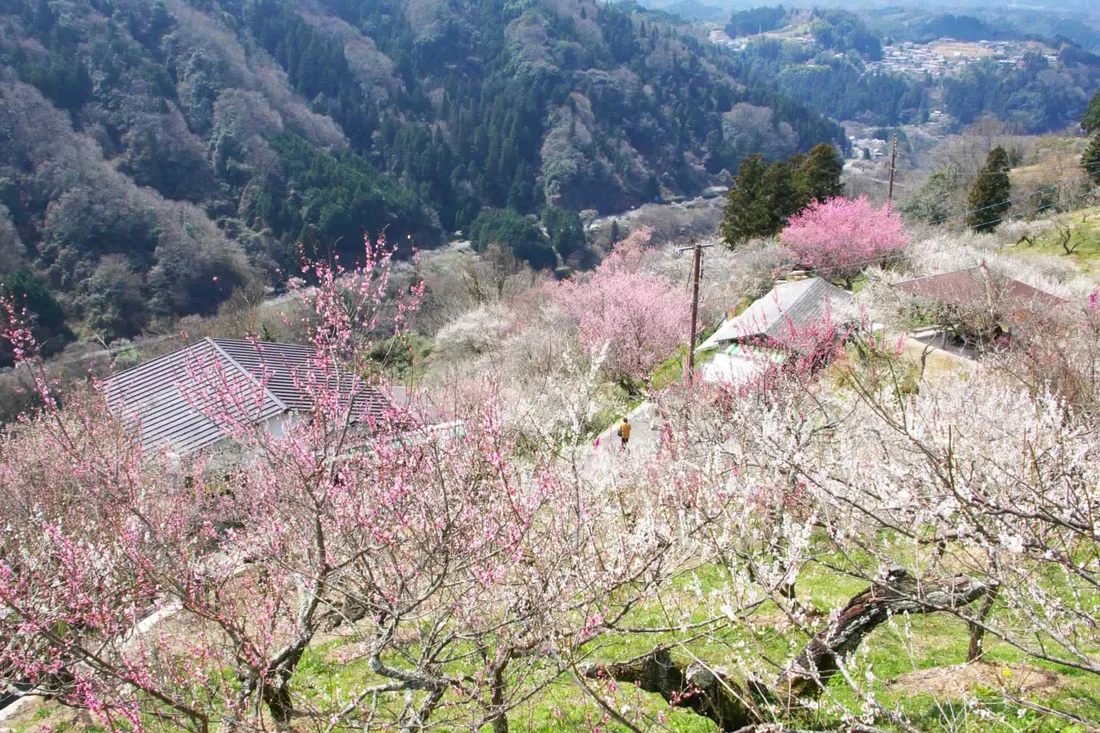
    Pink and white plum trees in flower on the slope above Tsukigase village
    Plum trees in flower by a viewpoint over the river gorge at Tsukigase
    White plum blossom across a hillside of the Tsukigase grove, wooded hills beyond
    Plum trees in flower around the stone marking the variety garden of the Tsukigase grove

    About 10,000 red and white plum trees line both sides of the Satsuki River gorge in the far east of Nara city, flowering from mid-February into March above the water and the hillside village.

    Dates
    15 FEB – 25 MARWinter to spring
    Where
    NaraGoogle Maps
    Survive
    The plum festival ran 14 Feb – 29 Mar in 2026. Buses are few, so check the return times before you go.
    Holidays
    Emperor's Birthday · Tue 23 FebVernal Equinox Day · Sun 21 MarSubstitute holiday · Mon 22 MarLong weekend: expect full trains and hotels
    Access
    JR or Kintetsu Nara Stn, then about 80 min by Nara Kotsu bus; or Iga Railway Uenoshi Stn, then about 30 min by Mie Kotsu bus.
    Source
    Official sitePlum blossom page · checked 2026-10-28
    Photos
    4 photos · credits
    1. N yotarou · CC BY 2.5
    2. N yotarou · CC BY 2.5
    3. N yotarou · CC BY 2.5
    4. N yotarou · CC BY 2.5

    Background

    The grove became a national Place of Scenic Beauty in 1922, when it was known as Tsukigase Baikei.

    Nara · 20 km from Nara

    Open in Google Maps

    About 10,000 red and white plum trees line both sides of the Satsuki River gorge in the far east of Nara city, flowering from mid-February into March above the water and the hillside village. Pink and white plum trees in flower on the slope above Tsukigase village

    Photo · N yotarou · CC BY 2.5

    Spring · Cherry blossom

    Matabei-zakura

    又兵衛桜

    27 MAR – 12 APR · Nature · Cherry blossom

    Cherry blossom — Matabei-zakura又兵衛桜

    NaraUda · 25 km from Nara

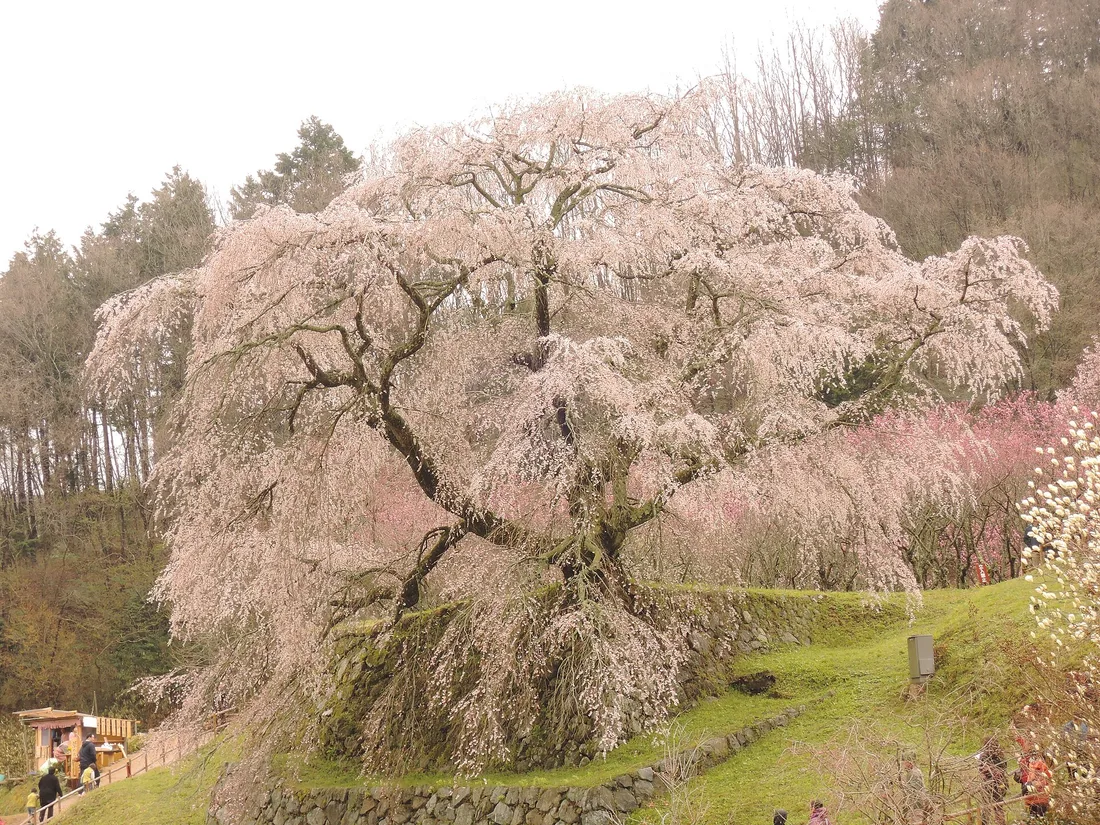
    Matabei-zakura in full bloom on its stone terrace, pink peach trees behind
    Matabei-zakura above terraced fields of rape blossom, with pink peaches beside it
    The weeping branches of Matabei-zakura with pink peach blossom behind

    A single old weeping cherry on a stone terrace in the hamlet of Hongo, its branches falling like a waterfall. Pink peach trees behind it flower at the same time, and terraced fields below fill with rape blossom.

    Dates
    27 MAR – 12 APRSpring
    Where
    NaraGoogle Maps
    Open
    Open at all hours · ¥100 donation in blossom seasonOfficial hours ↗
    Survive
    A ¥100 donation is asked in blossom season. Private car parks nearby, about 500 spaces in all, charge around ¥500. The tree is not lit at night.
    Access
    Kintetsu Haibara Stn, then the Nara Kotsu bus for Ouda, about 17 min to Ouda Hazama and about 20 min on foot.
    Source
    Official siteCherry blossom page · checked 2026-10-28
    Photos
    3 photos · credits
    1. Koichi Shibata · CC BY-SA 3.0
    2. coniferconifer · CC BY 2.0
    3. 浪速丹治 · CC BY-SA 4.0

    Background

    The tree is also called Hongo no Taki-zakura. Local legend holds that Goto Matabei, a samurai of the Toyotomi side, survived the Siege of Osaka in 1615 and lived out his days on this spot.

    Uda · 25 km from Nara

    Open in Google Maps

    A single old weeping cherry on a stone terrace in the hamlet of Hongo, its branches falling like a waterfall. Pink peach trees behind it flower at the same time, and terraced fields below fill with rape blossom. Matabei-zakura in full bloom on its stone terrace, pink peach trees behind

    Photo · Koichi Shibata · CC BY-SA 3.0
    Spring · Wisteria

    Kasuga Taisha Manyo Botanical Garden

    萬葉植物園

    20 APR – 08 MAY · Nature · Wisteria

    Wisteria — Kasuga Taisha Manyo Botanical Garden萬葉植物園

    Nara

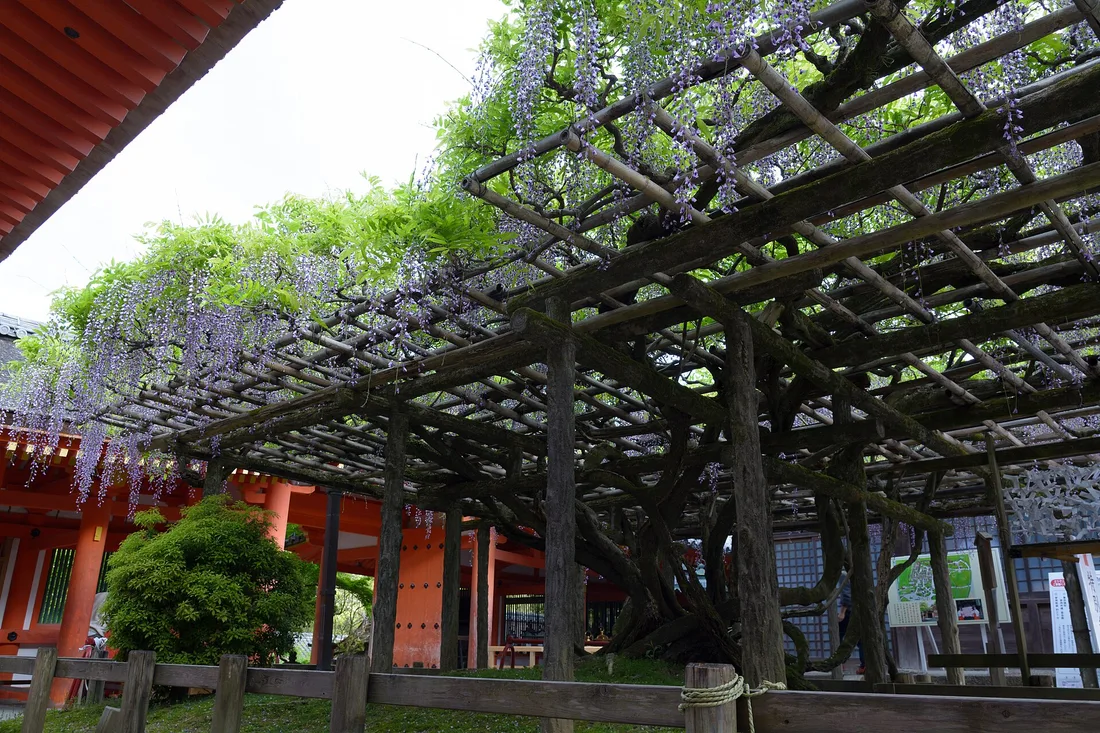
    Sunazuri-no-fuji in flower on its trellis at Kasuga Taisha, a few minutes from the garden
    The trellis of Sunazuri-no-fuji at Kasuga Taisha, its clusters hanging towards the ground
    Clusters of Sunazuri-no-fuji above its name board at Kasuga Taisha

    The wisteria garden here holds about 200 vines of 20 varieties, white, pink, crimson and purple, opening one after another over about two weeks. A few minutes away, the shrine’s Sunazuri-no-fuji hangs its clusters almost to the ground.

    Dates
    20 APR – 08 MAYSpring
    Where
    NaraGoogle Maps
    Open
    9:00–16:30 · last entry 16:00 · ¥700, children ¥300 · open daily in April and May, closed Tuesdays from June to MarchOfficial hours ↗
    Survive
    Full bloom often falls in Golden Week, when it is busiest; the garden suggests weekdays.
    Holidays
    Constitution Memorial Day · Mon 3 MayGreenery Day · Tue 4 MayChildren's Day · Wed 5 MayLong weekend: expect full trains and hotels
    1 more holidayShowa Day · Thu 29 Apr
    Access
    Kintetsu Nara Stn, then about 25 min on foot through Nara Park, or a bus towards Kasuga Taisha.
    Source
    Official siteWisteria page · checked 2026-10-28
    Photos
    3 photos · credits
    1. Degueulasse · CC BY 3.0
    2. Degueulasse · CC BY 3.0
    3. Degueulasse · CC BY 3.0

    Background

    Opened in 1932 with funds granted by Emperor Showa, it is the oldest garden in Japan given to the plants of the Manyoshu, the 8th-century poetry anthology.

    Open in Google Maps

    The wisteria garden here holds about 200 vines of 20 varieties, white, pink, crimson and purple, opening one after another over about two weeks. A few minutes away, the shrine’s Sunazuri-no-fuji hangs its clusters almost to the ground. Sunazuri-no-fuji in flower on its trellis at Kasuga Taisha, a few minutes from the garden

    Photo · Degueulasse · CC BY 3.0

    Summer · Lotus

    Fujiwara Palace Site

    藤原宮跡

    10 JUL – 08 AUG · Nature · Lotus

    Lotus — Fujiwara Palace Site藤原宮跡

    NaraKashihara · 20 km from Nara

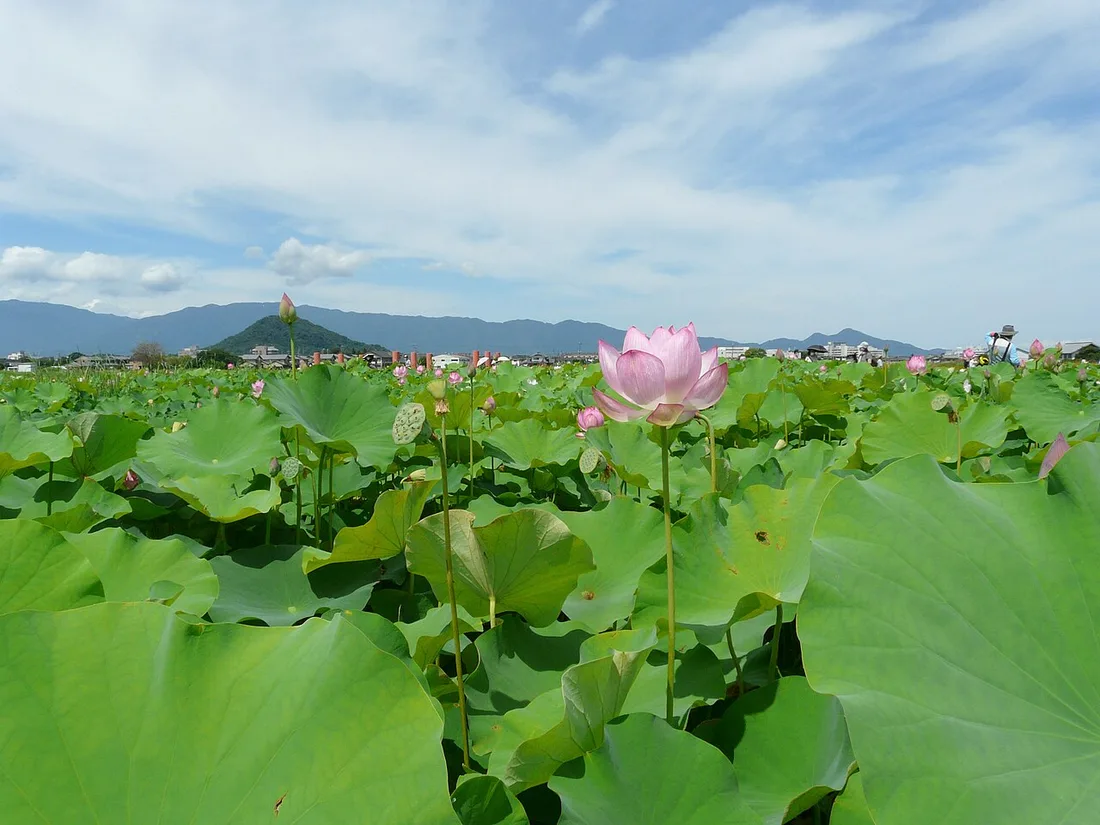
    Pink lotus over the ponds of the Fujiwara Palace Site, hills on the horizon
    This place in other seasons · 3
    • A field of pink, white and crimson cosmos at the Fujiwara Palace Site
    • Cosmos at the Fujiwara Palace Site with the hill of Kagu-yama behind
    • Cosmos at the Fujiwara Palace Site against the low evening sun

    About 3 million cosmos of six varieties cover some 30,000 square metres of the old palace ground, with the low hill of Kagu-yama rising behind. The northern plots open first, the larger southern ones in mid to late October.

    Dates
    10 JUL – 08 AUGSummer
    Where
    NaraGoogle Maps
    Open
    Open at all hours · free
    Survive
    Low. An open field with no shade. Cosmos fall over after heavy rain, so check the city’s bloom updates before going. 11 kinds of lotus in three ponds (north, central, south) southeast of the Daigokuden site, each pond a different kind; they close by noon, so come early. Free.
    Holidays
    Marine Day · Mon 19 JulLong weekend: expect full trains and hotels
    Access
    Kintetsu Yamato-Yagi or JR Unebi Stn, then about 25 min on foot.
    Source
    Official siteLotus page · checked 2026-11-09
    Photos
    4 photos · credits
    1. Naokijp · CC BY 4.0
    2. Naokijp · CC BY 4.0
    3. Ajax · CC BY-SA 4.0
    4. coniferconifer · CC BY 2.0

    Background

    Fujiwara-kyo was the capital of Japan from 694 to 710, the first laid out on a Chinese-style grid. The field lies south of the site of its Great Hall of State.

    Kashihara · 20 km from Nara

    Open in Google Maps

    About 3 million cosmos of six varieties cover some 30,000 square metres of the old palace ground, with the low hill of Kagu-yama rising behind. The northern plots open first, the larger southern ones in mid to late October. Pink lotus over the ponds of the Fujiwara Palace Site, hills on the horizon

    Photo · Naokijp · CC BY 4.0

    Summer · Hydrangea

    Yatadera

    矢田寺

    05 JUN – 05 JUL · Nature · Hydrangea

    Hydrangea — Yatadera矢田寺

    NaraYamatokoriyama

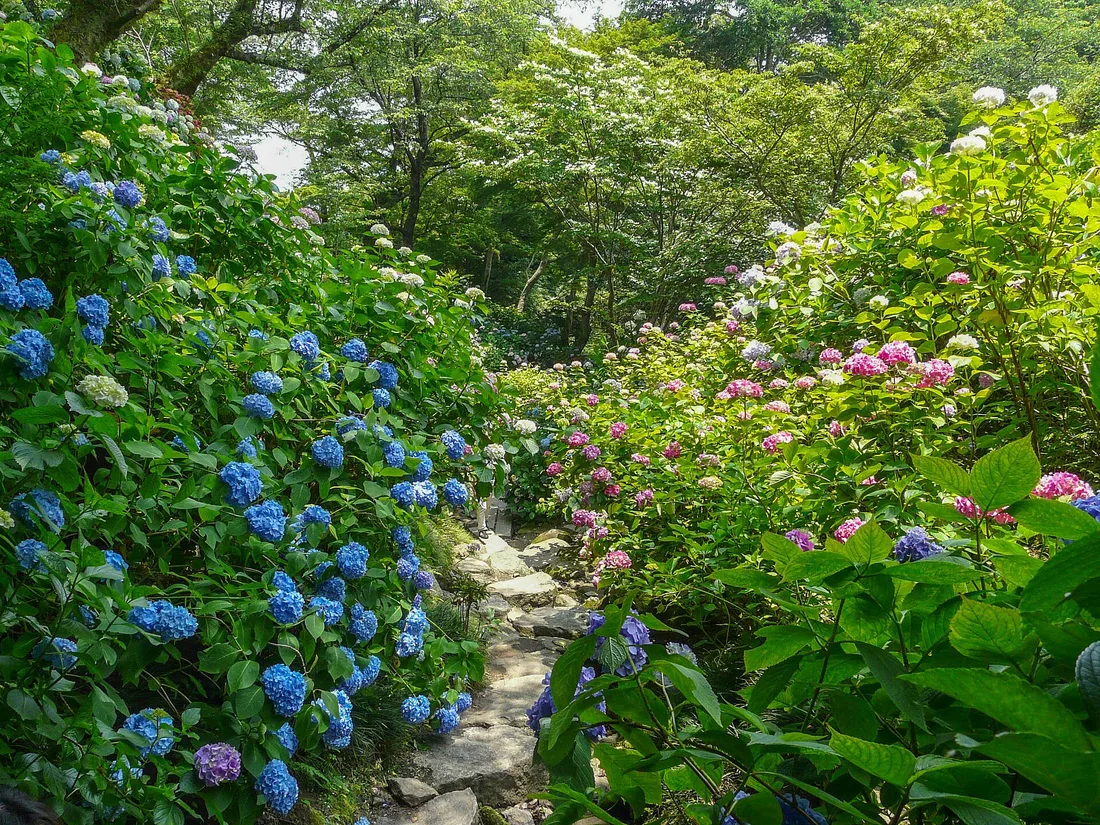
    Blue and pink hydrangeas lining a stone path in Yatadera’s garden
    Stone Jizo statues in red bibs among blue hydrangeas at Yatadera
    Visitors photographing hydrangeas along a stone wall at Yatadera

    Over 10,000 hydrangeas fill the hillside garden of this temple in the Yata hills, blue, pink and purple heads crowding around small stone Jizo statues in red bibs.

    Dates
    05 JUN – 05 JULSummer
    Where
    NaraGoogle Maps
    Open
    Hydrangea season · ¥700, children ¥300Official hours ↗
    Survive
    The flowers open just before the rainy season peaks in mid-June; go early on a weekday.
    Access
    Kintetsu Koriyama Stn, then extra buses to Yatadera in June and July; or about 15 min by taxi from JR Yamato-Koizumi Stn.
    Source
    Official siteHydrangea page · checked 2026-10-28
    Photos
    3 photos · credits
    1. Naokijp · CC BY-SA 4.0
    2. Naokijp · CC BY-SA 4.0
    3. Naokijp · CC BY-SA 4.0

    Background

    Officially Kongosen-ji, the temple is said to date from 679 and is a centre of Jizo worship, which is why stone Jizo line its paths.

    Yamatokoriyama

    Open in Google Maps

    Over 10,000 hydrangeas fill the hillside garden of this temple in the Yata hills, blue, pink and purple heads crowding around small stone Jizo statues in red bibs. Blue and pink hydrangeas lining a stone path in Yatadera’s garden

    Photo · Naokijp · CC BY-SA 4.0

    All 15 places in Nara

    Events

    EventWhat it is

    Autumn Mantoro at Kasuga Taisha

    春日大社 万燈籠特別開催

    On now · 7–28 Nov

    Light-up

    7–28 Nov · Light-up

    Autumn Mantoro at Kasuga Taisha春日大社 万燈籠特別開催

    Kasuga Taisha, Nara

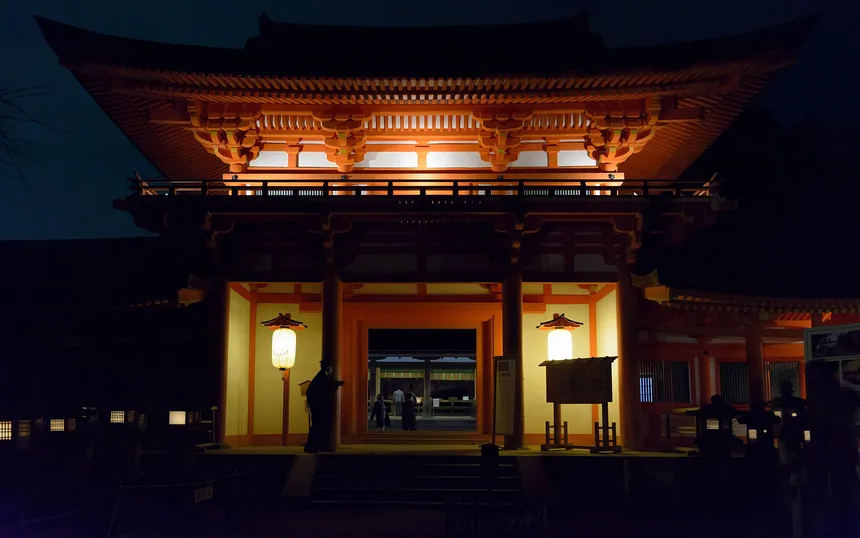
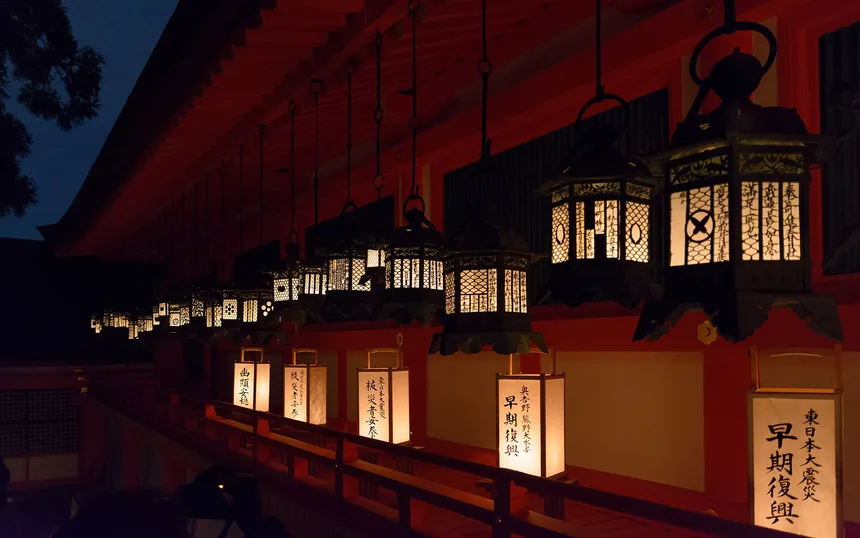
    The vermilion Chumon gate lit from inside at night, lanterns glowing at its foot, at Setsubun Mantoro, February 2015
    Lit lanterns under the eaves of the vermilion cloister, February 2015
    A cloister of Kasuga Taisha at night, lit hanging lanterns in a row down each side; photographed on the night of Setsubun
    Gilded hanging lanterns in a row between the vermilion pillars of the cloister, Setsubun Mantoro, February 2015
    Close-up of a lit bronze hanging lantern with its pierced patterns and inscription glowing, Setsubun Mantoro, February 2015
    A row of lit bronze lanterns hanging from the eaves in the dark, Setsubun Mantoro, February 2015

    On four Saturday evenings in November Kasuga Taisha reopens after dark and lights about 1,000 hanging lanterns in its vermilion cloisters. You walk the corridors between the rows of light and visit the main sanctuary, a National Treasure, by night. No booking is needed.

    RelatedSetsubun Mantoro at Kasuga Taisha

    Dates
    7–28 NovAutumn
    Where
    Kasuga Taisha, NaraGoogle Maps
    Open
    17:30–20:00 · last entry 19:45 · the shrine shuts at 17:00 and reopens for the evening · Closed 8–13 Nov, 15–20 Nov and 22–27 Nov
    Tickets
    Special visit ¥700, no booking. On the four evenings a loop bus runs from JR Nara and Kintetsu Nara stations about every 20 minutes from 17:10, ¥250; the ordinary bus stops soon after 17:00.
    Holidays
    Labour Thanksgiving Day · Mon 23 NovLong weekend: expect full trains and hotels
    Heritage
    World Heritage · Historic Monuments of Ancient Nara, 1998 古都奈良の文化財 世界遺産
    Source
    Official site · checked 2026-10-15
    Photos
    6 photos · credits
    1. Degueulasse · CC BY 3.0
    2. Degueulasse · CC BY 3.0
    3. Greg Schechter · CC BY 2.0
    4. Greg Schechter · CC BY 2.0
    5. Degueulasse · CC BY 3.0
    6. Degueulasse · CC BY 3.0

    Background

    The evenings belong to Shuya no Nara-tabi, a programme the Nara City Tourism Association has run each autumn since 2020: in 2026 five World Heritage shrines and temples open after dark on Saturdays from 31 October to 28 November. The shrine’s two great lightings, when all 3,000 lanterns burn, are on the night of Setsubun and on 14 and 15 August.

    About 1,000 hanging lanterns lit in the cloisters on four November Saturdays The vermilion Chumon gate lit from inside at night, lanterns glowing at its foot, at Setsubun Mantoro, February 2015

    Photo · Degueulasse · CC BY 3.0

    Omizutori at Todai-ji

    東大寺 修二会(お水取り)

    In 99 days · 1–14 Mar

    Matsuri

    1–14 Mar · Matsuri

    Omizutori at Todai-ji東大寺 修二会(お水取り)

    Nigatsu-do, Todai-ji, Nara

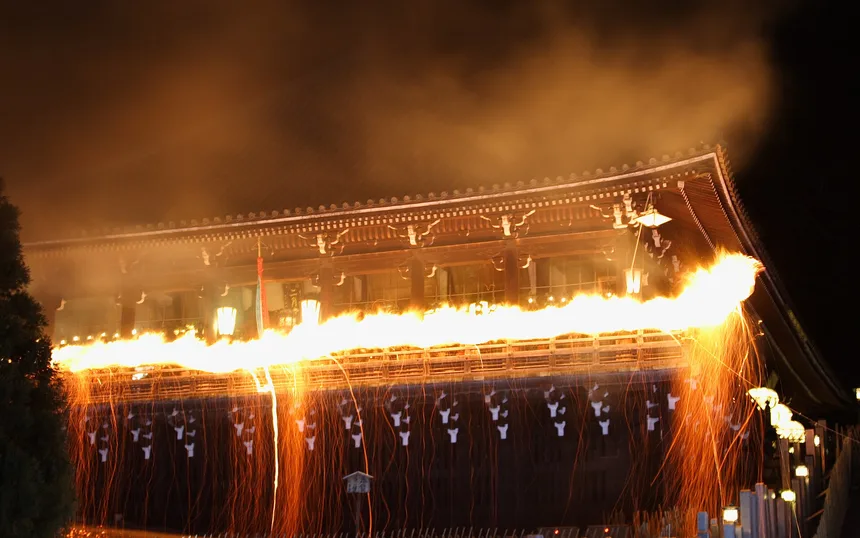
    A torch run along the balcony of Nigatsu-dō leaves a line of fire and a fall of sparks, March 2007: a long exposure
    Basket torches made for the rite leaning against a temple wall, March 2007
    Attendants readying torches on a rack below Nigatsu-dō on an afternoon of the rite, March 2011

    Every night for two weeks, attendants carry burning torches six metres long along the balcony of Nigatsu-do, scattering sparks over the crowd below as eleven monks go up to their rites. The hall stands high on a hillside, so the fire crosses the dark above your head. Go on a weekday other than the 12th.

    Dates
    1–14 MarSpring
    Where
    Nigatsu-do, Todai-ji, NaraGoogle Maps
    Open
    Torches 19:00 on 1–11 and 13 March · 19:30 on the 12th · 18:30 on the 14th
    Programme · 4 daysMon 1 Mar · Every night to 11 March: ten torches from 19:00, about 20 minutes; Saturdays and Sundays are the most crowdedFri 12 Mar · Eleven great basket torches from 19:30, about 45 minutes; entry near the hall is restricted and the crowd is moved past for a brief look, traffic around Nara Park is restricted, and visitors are asked to stay away if they canSat 13 Mar · The water-drawing rite at about 1:30 in the small hours, inside a well house no outsider may enter · ten torches from 19:00, about 20 minutesSun 14 Mar · Last night: ten torches from 18:30 go up one after another and stand in a row along the balcony, about 10 minutes
    Tickets
    Free, no ticket or booking. The square below the hall holds about 3,000; when it fills, later arrivals are sent to a second viewing area. On 12 March you file past and may see nothing.
    Heritage
    World Heritage · Historic Monuments of Ancient Nara, 1998 古都奈良の文化財 世界遺産
    Source
    Official site · checked 2026-10-15
    Photos
    3 photos · credits
    1. ignis · CC BY-SA 3.0
    2. ignis · CC BY-SA 3.0
    3. Nekosuki · CC BY-SA 4.0

    Background

    The rite is the Shuni-e, two weeks of repentance before the Eleven-faced Kannon that the temple says has been held every year since 752 without a break: it counted the 1,275th in 2026. Omizutori, ‘water-drawing’, is one moment in it, when water for the Kannon is drawn from the Wakasa well below the hall at about 1:30 on the 13th. Nigatsu-do means ‘hall of the second month’, when the rite fell in the old calendar.

    Six-metre torches run along a temple balcony every night for two weeks A torch run along the balcony of Nigatsu-dō leaves a line of fire and a fall of sparks, March 2007: a long exposure

    Photo · ignis · CC BY-SA 3.0

    Setsubun Mantoro at Kasuga Taisha

    春日大社 節分万燈籠

    In 73 days · 3 Feb

    Light-up · Setsubun

    3 Feb · Light-up · Setsubun

    Setsubun Mantoro at Kasuga Taisha春日大社 節分万燈籠

    Kasuga Taisha, Nara

    Lit hanging lanterns in a row along the vermilion cloister, with paper lanterns below them, on the night of Setsubun, February 2015
    A row of lit stone lanterns before a vermilion hall of Kasuga Taisha on the night of Setsubun, February 2015
    Hanging lanterns glowing through their pierced panels in the dark cloister, February 2015
    The South Gate of Kasuga Taisha lit at dusk on the night of the lantern festival, February 2015

    On the night of Setsubun every lantern at Kasuga Taisha is lit: about 2,000 stone ones along the approach through the woods and about 1,000 hanging in the vermilion cloisters. For two and a half hours they glow among the trees and in rows down the corridors. Court dance is offered before the lighting.

    Dates
    3 FebWinter
    Where
    Kasuga Taisha, NaraGoogle Maps
    Open
    Lanterns lit about 18:00 · gates close 20:30 · court dance from about 17:30 · cloister visit from about 18:00, ¥700Wed 3 Feb · Court dance (bugaku) at the Naoraiden hall from about 17:30 · all lanterns lit by about 18:00 · special visit to the cloister from about 18:00 · gates close at 20:30 (the shrine’s standing timetable; its notice for 2027 is not out yet)
    Tickets
    The approach with its stone lanterns is free. The cloister with the hanging lanterns opens for a special visit from about 18:00: ¥700 on the day. An offering of ¥3,000 or more dedicates a light.
    Heritage
    World Heritage · Historic Monuments of Ancient Nara, 1998 古都奈良の文化財 世界遺産
    Source
    Official site · checked 2026-10-15
    Photos
    4 photos · credits
    1. Degueulasse · CC BY 3.0
    2. Degueulasse · CC BY 3.0
    3. Degueulasse · CC BY 3.0
    4. Degueulasse · CC BY 3.0

    Background

    Worshippers have given lanterns to the shrine since the late Heian period: the oldest, by tradition, are a hanging one of 1038 and a stone one of 1136. They were once lit every night for as long as the donor’s oil lasted; the custom lapsed in the Meiji period and was revived for the night of Setsubun in 1888 and for mid-August in 1929. The summer lighting, Chūgen Mantōrō, is on 14 and 15 August.

    All 3,000 lanterns of Kasuga Taisha lit for one winter night Lit hanging lanterns in a row along the vermilion cloister, with paper lanterns below them, on the night of Setsubun, February 2015

    Photo · Degueulasse · CC BY 3.0

    Takigi Onoh

    薪御能

    In 180 days · 21–22 May

    Show

    21–22 May · Show

    Takigi Onoh薪御能

    Kofuku-ji, Nandaimon gate site; mornings at Kasuga Taisha, Nara

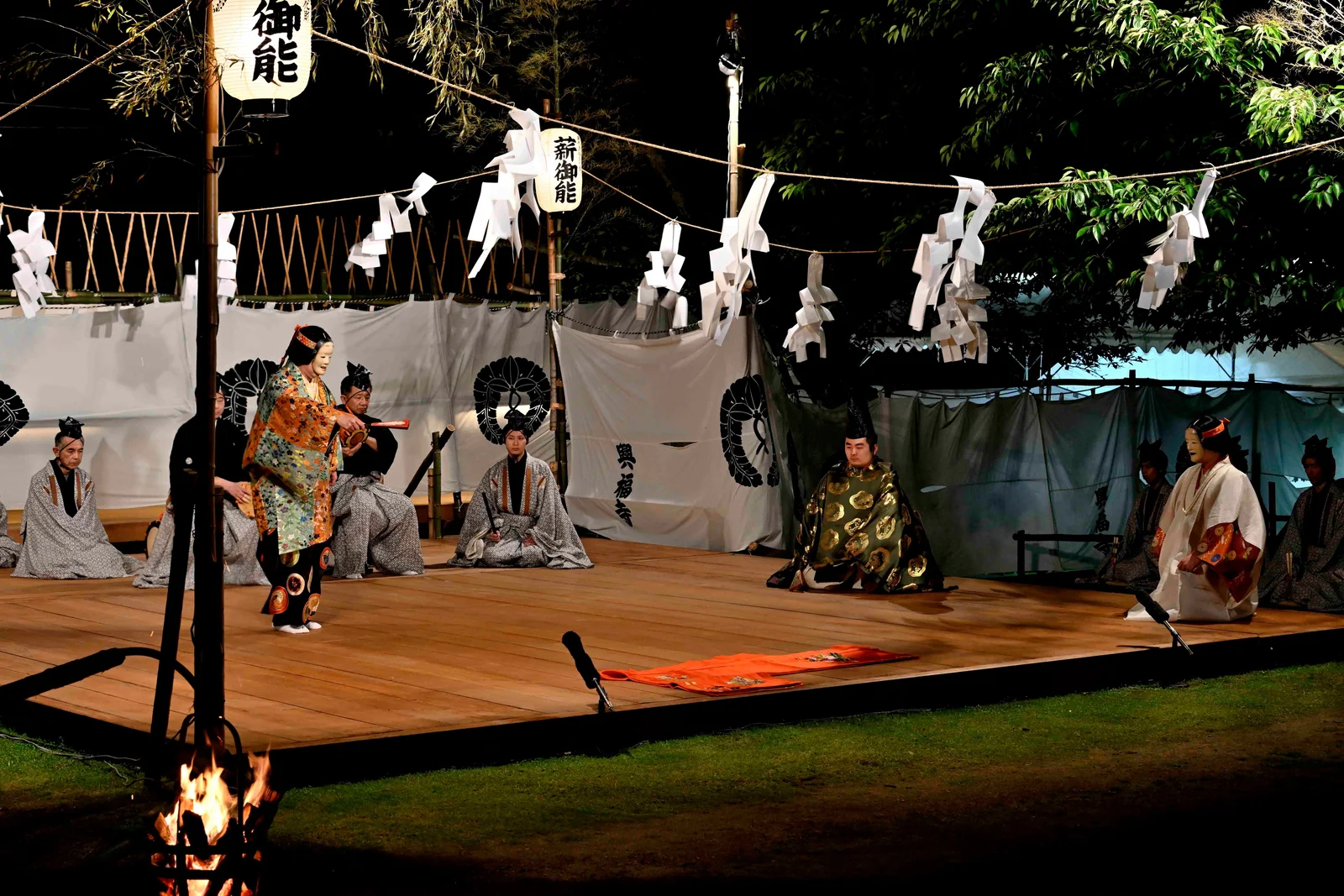
    Noh by bonfire light at the Nandaimon site of Kofuku-ji, a past year
    Masked performers in the Shushi-bashiri rite at Kasuga Taisha, a past year

    For two May days, all four main Noh schools and Okura kyogen actors perform outdoors. Mornings belong to Kasuga Taisha, where masked performers open with the Shushi-bashiri rite; at dusk the stage moves to the lawn where Kofuku-ji’s south gate once stood, and monks light the bonfires around it.

    Dates
    21–22 MaySpring
    Where
    Kofuku-ji, Nandaimon gate site; mornings at Kasuga Taisha, NaraGoogle Maps
    Open
    2026: Kasuga Taisha from 11:00 · Kofuku-ji from 17:30 · in rain the evening part moves to Nara Centennial HallFri 21 May · Kasuga Taisha: Shushi-bashiri rite and Noh, 11:00 · Kofuku-ji: Nandaimon rite, Noh and kyogen, 17:30 (2026 timings)Sat 22 May · Kasuga Taisha: Miyashiro-agari rite and Noh, 11:00 · Kofuku-ji: Noh and kyogen, 17:30 (2026 timings)
    Tickets
    Not yet announced for 2027. In 2026 a seat cost ¥6,000 booked ahead by postal transfer or ¥6,500 on the day, with a guide booklet.
    Source
    Official site · checked 2026-10-28

    Background

    It traces its roots to 869, when sarugaku was performed at Kofuku-ji’s Shuni-e rite, and is held to be the origin of every takigi noh in Japan. It falls on the third Friday and Saturday of May; the 2027 dates and programme are not yet announced.

    Noh by firelight on the lawn of Kofuku-ji’s lost south gate Noh by bonfire light at the Nandaimon site of Kofuku-ji, a past year

    Photo · Takigi Onoh Preservation Society, photo Kuwabara Hidefumi · Press photo

    Kasuga Wakamiya Onmatsuri

    第891回 春日若宮おん祭

    In 23 days · 15–18 Dec

    Matsuri

    15–18 Dec · Matsuri

    Kasuga Wakamiya Onmatsuri第891回 春日若宮おん祭

    Otabisho of Kasuga Taisha and the streets of central Nara

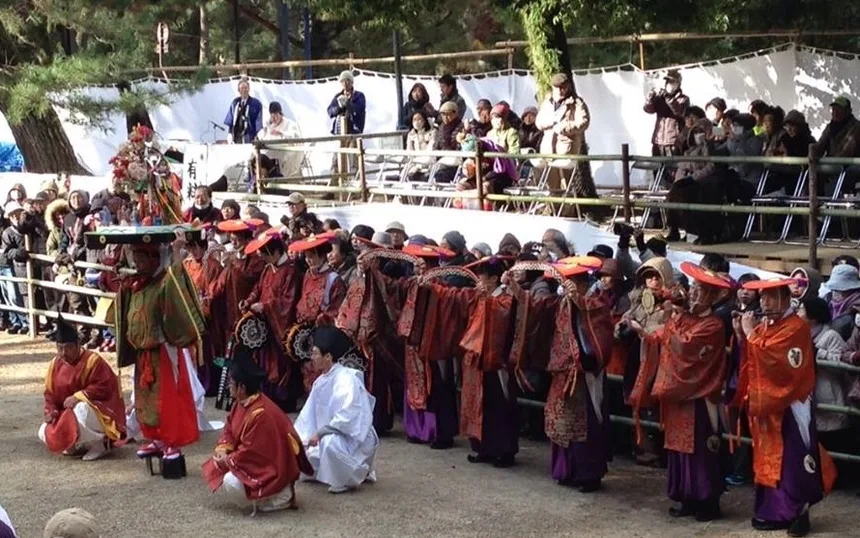
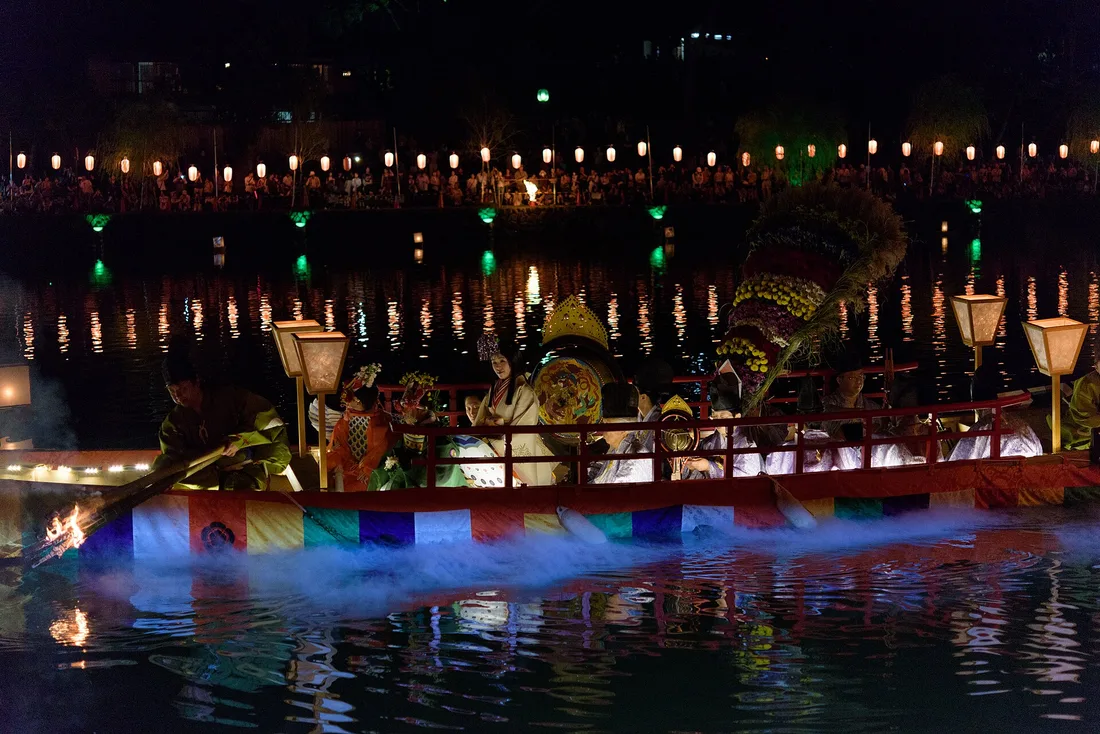
    Performers in red court costume at the Otabisho during the Kasuga Wakamiya Onmatsuri
    A dance before the crowd at the Otabisho of the Onmatsuri
    A night rite lit by torches at the Onmatsuri
    Dancers performing on the turf stage of the Otabisho
    Procession members in white and black court dress at the Onmatsuri

    At noon on 17 December about 1,000 people and 50 horses in dress from the Heian to the Edo period walk through Nara to the shrine’s temporary hall. From 14:30 until about 22:30, sacred dances, bugaku and early noh are performed there on a turf stage, lit by bonfires after dark.

    Dates
    15–18 DecWinter
    Where
    Otabisho of Kasuga Taisha and the streets of central NaraGoogle Maps
    Open
    17 Dec: procession from 12:00 · Otabisho rites 14:30 to about 22:30 · the midnight rites are held in darkness, no photos or torches
    Programme · 4 daysTue 15 Dec · 13:00 shrine maidens walk in procession from JR Nara Station to the Oshukusho · hot-water purification at 14:30, 16:30 and 18:00, the last one for the publicWed 16 Dec · Eve rites at the Wakamiya shrine: dengaku at 15:00, Yoimiya-sai at 16:00Thu 17 Dec · 0:00 the deity is carried to the Otabisho in total darkness · 12:00 procession from the Nara Prefectural Office · about 13:00 Matsu-no-shita rite at the Yogo pine · 14:30 Otabisho rites, performances until about 22:30 · about 23:00 the deity returnsFri 18 Dec · 13:00 sumo offering beside the Otabisho · 14:00 noh and kyogen on the turf stage
    Tickets
    Free to watch along the route and around the Otabisho. Stand seats on 17 Dec, ¥2,000–¥10,000, book on the NARA Time site from 20 Oct 13:00, pay on the day.
    Source
    Official site · checked 2026-10-18
    Photos
    5 photos · credits
    1. Lovelin6th · CC BY-SA 4.0
    2. Lovelin6th · CC BY-SA 4.0
    3. Lovelin6th · CC BY-SA 4.0
    4. Lovelin6th · CC BY-SA 4.0
    5. Lovelin6th · CC BY-SA 4.0

    Background

    The festival of the Wakamiya shrine of Kasuga Taisha has been held every year without a break since 1136; 2026 is the 891st. The 17 December procession and the performances are a National Important Intangible Folk Cultural Property, designated in 1979.

    Buy tickets · Kasuga Wakamiya Onmatsuri

    Nara’s winter festival: a costumed procession and dances until late at night Performers in red court costume at the Otabisho during the Kasuga Wakamiya Onmatsuri

    Photo · Lovelin6th · CC BY-SA 4.0

    Wakakusa Yamayaki

    若草山焼き

    In 62 days · 23 Jan

    Matsuri

    23 Jan · Matsuri

    Wakakusa Yamayaki若草山焼き

    Mount Wakakusa, seen from Nara Park, Nara

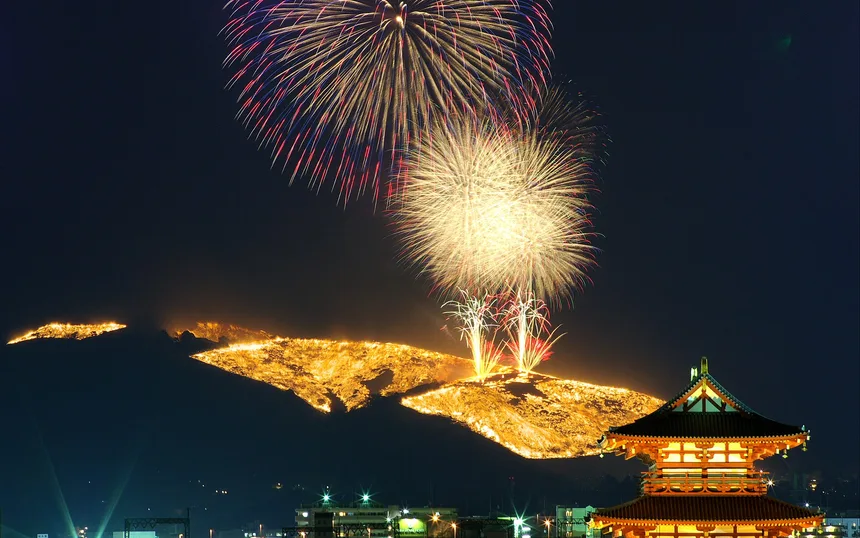
    Mount Wakakusa burning under fireworks, seen from the Heijō Palace site with the lit Suzaku Gate in front, January 2011: a long exposure
    Fireworks bursting above the burning hillside of Mount Wakakusa, January 2011
    The dry grass of Mount Wakakusa in evening light an hour before the burning, behind the Suzaku Gate of Heijō Palace, January 2011
    The blackened upper slope of Mount Wakakusa four days after the burning, seen from the south gate at its foot, January 2022

    After fifteen minutes of fireworks, about 300 volunteer firefighters with torches light the dry grass of Mount Wakakusa, and fire runs up 33 hectares of hillside above Nara Park. It burns for half an hour to an hour. Photographs showing fireworks over the flames are long exposures: the two come in turn.

    Dates
    23 JanWinter
    Where
    Mount Wakakusa, seen from Nara Park, NaraGoogle Maps
    Open
    Fireworks 18:15 · the hill is lit at 18:30 and burns for 30–60 min · roads round the hill closed about 15:00–20:00, buses may stop at the Daibutsuden crossing or the prefectural office · go or no-go posted by 10:00 on the day; no reserve dateSat 23 Jan · Bonfire of New Year charms at Tobihino from 13:00 · sacred-fire rite there 16:45 · torch procession leaves 17:05 · rite at Nogami Shrine at the foot of the hill 17:40 · fireworks 18:15 · the hill is lit at 18:30
    Tickets
    Free from the lawns of Nara Park. Paid standing area at the foot of the hill: ¥2,000 from 20 November, 10:00, to 15 January, ¥2,500 on 16–22 January, ¥3,000 on the day if any are left; on Ticket Pia or at 7-Eleven. Seats on the Nara Park Bus Terminal roof with a concert ¥10,000, 215 only, no preschool children. On sale since 20 Nov
    Source
    Official site · checked 2026-11-11
    Photos
    4 photos · credits
    1. 名古屋太郎 · CC BY-SA 4.0
    2. 米田賢一 · CC BY 3.0
    3. 名古屋太郎 · CC BY-SA 3.0
    4. Naokijp · CC BY-SA 4.0

    Background

    The organisers trace the burning to a belief that fire kept the ghosts of the Uguisuzuka burial mound on the summit quiet: passers-by set the hill alight themselves, the flames more than once came close to Todai-ji, and by the end of the Edo period the neighbouring temples and the Nara magistrate burned it under watch. It became a night event in 1900 and has fallen on the fourth Saturday of January since 2009. The fire is brought from the bonfire of New Year charms at Kasuga Taisha by a procession of about 40 people in period dress.

    Fireworks, then a whole hill above Nara Park set on fire Mount Wakakusa burning under fireworks, seen from the Heijō Palace site with the lit Suzaku Gate in front, January 2011: a long exposure

    Photo · 名古屋太郎 · CC BY-SA 4.0

    All events in Nara

    Add to which trip?

    The Kigo季語

    Found a mistake?

    Tell us what is wrong and, if you can, where the right information is. We check it against the official page and fix the card.

    Email

    hello@thekigo.com

    Write to us

    Omikuji ·

    願望Wishes
    待人The one you wait for
    失物Lost things
    旅行Travel

    One slip a day

    The Kigo home page in version 1.0, on 24 September 2026: one day to the harvest moon, the first festivals of autumn, cosmos and silver grass

    The rest has faded

    The Kigo 1.0 · 24 Sep 2026